What do recent national politics have to do with transportation planning? For Sarah Goodyear, the connection is clear: it's about having access to good data for solving real-world problems.


TrafficCOM is a new, comparatively affordable and easy-to-use gizmo that allows users to collect traffic data and share it immediately. For inventors Aurash Khawarzad and Ted Ullrich, this is an "inexpensive solution for one of the most pressing data-collection needs in the urban portfolio: traffic frequency and speed," reports Goodyear. Most importantly, it collects such data for use by "community groups, neighborhood associations, and advocacy organizations who are concerned about the impact of traffic on their streets and want to pursue solutions, but who have been frustrated by the impenetrability of the processes surrounding traffic planning."
The impetus to develop the device is rooted in a realization made on a recent trip to Moscow "that [local advocacy groups] needed solid data on traffic conditions to begin making recommendations," says Khawarzad. Development for the device was enabled by "key support, in the form of a small stipend and some feedback, after being invited to participate in the recent San Francisco Urban Prototyping Festival." reports Goodyear. At a cost of $139, the pre-assembled and plug-in ready device is accessible and user-friendly.
Read the full story: This DIY Traffic Counter Could Change Everything About Transportation Planning
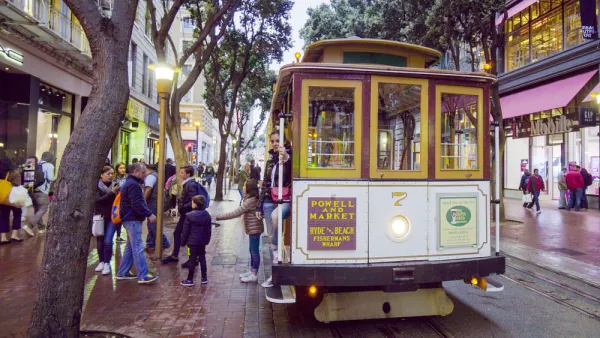
San Francisco Returns $15 Million Federal Grant for Market Street Improvements
San Francisco was awarded a federal grant in 2018 that it was forced to return in 2022 because it couldn't start construction by 2025.
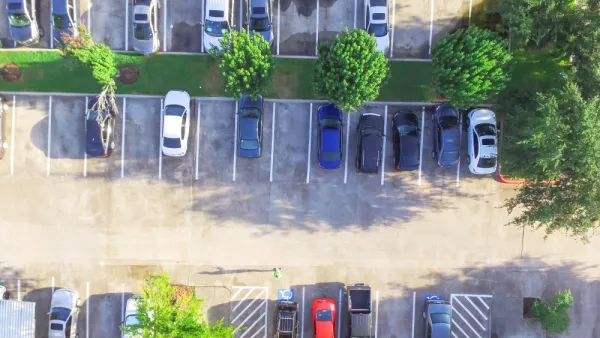
Parking Induces Driving, Study Says
New research published in the Urban Studies journal does the difficult work of connecting the dots between parking and driving.
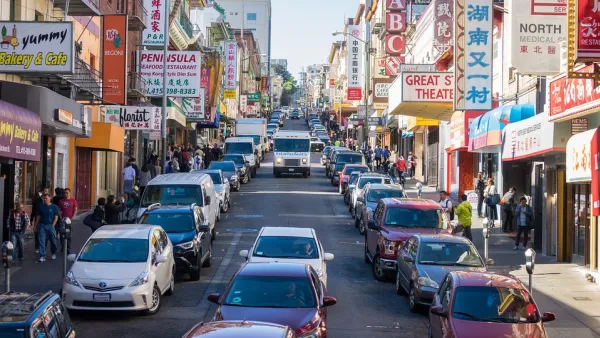
Congestion Pricing Under Discussion in San Francisco
An expanding number of major U.S. cities are exploring the idea of charging drivers to drive into certain heavily trafficked parts of town. San Francisco is the most recent to explore the idea of congestion pricing (also known as cordon pricing).
Planetizen Federal Action Tracker
A weekly monitor of how Trump’s orders and actions are impacting planners and planning in America.

Eastern Nebraska is running out of electricity
Data centers and electrification are straining eastern Nebraska’s grid, throttling economic development.

Study reveals best places in the U.S. for cycling, walking
New research from Streetlight Data examines bicycle and pedestrian miles per capita in the 100 largest U.S. cities by population.

Federal government nominates new FTA administrator
Mark Aesch is currently the founder and CEO of a transportation management consulting firm.

Developers reveal $10 billion stadium plan as ‘Hail Mary’ to keep Bears in Chicago
The plan would also boast a public park, high- and mid-rise buildings and a youth sports complex.

As Texas embraces carbon storage, a Black community questions the risks
Texas now issues permits for companies to store carbon dioxide underground. East Texas residents fear safety risks, and skeptics doubt the climate benefits.

FREE Course: Walkable City 1: Why Walkability?
After describing his path towards focusing on walkability as the essence of good planning, Jeff Speck marches through his five principal reasons for making more walkable places.
Reinventing Malls: Planning Alchemy—Turning Gray Fields Into Gold
The course focuses on the opportunities and imperatives that shape reinvention of mall sites.

City of Charlotte
City of Rosemead
Rutgers University, Edward J. Bloustein School of Planning and Public Policy
University of Michigan School for Environment and Sustainability (SEAS)
Hunter College, City University of New York (CUNY)
The Architects Foundation
City of Cambridge
The Pocatello Development Authority
The Urban Renewal Agency of the City of Pocatello