An expanding number of major U.S. cities are exploring the idea of charging drivers to drive into certain heavily trafficked parts of town. San Francisco is the most recent to explore the idea of congestion pricing (also known as cordon pricing).


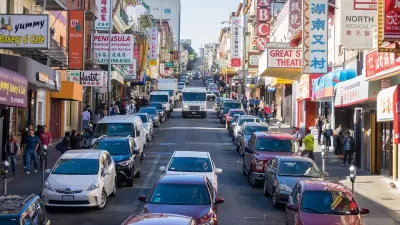
"San Francisco could be the latest to implement congestion pricing after the San Francisco County Transportation Authority (SFCTA) kicked off a study and public comment period on a new tolling scheme," reports Chris Teale.
The proposal under discussion would charge drivers to drive into downtown San Francisco or the South of Market (SoMa) neighborhood.
"SFCTA says the study will aim "to understand whether congestion pricing could be an effective and fair tool to reduce congestion," and will explore this in addition to discounts and subsidies for transit, biking and walking," according to Teale.
As noted by Teale, New York City is leading a recent wave of interest in congestion pricing (in this case, most accurately referred to as cordon pricing), but Seattle, Portland, and Los Angeles have also launched studies into the idea within the calendar year. A plan to charge drivers to drive on the famously crooked Lombard Street in San Francisco also died this year.
FULL STORY: San Francisco considers congestion pricing — again

Planning for Congestion Relief
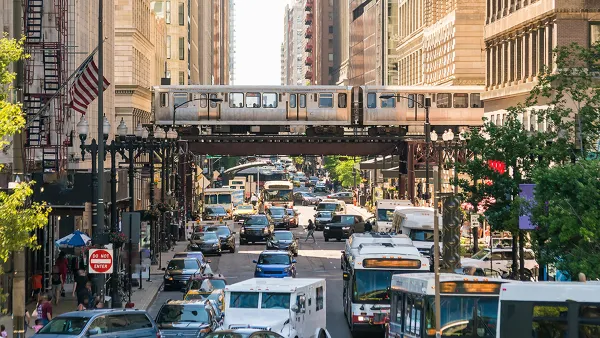
The third and final installment of Planetizen's examination of the role of the planning profession in both perpetuating and solving traffic congestion.
Congestion Pricing Study Taking Shape in Los Angeles
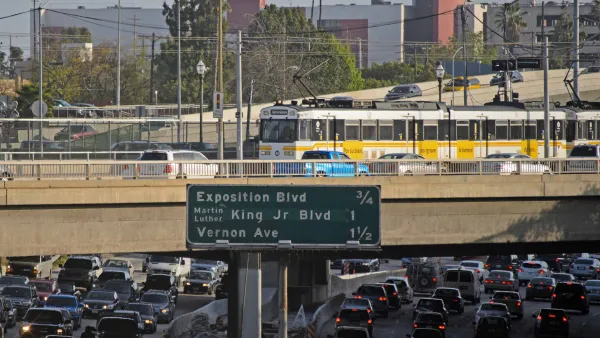
New York City is the furthest along with a congestion pricing scheme, but San Francisco and Los Angeles are catching up in California.
Congestion Pricing Scheme Up for Discussion in San Francisco
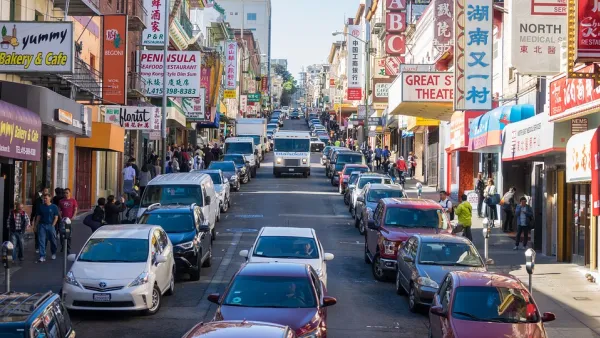
The public is providing feedback for the idea of a congestion pricing scheme that could charge as much as $12 to drive into Downtown San Francisco.

Planetizen Federal Action Tracker
A weekly monitor of how Trump’s orders and actions are impacting planners and planning in America.

The state-sanctioned urbicide of Austin
People don’t kill cities. Freeways do.

US to reduce Colorado River water deliveries to Mexico
A new Colorado Treaty amendment reduces Mexico’s Colorado River water allocation by 250,000 acre feet.

5 New England states march closer to 800 megawatt wind energy project
Securing federal approval for the project may be complicated under the Trump administration, which has historically been hostile towards domestic wind power.

Baltimore to break ground on $50 million Transit Priority Project
The project will bring faster bus trips, safer streets and better bike connections to Baltimore.

Airbnb launches $250 million 'last-dollar financing' housing accelerator, makes first investment in Austin
The company will put $6.4 million towards affordable housing development in Texas’ capital.

FREE Course: Walkable City 1: Why Walkability?
After describing his path towards focusing on walkability as the essence of good planning, Jeff Speck marches through his five principal reasons for making more walkable places.
Reinventing Malls: Planning Alchemy—Turning Gray Fields Into Gold
The course focuses on the opportunities and imperatives that shape reinvention of mall sites.

Eagle County Government
Harvard University Graduate School of Design
Nashville Planning Department
The Architects Foundation
University of Cincinnati Online
The Pocatello Development Authority
The Urban Renewal Agency of the City of Pocatello
Journal of the American Planning Association