With the second highest share of transit usage in the U.S., a new study three years in the making assesses the development opportunities around the New Jersey's 243 transit stations.


A new report published last week by New Jersey Future, looks at the development opportunities around the state's existing transit stations (243 in total), many of which have already seen an influx of new development in recent years. The Star-Ledger's Mike Frassinelli reports, "[t]he report by the smart growth and transportation choice advocacy group shows that what is old is new again in New Jersey as towns look to the past - their train stations - to make them desirable for a new generation of commuters who have eschewed their cars."
The report, the first of its kind in New Jersey, "could help policy-makers and developers put the right kinds of incentives - such as urban hub tax credits or Transit Village designations - in the right kinds of locations and help municipalities understand the strengths and weaknesses around their transit assets, said Elaine Clisham, New Jersey Future's director of communications."
Read the full story: Transit villages in N.J. blend past with future, and spark development
Study: New Jersey Surrounds Transit Stations With Single-Family Housing
According to the Streetsblog, one of the most transit-rich states in the country squanders the potential benefits of its infrastructure by surrounding stations with sprawling residential communities.
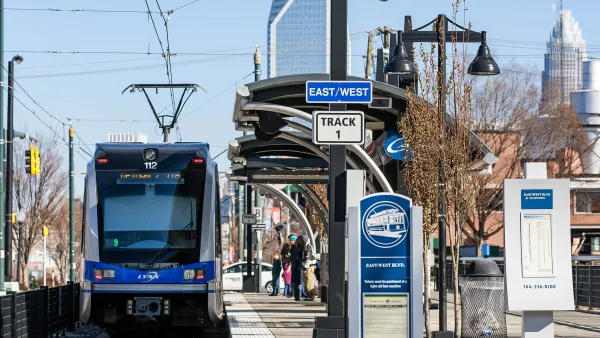
The triumph and tragedy of light rail in Charlotte
Like the iPhone, Charlotte's Blue Line represents a missed opportunity for the public to recoup the value it created.
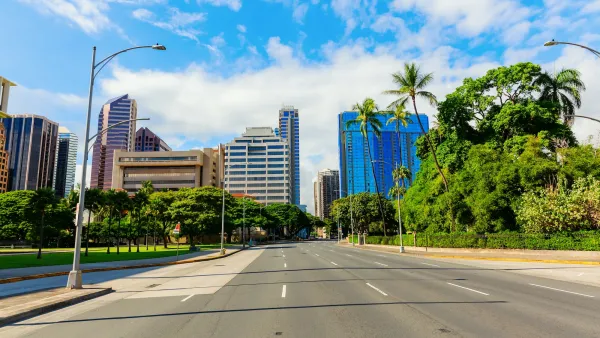
Paradise Lost, Paradise Found: Planning for People Rather Than Cars in Hawai'i
With better planning Honolulu can become an active travel paradise. Replace car sewers with pedestrian promenades, and build urban villages where it is easy to get around without driving.

Planetizen Federal Action Tracker
A weekly monitor of how Trump’s orders and actions are impacting planners and planning in America.

California plans to bury El Niño’s downpour
If the state plays its cards right, it may be able to store a billion acre-feet of El Niño’s water in aquifers.

Desperate measures: Advocates weigh draining Lake Powell to fill Colorado River
Draining the reservoir could reduce evaporation losses by a couple hundred thousand acre-feet.

Housing is the top priority of Seattle’s sole new councilmember
Jenks campaigned on building 1,000 new units of affordable housing.

New tax cuts may slash $1.5 billion in funding for Miami transit, public parks
Amendment 3 will save Miami-Dade homeowners $2,700 in 2028.

Arizona, Wisconsin, Pennsylvania hope to finally advance climate goals post-midterms
The three states have spent years under Republican or divided control.

FREE Course: Walkable City 1: Why Walkability?
After describing his path towards focusing on walkability as the essence of good planning, Jeff Speck marches through his five principal reasons for making more walkable places.
Reinventing Malls: Planning Alchemy—Turning Gray Fields Into Gold
The course focuses on the opportunities and imperatives that shape reinvention of mall sites.

City of Rosemead
Rutgers University, Edward J. Bloustein School of Planning and Public Policy
One Hundred Miles
University of Michigan School for Environment and Sustainability (SEAS)
Hunter College, City University of New York (CUNY)
The Architects Foundation
City of Cambridge
Montrose County
The Pocatello Development Authority