With the world's supposedly fashionable neighborhoods "increasingly as banal, antisocial and plain dull as any suburb," Feargus O'Sullivan explains why he's perfectly happy to have ditched inner London for the burbs.


"For all their reputation as hives of individuality, neighborhoods like my own city's Broadway Market
offer almost identical businesses to those you'd find in currently hip
city neighborhoods anywhere," argues O'Sullivan. "While the base materials (streets and
houses) may be different in, say, NYC's Greenpoint, Berlin's Neukölln,
or Madrid's Malasaña, the trappings of gentrification – expensive coffee
and bike shops, junk sold at a premium as 'vintage' and, soon after,
bitterly resented chain outlets – make these places seem increasingly
homogenous."
While O'Sullivan admits that Britain's suburbs - walkable, transit-served and historic - are not analogous to those in the U.S., his bile is more pointedly directed against the faux heterogeneity and diversity of "inner city honey pots."
"No
longer the offbeat choice for hard-up people who couldn't fit in
elsewhere, inner city living is now a ubiquitously promoted urban
fantasy, recreated ad nauseam in real estate brochures, newspaper trend pieces and ads for instant coffee."
Read the full story: Why I Moved Back to the Suburbs
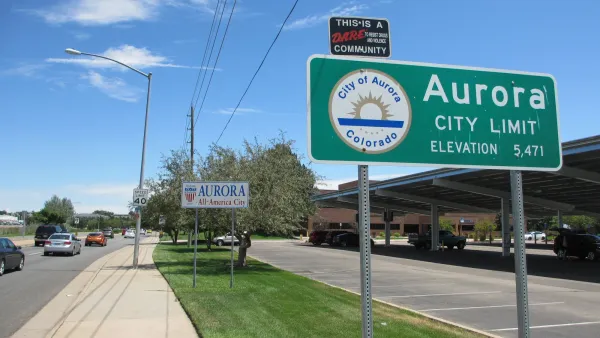
Mobile Social Services Address Gaps in Suburban Colorado
In the Denver suburb of Aurora, nonprofits are using 'mobile public spaces' to reach refugees settling in the autocentric community.
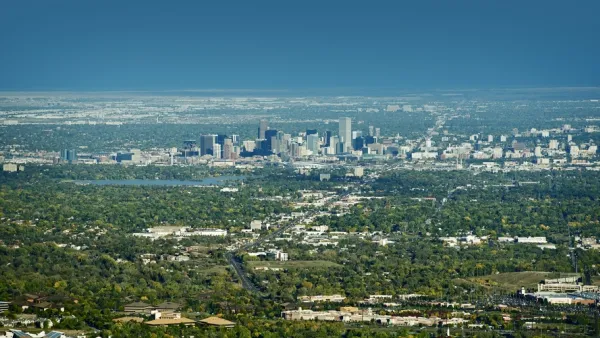
The Changing Demographics of Denver's Suburbs
The Colorado Demographer's Office is projecting big changes for the demographics of the suburban counties and cities surrounding Denver—even as overall growth for the region is expected to slow.
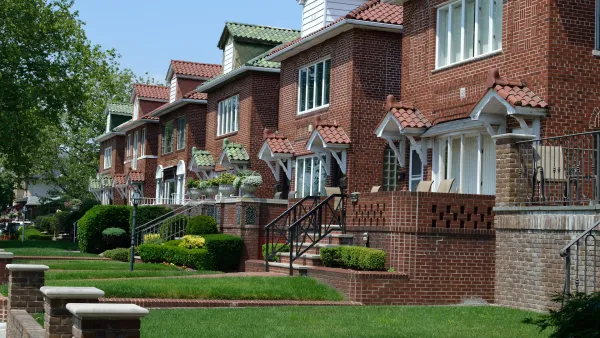
What Trump Gets Wrong About America’s Suburbs
The Trump administration’s talk about protecting the suburbs is based on misrepresentations of who really lives in suburbs and what these communities need.

Planetizen Federal Action Tracker
A weekly monitor of how Trump’s orders and actions are impacting planners and planning in America.

Washington state to charge fee to drivers with fuel-efficient cars
Revenue from the fee will go towards supporting the state’s highways.

Trump to blast ‘hydrocarbon highway’ through ‘world’s longest art gallery’
Environmental and historic preservation groups are suing to stop the project.

Minnesota Gold Line extension now has launch date
Plans to extend the Gold Line have existed since 2025.

Data centers need power – lower income, rural residents pay the price
In 2025, data centers paid only 38% of the energy infrastructure costs linked to their growth, with households, especially rural and low-income residents, bearing the remaining burden.

MBTA Green Line project moved to next phrase of CIG program
The modernization effort will cost $4.08 billion.

FREE Course: Walkable City 1: Why Walkability?
After describing his path towards focusing on walkability as the essence of good planning, Jeff Speck marches through his five principal reasons for making more walkable places.
Reinventing Malls: Planning Alchemy—Turning Gray Fields Into Gold
The course focuses on the opportunities and imperatives that shape reinvention of mall sites.

City of Charlotte
City of Rosemead
Rutgers University, Edward J. Bloustein School of Planning and Public Policy
University of Michigan School for Environment and Sustainability (SEAS)
Hunter College, City University of New York (CUNY)
The Architects Foundation
University District Partnership