The Bay State is terrific at attracting the leading young minds from around to world to its prestigious institutions of higher education. But when those students graduate, high housing prices are forcing them out of the state, writes Edward Glaeser.


Citing a recent article in the Globe, Glaeser notes that the number of Massachusetts homeowners between ages 25 and 34 dropped by nearly 32,000 - or 19 percent - between 2005 and 2010, and he blames the "over-regulation of new housing, especially in suburbs near the urban core," as the source of the affordability problem.
Glaeser argues that, "Our high prices ultimately reflect the Draconian limits on Boston-area construction. We don't lack land, but our rules don't let us build on that land. An overwhelming number of communities near Boston have enacted fearsome land use controls, including minimum lot sizes that are often over an acre, which make it all but impossible to produce significant numbers of starter homes."
He adds, "Massachusetts expertly protects middle-aged insiders, like myself, but shuts its door to younger outsiders. If we maintain our fortress mentality instead of allowing more building, the recent decline in younger homeowners will be just another missed warning signal."
Read the full story: Young workers can’t afford homes in the state

Cost of living too high? Planners to the rescue!
Excessive costs of living force many people to work more than optimal hours, leaving less time for family and fun. Local policies that favor affordable housing and transportation increase freedom, opportunity and happiness.
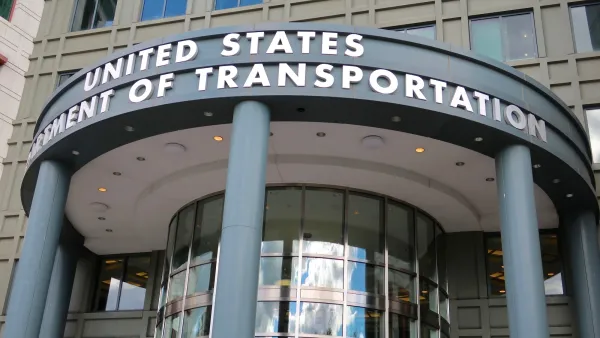
DOT Will Use AI to Write “Good Enough” Regulations: “We’re Flooding the Zone”
The agency wants to speed up the rulemaking process to as little as 30 days.
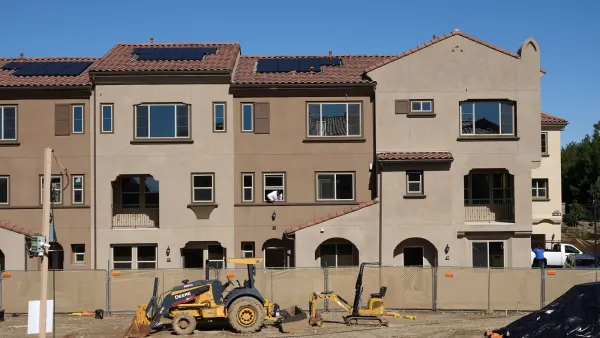
Senate Bill Calls for National Housing Emergency
If passed, the bill could trigger the use of the Defense Production Act to speed up production of construction materials.

Planetizen Federal Action Tracker
A weekly monitor of how Trump’s orders and actions are impacting planners and planning in America.

California plans to bury El Niño’s downpour
If the state plays its cards right, it may be able to store a billion acre-feet of El Niño’s water in aquifers.

Desperate measures: Advocates weigh draining Lake Powell to fill Colorado River
Draining the reservoir could reduce evaporation losses by a couple hundred thousand acre-feet.

Housing is the top priority of Seattle’s sole new councilmember
Jenks campaigned on building 1,000 new units of affordable housing.

New tax cuts may slash $1.5 billion in funding for Miami transit, public parks
Amendment 3 will save Miami-Dade homeowners $2,700 in 2028.

Arizona, Wisconsin, Pennsylvania hope to finally advance climate goals post-midterms
The three states have spent years under Republican or divided control.

FREE Course: Walkable City 1: Why Walkability?
After describing his path towards focusing on walkability as the essence of good planning, Jeff Speck marches through his five principal reasons for making more walkable places.
Reinventing Malls: Planning Alchemy—Turning Gray Fields Into Gold
The course focuses on the opportunities and imperatives that shape reinvention of mall sites.

City of Rosemead
Rutgers University, Edward J. Bloustein School of Planning and Public Policy
One Hundred Miles
University of Michigan School for Environment and Sustainability (SEAS)
Hunter College, City University of New York (CUNY)
The Architects Foundation
City of Cambridge
Montrose County
The Pocatello Development Authority