Shopping center landlords are having trouble renting their big-box spaces after the fall of Borders Group Inc., reflecting a larger shift in the way Americans shop, reports Kris Hudson.


The high number of vacancies where Borders bookstores used to operate highlights the difficulty in finding new tenants for big-box store centers. Of the spaces that have been leased to new tenants, the average rent is only 70% of what Borders used to pay.
According to Hudson, "Some industry watchers believe that big-box centers are facing problems that go beyond a weak economy. Rather, they suggest that these shopping centers are going to suffer long-term declines because Internet shopping offers more choice and greater ease."
"When [the big-box format] originated, it was about wide selection in a certain category," said Suzanne Mulvee, retail strategist at CoStar Group, a real-estate-research company. "They had the biggest selection, and that's why you'd go there. Now the biggest selection is online. So I am concerned about this sector long-term."
Read the full story: Big-Box Space Remains Hard to Fill
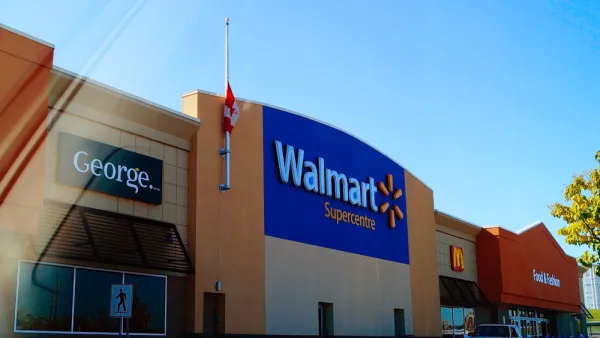
Opinion: When New Growth Is Really a 'Giant Ponzi Scheme'
Development that depends on subsidies is not fostering true growth and instead is a financial house of cards.
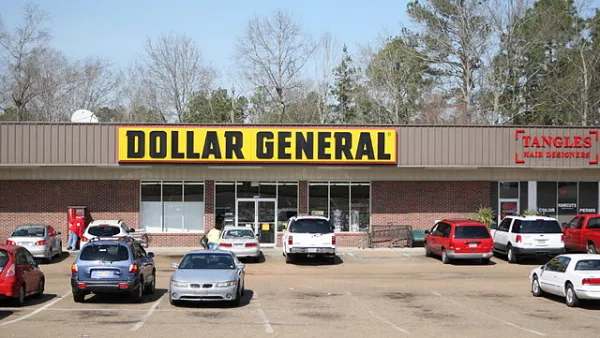
Dollar General Unveils Urban Format Store For Millennials
Now proposing to add another 900 stores in 2018, Dollar General continues to rapidly expand throughout the U.S. However, their push for a smaller more urban format is something seriously worth watching.
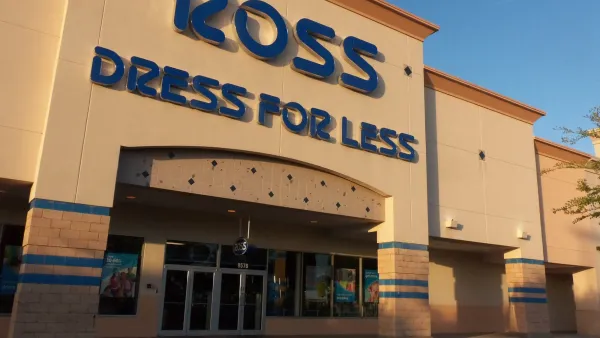
Ross May Be Immune from the Amazon Effect
Ross Stores continues its expansion in the face of a much-foretold retail apocalypse. The shopping experience it provides may be one reason it can stand up to Amazon.

Planetizen Federal Action Tracker
A weekly monitor of how Trump’s orders and actions are impacting planners and planning in America.

Eastern Nebraska is running out of electricity
Data centers and electrification are straining eastern Nebraska’s grid, throttling economic development.

Study reveals best places in the U.S. for cycling, walking
New research from Streetlight Data examines bicycle and pedestrian miles per capita in the 100 largest U.S. cities by population.

DSA members accuse Mamdani of 'abandoning values' over housing redevelopment
New York City's mayor plans to replace about 2,000 units of public housing with private, mixed-income housing.

All sides of BRT debate unhappy with CDOT’s most recent move
The Colorado Department of Transportation is no longer considering center-running bus lanes for Colorado Boulevard.

Massachusetts bogs generate both power, and cranberries
Putting solar panels above farmland is one way Massachusetts is advancing toward its goal of net-zero carbon emissions by 2050.

FREE Course: Walkable City 1: Why Walkability?
After describing his path towards focusing on walkability as the essence of good planning, Jeff Speck marches through his five principal reasons for making more walkable places.
Reinventing Malls: Planning Alchemy—Turning Gray Fields Into Gold
The course focuses on the opportunities and imperatives that shape reinvention of mall sites.

City of Rosemead
Rutgers University, Edward J. Bloustein School of Planning and Public Policy
One Hundred Miles
University of Michigan School for Environment and Sustainability (SEAS)
Hunter College, City University of New York (CUNY)
The Architects Foundation
City of Cambridge
The Pocatello Development Authority
The Urban Renewal Agency of the City of Pocatello