Yesterday was a bad day for Toronto mayor Rob Ford as his quest to see a proposed streetcar for Sheppard Avenue East replaced with a subway to to Scarborough was dashed by the City Council. Kelly Grant has the details.


Toronto's first-term mayor Rob Ford suffered a decisive defeat yesterday in his fight over the future of transit in the city, as "City council voted 24-19 in favour of building a $1-billion light-rail line on Sheppard Avenue East, scuttling Mr. Ford's promise of a subway to Scarborough."
According to Grant, "The decision came despite Mr. Ford making two passionate pleas for underground transit on the second day of a special transit meeting. In one of his most animated speeches since taking office, Mr. Ford shouted: 'People hate the St. Clair. They hate these streetcars. You can call them what you want. People want subways, folks. Subways, subways. They don't want these damn streetcars blocking up our city.'"
The light-rail vote was the latest in a series of defeats handed to Ford by the City Council, "which already this year has swept his allies off the Toronto Transit Commission, revived most of his predecessor's light-rail network and watered-down his budget."
In a post for Spacing Toronto, John Lorinc was more direct in his appraisal of Ford's political fiasco. "The Great Subway Battle of 2012™ was Mayor Rob Ford's to lose, and he lost it with such single-mindedness and determination that this episode may well go down in Toronto history as the textbook example of political self-immolation."
Read the full story: Toronto council votes for light-rail transit, kills Mayor Ford's subway plan
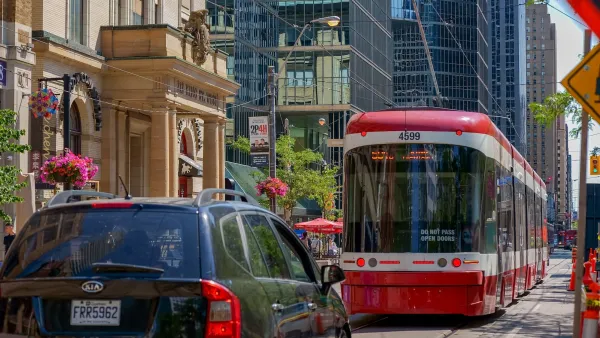
Toronto Man Beats Streetcar on Foot to Highlight Traffic Delays
Runner Mac Bauer says he hopes his project spurs the city to improve transit speed and reliability.
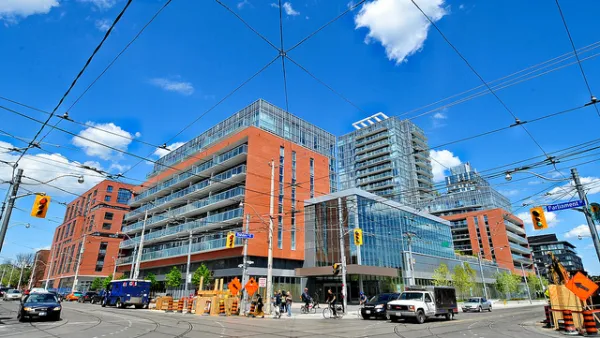
The Most and Least Expensive TOD in Toronto
A new study maps out affordability and inequality across Toronto's transit network.
Quiet Suburban Road Considered for Toronto's New Subway
Some are calling one of the proposed routes for an extended Scarborough subway route in Toronto a straw man. The discussion about the route provides insight into the city's current transit planning process.

Planetizen Federal Action Tracker
A weekly monitor of how Trump’s orders and actions are impacting planners and planning in America.

California plans to bury El Niño’s downpour
If the state plays its cards right, it may be able to store a billion acre-feet of El Niño’s water in aquifers.

Desperate measures: Advocates weigh draining Lake Powell to fill Colorado River
Draining the reservoir could reduce evaporation losses by a couple hundred thousand acre-feet.

Los Angeles just elected an urban planner as its mayor
Transportation analysts are optimistic that Raman will be more aggressive in addressing transit issues than Bass.

Mamdani’s pied-à-terre tax survives legal challenge
A panel of judges found that the plaintiffs failed to demonstrate injury as a result of New York City's implementation of the tax.

Eastern Nebraska is running out of electricity
Data centers and electrification are straining eastern Nebraska’s grid, throttling economic development.

FREE Course: Walkable City 1: Why Walkability?
After describing his path towards focusing on walkability as the essence of good planning, Jeff Speck marches through his five principal reasons for making more walkable places.
Reinventing Malls: Planning Alchemy—Turning Gray Fields Into Gold
The course focuses on the opportunities and imperatives that shape reinvention of mall sites.

City of Rosemead
Rutgers University, Edward J. Bloustein School of Planning and Public Policy
One Hundred Miles
University of Michigan School for Environment and Sustainability (SEAS)
Hunter College, City University of New York (CUNY)
The Architects Foundation
City of Cambridge
Montrose County
The Pocatello Development Authority