Americans are driving less and more efficiently, resulting in reduced gas consumption - yet prices are rising. What gives? For a nation that relies on oil imports despite surging drilling, the answer is unusual.


If you believe what the LA Times' business writer reports, gas prices are headed for an all-time high, reaching $4.50/gallon in CA by Easter. In these three articles from Oct. 18 to Nov. 12, Ronald White explains the paradox.
"U.S. exports of refined fuels, particularly diesel, have surged to fresh all-time highs, helping to keep the prices of gasoline and diesel in this country at record levels for this time of year."
From "Gas prices might be headed to record highs in 2012, analysts say": "The primary reason for the stubbornly high prices is growing demand in Latin and South America, which is driving record U.S. exports of fuel to those parts of the world, particularly in the form of diesel. U.S. refiners are also making more diesel at the expense of gasoline production, said Tom Kloza, chief oil analyst for the Oil Price Information Service."
"Demand for gasoline is down in the U.S. by 4% compared to last year, but global demand has more than made up for that," Kloza said. "If you want to blame someone for the high prices, blame South America."
Finally, in his Oct. 18th article, White notes the price-turnaround: "The increase comes after five straight weeks of declines at the pump."
"Highlighting what I've reiterated for weeks, we're seeing gasoline prices continue their volatile trend, and this time that trend is upward," said Patrick DeHaan, senior petroleum analyst for GasBuddy.com, where members report the lowest and highest prices they see."
Thanks to The Transit Coalition
Read the full story: Fuel exports hit record, helping keep gas prices high in U.S.
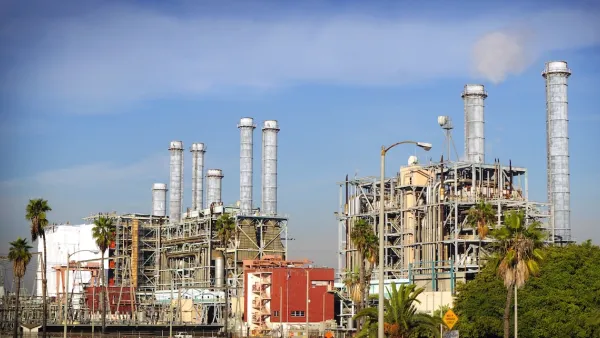
Even in California, Energy Affordability Trumps the Environment
A Democratic senator proposes to relax vehicle emissions standards in order to increase the supply of gasoline as the state's oil refinery capacity decreases, thus mitigating increases in gasoline prices in the state with the highest fuel prices.
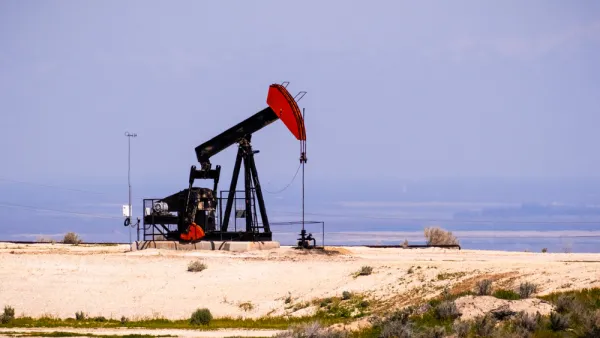
The Surprising Oil Tax in the Inflation Reduction Act
President Biden has made reducing gas prices paramount in his administration, so it was likely a surprise to hear a Republican senator last Sunday warn TV viewers that a revived and increased oil fee in the climate bill will increase their gas costs.
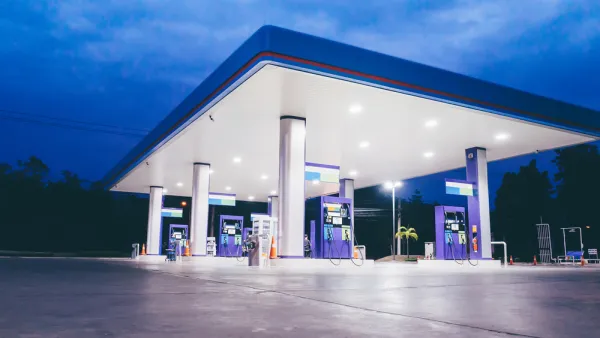
Biden Proposes Gas Tax Holiday to Reduce Gas Prices
President Biden asked Congress on June 22 to suspend federal fuel taxes, unchanged since 1993, for three months to provide motorists 'relief' at the pump. Additionally, he asked states to follow suit and for oil companies to increase refining.

Planetizen Federal Action Tracker
A weekly monitor of how Trump’s orders and actions are impacting planners and planning in America.

California plans to bury El Niño’s downpour
If the state plays its cards right, it may be able to store a billion acre-feet of El Niño’s water in aquifers.

Desperate measures: Advocates weigh draining Lake Powell to fill Colorado River
Draining the reservoir could reduce evaporation losses by a couple hundred thousand acre-feet.

Housing is the top priority of Seattle’s sole new councilmember
Jenks campaigned on building 1,000 new units of affordable housing.

New tax cuts may slash $1.5 billion in funding for Miami transit, public parks
Amendment 3 will save Miami-Dade residents homeowners $2,700 in 2028.

Arizona, Wisconsin, Pennsylvania hope to finally advance climate goals post-midterms
The three states have spent years under Republican or divided control.

FREE Course: Walkable City 1: Why Walkability?
After describing his path towards focusing on walkability as the essence of good planning, Jeff Speck marches through his five principal reasons for making more walkable places.
Reinventing Malls: Planning Alchemy—Turning Gray Fields Into Gold
The course focuses on the opportunities and imperatives that shape reinvention of mall sites.

City of Rosemead
Rutgers University, Edward J. Bloustein School of Planning and Public Policy
One Hundred Miles
University of Michigan School for Environment and Sustainability (SEAS)
Hunter College, City University of New York (CUNY)
The Architects Foundation
City of Cambridge
Montrose County
The Pocatello Development Authority