The Burj Khalifa in Dubai has one of the world's largest condensate recovery systems that diverts and reuses water from air conditioning. One World Trade Center in New York will use 30% less water and 20% less energy.


With today's buildings looking at ways of becoming more energy efficient as well as trying to exceed LEED certification, The Infrastructurist looks at 10 of the worlds tallest buildings and sees how they compare against each other.
"Although none of the world's tallest skyscrapers come close to being Living Buildings, they do vary widely in terms of their energy efficiency, and it's useful to know how they stack up against each other in terms of energy use," said Ysabel Yates.
Other buildings include Taipei 101 in Taiwan which has double-paned blue-green glazed curtain walls, offering heat and UV protection, and Shanghai World Financial Center that won 2008 Best Skyscraper award.
Read the full story: How Energy Efficient Are the World’s Tallest Buildings?


Study: Retrofitting Old Buildings Has Lower Total Carbon Footprint Than New Construction
A study of over a million Chicago buildings assessed their ‘embodied carbon’ footprint over their lifetimes, showing that demolishing an old building in favor of a new one almost always produced more emissions.

Chicago Updating its Climate Action Plan for 2022
Chicago Mayor Lori Lightfoot on Earth Day announced the forthcoming release of a new plan to reduce greenhouse gas emissions and prepare communities for the effects of climate change.
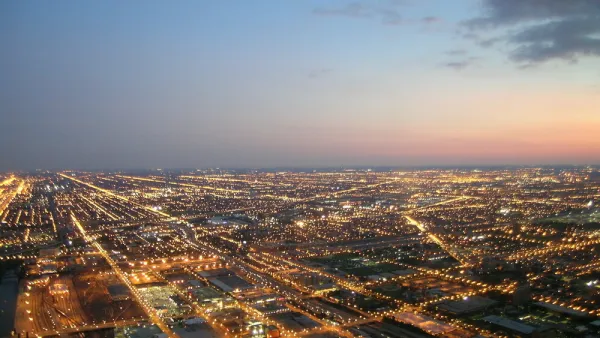
LEDs, Downward Lights Changing the Night in Chicago
The nighttime illumination of Chicago is almost finished with a complete overhaul of its streetlights, producing a dramatic effect in the nighttime environment of the city.

Planetizen Federal Action Tracker
A weekly monitor of how Trump’s orders and actions are impacting planners and planning in America.

Amtrak, CN end decades-long dispute with eight-year agreement
The new operating agreement establishes an updated framework for the companies to work together, including processes to resolve disputes.

Northwest rail fans eager for Sept. 30 debut of Amtrak’s Airo fleet
Get ready for that new train smell and more seats. But they won’t go faster or run more frequently on the Cascades route in Washington and Oregon.

LAX SkyLink opening delayed again, contractor won’t commit to new deadline
The project was supposed to open its doors to the public in 2023.

Caltrain may slash over one-third of its stations
If Bay Area voters reject two transit tax measures, Caltrain, BART and AC Transit will see steep service cuts.

A 'dangerous' precedent: North Carolina successfully pressures communities into voting for toll roads
Two mayors resigned from the Charlotte Regional Transportation Planning Organization after it voted in favor of the toll roads.

FREE Course: Walkable City 1: Why Walkability?
After describing his path towards focusing on walkability as the essence of good planning, Jeff Speck marches through his five principal reasons for making more walkable places.
Reinventing Malls: Planning Alchemy—Turning Gray Fields Into Gold
The course focuses on the opportunities and imperatives that shape reinvention of mall sites.

City of Thousand Oaks
City of Wisconsin Rapids
Harvard University Graduate School of Design
The Architects Foundation
University of Cincinnati Online
The Pocatello Development Authority
The Urban Renewal Agency of the City of Pocatello