New York City already has low parking maximums in place in much of Manhattan, but those maximums are riddled with loopholes. A set of reforms being developed by the Department of City Planning would tighten those regulations further.


Noah Kazis reports that parking maximums put in place in 1982 were a great leap forward, but are still riddled with loopholes:
"Special permits allow developers to skirt parking maximums, and parking minimums still impede the construction of affordable housing. Now, the Department of City Planning is undertaking a major rewrite of the Manhattan core parking regulations that could address these and other shortcomings."
"According to parking policy experts, DCP's Manhattan core proposal, as it appears in these documents, would be a significant improvement over the status quo, tightening the restrictions on parking and eliminating major loopholes and incentives that lead to parking construction."
Thanks to Noah Kazis
Read the full story: Promising Parking Reforms Brewing Inside Department of City Planning
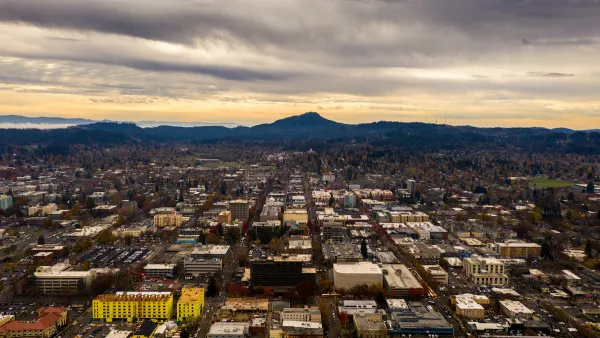
Eugene Ends Parking Minimums
In a move that complies with a state law aimed at reducing transportation emissions, Eugene amended its parking rules to eliminate minimum requirements and set maximum parking lot sizes.

San Diego Unbundles Parking, Eliminates Parking Minimums and Sets Maximums
In addition to replacing parking minimums with parking maximums of one space per unit in transit corridors, the city council went a step further by requiring unbundling, that is, requiring separate payment for parking from the housing.

Major Parking Reform Effort Moving Forward in San Diego
Civic San Diego and San Diego planning commissioners approved new parking standards that would eliminate minimums and set maximums of one space per multifamily unit. Those reforms and more must still be approved by the City Council.

Planetizen Federal Action Tracker
A weekly monitor of how Trump’s orders and actions are impacting planners and planning in America.

California plans to bury El Niño’s downpour
If the state plays its cards right, it may be able to store a billion acre-feet of El Niño’s water in aquifers.

Desperate measures: Advocates weigh draining Lake Powell to fill Colorado River
Draining the reservoir could reduce evaporation losses by a couple hundred thousand acre-feet.

Los Angeles just elected an urban planner as its mayor
Transportation analysts are optimistic that Raman will be more aggressive in addressing transit issues than Bass.

Mamdani’s pied-à-terre tax survives legal challenge
A panel of judges found that the plaintiffs failed to demonstrate injury as a result of New York City's implementation of the tax.

Eastern Nebraska is running out of electricity
Data centers and electrification are straining eastern Nebraska’s grid, throttling economic development.

FREE Course: Walkable City 1: Why Walkability?
After describing his path towards focusing on walkability as the essence of good planning, Jeff Speck marches through his five principal reasons for making more walkable places.
Reinventing Malls: Planning Alchemy—Turning Gray Fields Into Gold
The course focuses on the opportunities and imperatives that shape reinvention of mall sites.

City of Rosemead
Rutgers University, Edward J. Bloustein School of Planning and Public Policy
One Hundred Miles
University of Michigan School for Environment and Sustainability (SEAS)
Hunter College, City University of New York (CUNY)
The Architects Foundation
City of Cambridge
Montrose County
The Pocatello Development Authority