The Big Worm is a 2.2 mile elevated highway carving its way through South America's biggest city, carrying 80,000 vehicles a day past the bedroom windows of once elegant art deco apartment buildings.


Urban planners say that flattening it should be a priority if the city is to realize its modernization goals. At a recent conference on Sao Paulo's future, urban planners from New York, Barcelona and China told their Brazilian counterparts that the city requires a makeover. Projects should include expanding the subway, carving out underground highways, adding parks and revamping the airport.
This may be a vibrant and growing city, but it is also a 'planning mess,' writes Juan Forero. "A thousand new cars are introduced to traffic-choked streets each day. The subway system has roughly 60 stations and 50 miles of track; New York's has 468 stations and more than 800 miles of track. Business travelers rate Sao Paulo's international airport the worst on the continent."
Local residents are divided about a plan to flatten the 'Elevado,' and build a replacement thoroughfare underground. Perhaps an approach more indicative of a modern city would be to build a 'high line' style park for walkers and runners?
Read the full story: Sao Paulo's 'Big Worm,' An Elevated Highway, Must Go, Urban Planners Say

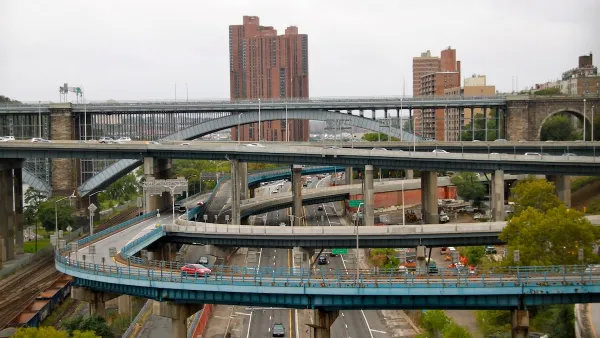
New York Scraps Cross Bronx Highway Expansion
In the wake of community opposition, the state DOT says it no longer plans to add a “traffic diversion” that would have added an elevated roadway next to the CBX.
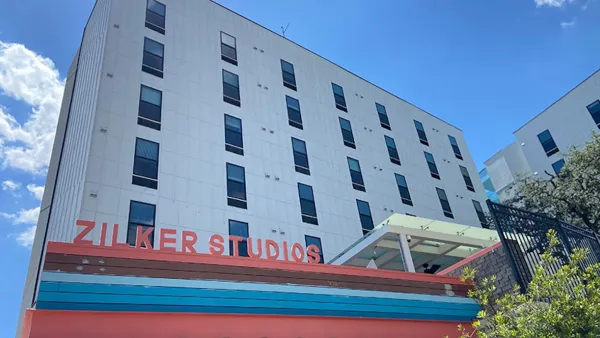
What Makes Affordable Housing Green?
There's no one way to determine what makes “green” housing. Here's a breakdown of the standards and considerations used by the affordable housing industry.
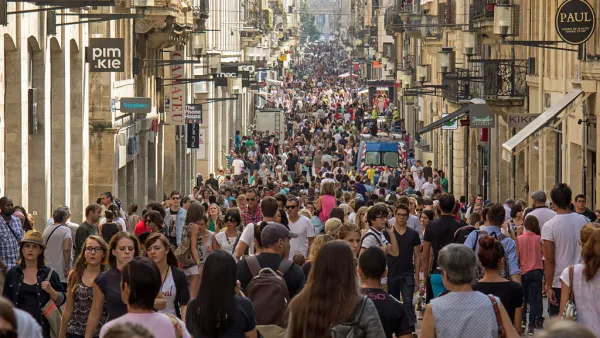
European Cities Act on Density
The sprawling mass of suburbia has been a disaster for the environment. But now smaller, denser cities herald a renaissance in city living.

Planetizen Federal Action Tracker
A weekly monitor of how Trump’s orders and actions are impacting planners and planning in America.

Amtrak, CN end decades-long dispute with eight-year agreement
The new operating agreement establishes an updated framework for the companies to work together, including processes to resolve disputes.

Judges permit Denver to divert 77,000 acre feet from the Colorado River for reservoir expansion
Overuse and climate change have caused the Colorado River’s water levels to plummet.

NYC DOT wants faster, more permanent street upgrades
The city is examining ways to build more concrete infrastructure without getting entangled in 'decades-long' projects.

'Something we’ve never seen before:' rising utility rates could strain city finances nationwide
Data centers, climate change and other factors have caused utility rates in the United States to increase by 38% since 2020.

Trump to overrule local leaders, lease millions of acres of America’s Pacific Island territories’ seafloors to mining companies
International law says that the Indigenous people of America’s territories have a right to prior and informed consent regarding projects that impact their countries.

FREE Course: Walkable City 1: Why Walkability?
After describing his path towards focusing on walkability as the essence of good planning, Jeff Speck marches through his five principal reasons for making more walkable places.
Reinventing Malls: Planning Alchemy—Turning Gray Fields Into Gold
The course focuses on the opportunities and imperatives that shape reinvention of mall sites.

Harvard University Graduate School of Design
KFH Group Inc.
Greater Baltimore Committee
The Architects Foundation
University of Cincinnati Online
The Pocatello Development Authority
The Urban Renewal Agency of the City of Pocatello