Ten years ago, Orenco Station outside Portland, Oregon was the model New Urbanist, transit-oriented development community. And while the project has had great success in creating community, it still hasn't lured commuters out of their cars.


Eric Jaffe reports on a recent article in the Journal of Urbanism on Orenco Station, written by sociologist Bruce Podobnik of Lewis and Clark College. Podobnik concludes"
"... while the neighborhood has achieved a heightened sense of community and successfully encouraged walking, most residents still rely on the single-occupancy vehicle - not mass transit - as their primary mode of commute."
And yet, Jaffe writes, "...[t]he findings are not entirely bleak. Only a third of Orenco Station inhabitants say they never use mass transit, and more than half of them ride transit at least once a week..."
Read the full story: The Limits of New Urbanism in Portland's Orenco Station

Residents of Landmark TOD Still Driving
While more residents walk or bike for nonwork trips, Orenco Station residents are still driving to work at a rate comparable to other area suburbs.
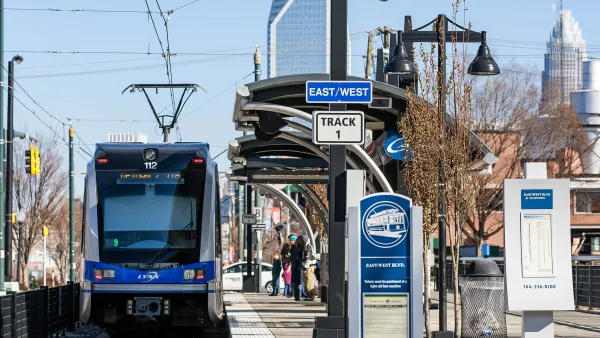
The triumph and tragedy of light rail in Charlotte
Like the iPhone, Charlotte's Blue Line represents a missed opportunity for the public to recoup the value it created.
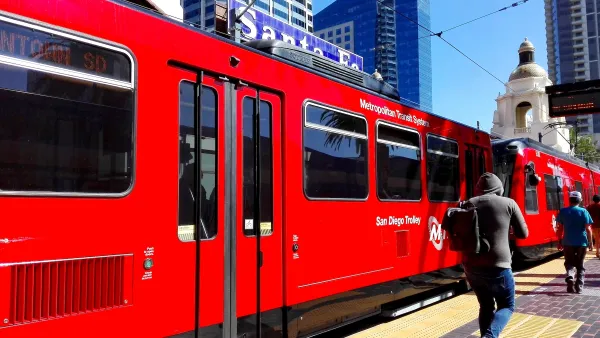
San Diego wants to limit upzoning law to just 16% of transit-adjacent parcels
The city's planning director says some areas are unfit for immediate upzoning due to a lack of resources or hazards such as wildfire risk.

Planetizen Federal Action Tracker
A weekly monitor of how Trump’s orders and actions are impacting planners and planning in America.

Chicago breaks ground on $3 billion megadevelopment
The new neighborhood, titled Foundry Park, will one day host 3,700 residences.

Denver is solving homelessness. Why aren't the rest of us?
Since 2023, Denver's street homeless population has decreased by 64%, proving that effective tools exist to support those in need of housing.

MBTA is using AI to catch drivers who park illegally
The transit agency is working in partnership with Hayden AI, and hopes the technology will improve transit safety across its network.

LA to bring bus rapid transit to its busiest corridor
The Vermont BRT line will feature 12.4 miles of dedicated bus lanes along the Vermont corridor.

The road design trend that's killing Americans
“Stroads,” street-road hybrids that channel high-speed traffic through residential areas, are increasingly common and often deadly for pedestrians.

FREE Course: Walkable City 1: Why Walkability?
After describing his path towards focusing on walkability as the essence of good planning, Jeff Speck marches through his five principal reasons for making more walkable places.
Reinventing Malls: Planning Alchemy—Turning Gray Fields Into Gold
The course focuses on the opportunities and imperatives that shape reinvention of mall sites.

City of Rosemead
Rutgers University, Edward J. Bloustein School of Planning and Public Policy
One Hundred Miles
The Architects Foundation
University of Cincinnati Online
Montrose County
Northern Illinois Transit Authority (NITA)
The Pocatello Development Authority