For a city of over 16,000 people per square mile, less than 7% of Hong Kong's land is designated for residential use. Subdivided apartments - aka "coffin units" - totaling 150 square feet aren't uncommon, reports The Wall Street Journal.


That Hong Kong appears to be completely insulated from the pervasive global housing crisis exacerbates the problem of overinflated real estate value. To the extent that its housing market reflects China's formidable economy, home prices in Hong Kong show no sign of attrition, having skyrocketed nearly 80% since 2008.
Polly Hui writes, "With demand for housing so hot, landlords are scrambling to take advantage. Subdivided apartments aren't illegal in Hong Kong, but they are subject to structural and fire-safety regulations," which are quite lax at best as evident by frequent fire incidents.

"Hong Kong isn't short of land. Our land-use design has failed to catch up with the changes in society," explains University of Hong Kong's professor Chau Kwong-wing in the article.
Read the full story: Hong Kong Faces Renewed Pressure Over Its Housing Fatal Tenement Fire Highlights Dire Conditions as High Costs Force City's Poor
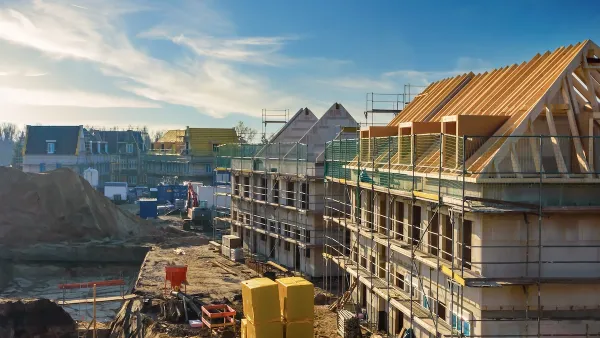
To Build More Housing, Cities Must Be Smarter in How They Use Land
How strategic land use policy decisions can alleviate the housing crisis and limit unsustainable sprawl.

Two Simple Sentences Could Reshape Suburban America
A seemingly innocuous sentence embedded in almost every subdivision ordinance across the United States has disconnected neighborhoods and made cities unwalkable. Two sentences could change that.
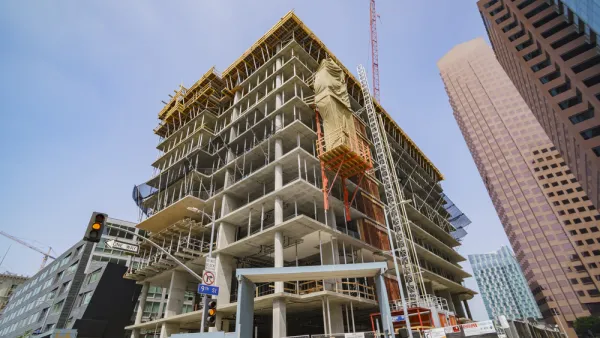
Downtown L.A. Sees Vacancies Rise and Homeless Populations Grow
There's plenty of housing available in Downtown L.A. for the wealthy but, while those apartments sit empty, many looking for housing find costs too high to pay.

Planetizen Federal Action Tracker
A weekly monitor of how Trump’s orders and actions are impacting planners and planning in America.

Washington state to charge fee to drivers with fuel-efficient cars
Revenue from the fee will go towards supporting the state’s highways.

Study reveals best places in the U.S. for cycling, walking
New research from Streetlight Data examines bicycle and pedestrian miles per capita in the 100 largest U.S. cities by population.

Mamdani unveils his ‘most ambitious bus lane project’ so far
The city has added two new bus lanes, which it expects to speed up tens of thousands of bus riders’ commutes.

New Jersey and New York suggest $10.3 billion budget for transit
Some of the budget is dedicated to replacing Manhattan's Midtown Bus Terminal.

States split over EPA’s proposal to drop greenhouse gas rules for power plants
The proposed rule drew over 165K comments, including from officials, health and environmental groups, and private citizens.

FREE Course: Walkable City 1: Why Walkability?
After describing his path towards focusing on walkability as the essence of good planning, Jeff Speck marches through his five principal reasons for making more walkable places.
Reinventing Malls: Planning Alchemy—Turning Gray Fields Into Gold
The course focuses on the opportunities and imperatives that shape reinvention of mall sites.

City of Charlotte
City of Rosemead
Rutgers University, Edward J. Bloustein School of Planning and Public Policy
University of Michigan School for Environment and Sustainability (SEAS)
Hunter College, City University of New York (CUNY)
The Architects Foundation
University District Partnership
City of Cambridge
The Pocatello Development Authority