Bicycling is growing in popularity in the U.S., but it still isn't considered a serious form of transportation as it is in Europe, according to this piece from Yale Environment 360.


Writer Elisabeth Rosenthal compares the cycling experience of the U.S. with European cities and finds major differences.
"When we talk about "bike friendly" cities in the United States, most are mere college towns and none boast more than 6 per cent bike commuters. According to the United States Census Bureau's 2009 community survey, 76 percent of Americans drive to work alone in their cars each day, while only 0.6 percent arrive by bicycle.
What's going on here? One key component that has enabled Europe's successful bike revolution, I think, is not infrastructure, but sociology: While Americans still view bicycling as a form of exercise or recreation, a tectonic shift in attitudes has taken place in many parts of Europe, where people now regard bicycling as a serious form of urban mass transportation."
Read the full story: On Biking, Why Can’t the U.S. Learn Lessons from Europe?
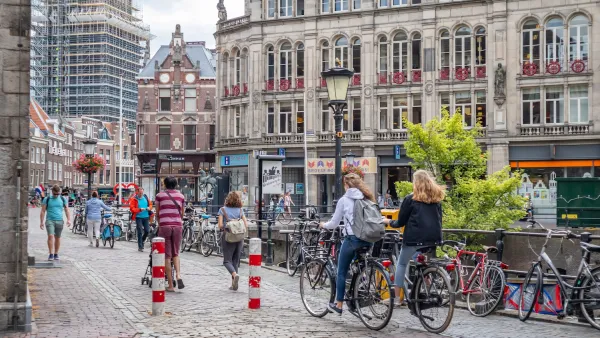
2025's 30 Most Bike-friendly Cities
Copenhagenize has released its list of top cities for cyclists. Spoiler alert: the United States doesn’t make the list.
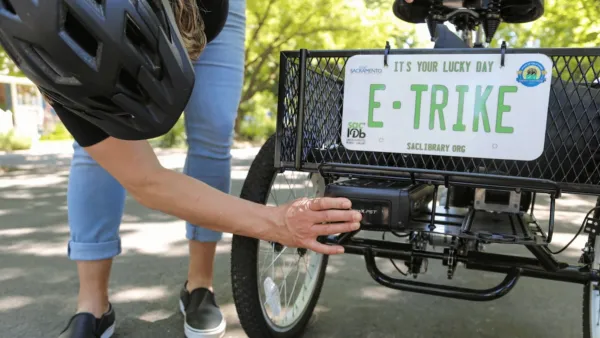
Bicycles and Books — In Sacramento, Libraries Now Offer Both
Adult library card holders can check out e-bikes and e-trikes for up to one week.
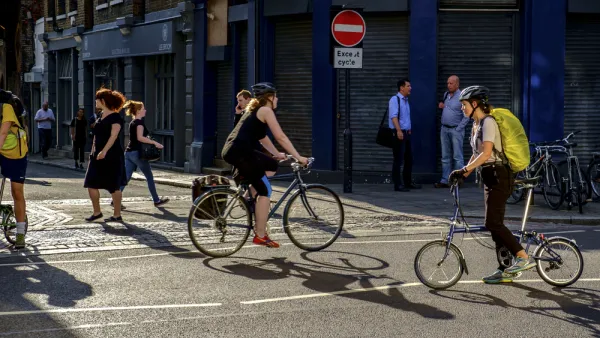
How Boosting Biking Could Improve London's Economy
A new study outlines the potential economic, environmental, and public health benefits of increasing cycling mode share in London, which has pledged to achieve net-zero emissions by 2030.

Planetizen Federal Action Tracker
A weekly monitor of how Trump’s orders and actions are impacting planners and planning in America.

California plans to bury El Niño’s downpour
If the state plays its cards right, it may be able to store a billion acre-feet of El Niño’s water in aquifers.

Desperate measures: Advocates weigh draining Lake Powell to fill Colorado River
Draining the reservoir could reduce evaporation losses by a couple hundred thousand acre-feet.

US buildings threatened, destroyed by fires set to triple by 2060
Researchers found a high fire risk for socioeconomically vulnerable neighborhoods in the American West.

LA residents may be allowed to paint their own crosswalks
Councilwoman Katy Yaroslavsky put out a motion instructing the Los Angeles Department of Public Transportation to study the feasibility of allowing volunteers to paint crosswalks.

Dallas moves to overhaul its zoning code
The city's zoning reform will allow more multi-family and mixed-use developments.

FREE Course: Walkable City 1: Why Walkability?
After describing his path towards focusing on walkability as the essence of good planning, Jeff Speck marches through his five principal reasons for making more walkable places.
Reinventing Malls: Planning Alchemy—Turning Gray Fields Into Gold
The course focuses on the opportunities and imperatives that shape reinvention of mall sites.

City of Rosemead
Rutgers University, Edward J. Bloustein School of Planning and Public Policy
One Hundred Miles
Hunter College, City University of New York (CUNY)
The Architects Foundation
University of Cincinnati Online
City of Cambridge
Montrose County
The Pocatello Development Authority