A proposal to cut transportation funding by chairman of the House transportation committee John Mica (R-Fla.) received wide criticism from the Democrat counterpart.


Ashley Halsey III of The Washington Post reports: "Mica's goal is to match spending to the revenue that flows into the Highway Trust Fund, primarily from the federal gas tax. He said he believes that could provide $35 billion for each of six years, which can be leveraged into $75 billion a year."
She continues, "Mica says the more-than-doubling of the available funds can be achieved by encouraging public-private construction projects, consolidating or eliminating about 70 federal programs, helping fund state infrastructure and streamlining federal requirements to speed completion of projects."
Characterizing the Mica bill as "fantasy funding," the Democrats support a two-year blueprint that calls for a $115 billion investment in transportation infrastructure. "We need $87 billion just to maintain the existing transit system, just to maintain the existing highways and bridges in this country," says Peter DeFazio (D-Ore.) in the article.
Read the full story: Fiery words over GOP proposal to cut transportation funds
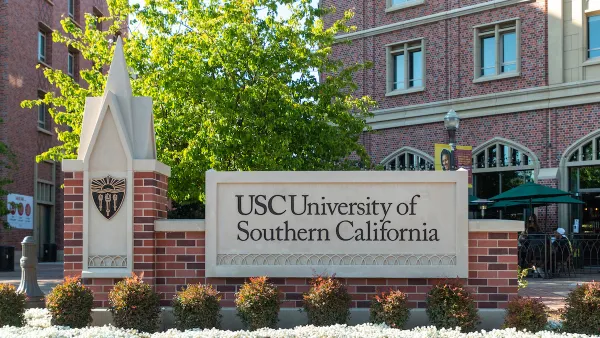
Sustainability Expert Becomes Dean of USC’s School of Public Policy
Chris Boone, a sustainability leader, becomes dean of the USC Price School of Public Policy, where he aims to advance interdisciplinary solutions and sustainability initiatives while building on the school’s legacy of public policy leadership.
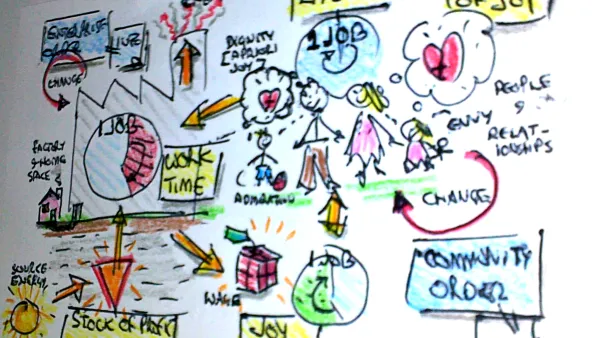
APA Releases its First Guide to Equity
The American Planning Association (APA) makes a clear statement that planners are especially suited to address matters of social equity.
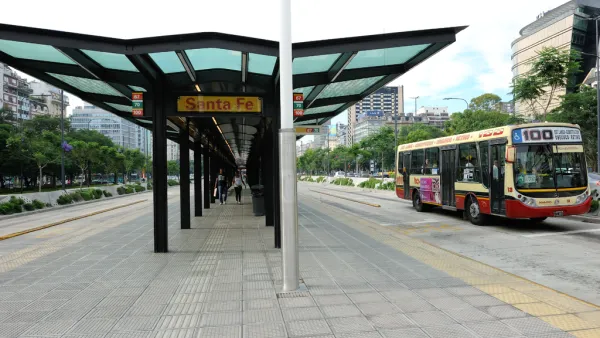
Cities' Role in Climate Governance and Global Policy: A Dispatch from the Urban20
In a dispatch from the Urban 20 Mayoral Summit, Jocelyn Perry and Bill Burke-White write about cities' role in climate governance and public policy.

Planetizen Federal Action Tracker
A weekly monitor of how Trump’s orders and actions are impacting planners and planning in America.

Eastern Nebraska is running out of electricity
Data centers and electrification are straining eastern Nebraska’s grid, throttling economic development.

Washington state to charge fee to drivers with fuel-efficient cars
Revenue from the fee will go towards supporting the state’s highways.

Instead of building new housing, LA developers are turning mansions into mega-mansions
In the richest areas, the number of houses valued at $30 million with demolition permits has skyrocketed since 2018.

Illinois considers spending $1 billion in taxpayer money on data center
A quantum computing campus and data center are currently under construction in Chicago.

As development costs rise, Boston moves to lessen affordable housing requirements
The Boston Zoning Commission and the City Council still need to approve Boston Mayor Michelle Wu’s proposed changes

FREE Course: Walkable City 1: Why Walkability?
After describing his path towards focusing on walkability as the essence of good planning, Jeff Speck marches through his five principal reasons for making more walkable places.
Reinventing Malls: Planning Alchemy—Turning Gray Fields Into Gold
The course focuses on the opportunities and imperatives that shape reinvention of mall sites.

City of Charlotte
City of Rosemead
Rutgers University, Edward J. Bloustein School of Planning and Public Policy
University of Michigan School for Environment and Sustainability (SEAS)
Hunter College, City University of New York (CUNY)
The Architects Foundation
University District Partnership
City of Cambridge
The Pocatello Development Authority