The new "Eco-Drive Index" offers a mode of comparing the average monthly environmental impact by an individual U.S. driver who has purchased a new vehicle that month.


The standard caveats apply, such as the unpredictability of the type of fuel used, but this index could indicate if the fuel economy of new cars is improving or not. According to the study, emissions are indeed decreasing, with a 14% reduction of emissions per driver of newly purchased vehicles between October of 2007 and April of 2011.
The index was developed by Michael Sivak and Brandon Schoettle of the University of Michigan's Transportation Research Institute.
Itir Sonuparlak of The City Fix comments, "Although the market's current vehicles have better fuel-efficiency than that of previous vehicles, we are a long way from cutting our carbon emissions in a meaningful and effective way."
Thanks to Jeffrey Riecke
Read the full story: Calculating the Environmental Impact of Driving in the United States

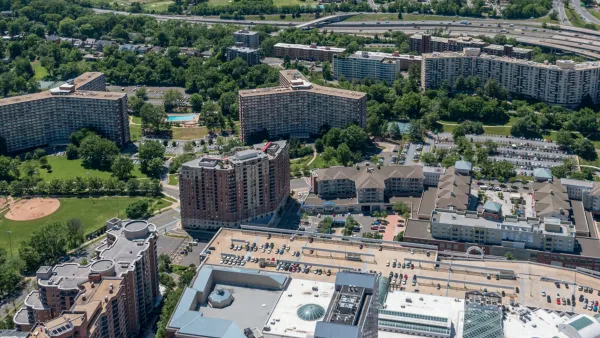
How one Arlington YIMBY used 'homebrew econometrics' to lobby for density
An upzoning proposal for Pentagon City could bring in an additional $8 million to $11 million in tax revenue.

NYC Congestion Pricing Revenue Will Fund up to 1,000 Hybrid Refrigerated Trucks
Traffic to the Hunts Point Produce Market causes increased rates of asthma in surrounding neighborhoods.

Florida Farm Bill Blocks Local Bans on Gas-Powered Tools
The law also paves the way for agricultural uses on land previously designated for conservation.

Planetizen Federal Action Tracker
A weekly monitor of how Trump’s orders and actions are impacting planners and planning in America.

Amtrak, CN end decades-long dispute with eight-year agreement
The new operating agreement establishes an updated framework for the companies to work together, including processes to resolve disputes.

Judges permit Denver to divert 77,000 acre feet from the Colorado River for reservoir expansion
Overuse and climate change have caused the Colorado River’s water levels to plummet.

Atlanta City Council unanimously backs $3.5 billion Beltline light rail project
The resolution was drafted after Atlanta Mayor Andre Dickens pulled support for the Atlanta Streetcar extension last year.

SEPTA to bring nearby frequent transit to over 1 million new riders as part of decade-long plan
The agency's Accelerate plan will also bring frequent transit to twice the amount of jobs that are currently located near it.

NYC plants over 18,000 trees, the most new foliage in a decade
Many of the trees were planted in communities vulnerable to extreme heat.

FREE Course: Walkable City 1: Why Walkability?
After describing his path towards focusing on walkability as the essence of good planning, Jeff Speck marches through his five principal reasons for making more walkable places.
Reinventing Malls: Planning Alchemy—Turning Gray Fields Into Gold
The course focuses on the opportunities and imperatives that shape reinvention of mall sites.

City of Thousand Oaks
City of Wisconsin Rapids
Harvard University Graduate School of Design
The Architects Foundation
University of Cincinnati Online
The Pocatello Development Authority
The Urban Renewal Agency of the City of Pocatello