Want to prevent crime and keep people safe in traffic? Jan Gehl says the solution is to mix up pedestrians, bikes and cars into "shared spaces."


Famed architect Jan Gehl presents excerpts from his book Cities for People over at Streetsblog. This time, he's focusing on street types and traffic solutions, and (of course) taking a human-oriented approach:
"A number of recent urban planning ideologies deriving from accident statistics contend that the risk of accident can be reduced by physically mixing types of traffic in the same street under the heading of 'shared space.'
The underlying idea of these so-called shared streets is that they will give trucks, cars, motorcycles, bicycles and pedestrians of all ages the opportunity to travel quietly, side by side and with good eye contact. Serious accidents will rarely occur under such conditions, or so it is thought, because pedestrians and bicyclists need to be extra vigilant at all times."
Read the full story: Danish Architect Jan Gehl on Cities for People: The Safe City

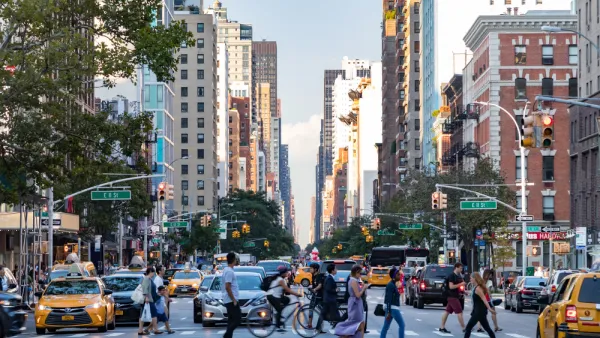
NYC Congestion Pricing May Be Saving Lives
According to preliminary data, crashes and injuries dropped dramatically within the city’s new congestion relief zone.

Op-Ed: Planners Could Do More to Encourage Healthy Communities
In many locales, instruments like traffic studies take pedestrian health into little account. According to Lark Lo, healthy communities haven't been much of a priority at all.
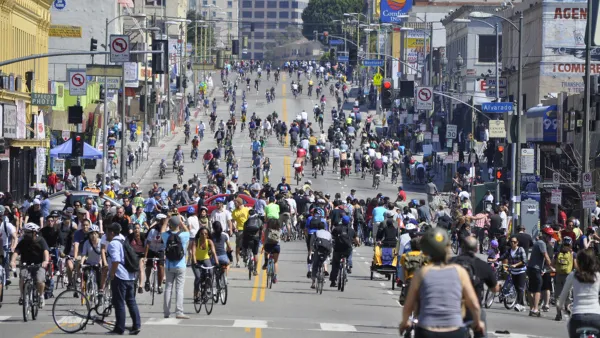
Open Streets Events Enjoy Coast-to-Coast Popularity
New York City and San Jose have expanded or added rules that temporarily close some of their streets to automobile traffic. This continues a string of successes for the open streets movement.

Planetizen Federal Action Tracker
A weekly monitor of how Trump’s orders and actions are impacting planners and planning in America.

Amtrak, CN end decades-long dispute with eight-year agreement
The new operating agreement establishes an updated framework for the companies to work together, including processes to resolve disputes.

Judges permit Denver to divert 77,000 acre feet from the Colorado River for reservoir expansion
Overuse and climate change have caused the Colorado River’s water levels to plummet.

Atlanta City Council unanimously backs $3.5 billion Beltline light rail project
The resolution was drafted after Atlanta Mayor Andre Dickens pulled support for the Atlanta Streetcar extension last year.

SEPTA to bring nearby frequent transit to over 1 million new riders as part of decade-long plan
The agency's Accelerate plan will also bring frequent transit to twice the amount of jobs that are currently located near it.

NYC plants over 18,000 trees, the most new foliage in a decade
Many of the trees were planted in communities vulnerable to extreme heat.

FREE Course: Walkable City 1: Why Walkability?
After describing his path towards focusing on walkability as the essence of good planning, Jeff Speck marches through his five principal reasons for making more walkable places.
Reinventing Malls: Planning Alchemy—Turning Gray Fields Into Gold
The course focuses on the opportunities and imperatives that shape reinvention of mall sites.

City of Thousand Oaks
City of Wisconsin Rapids
Harvard University Graduate School of Design
The Architects Foundation
University of Cincinnati Online
The Pocatello Development Authority
The Urban Renewal Agency of the City of Pocatello