Once thought to be only needed in dense inner cities, underground parking lots are being built now in suburban areas to reduce the use of space in tightening quarters.


In some areas, like the Washington D.C. suburb of North Bethesda, pulling into an underground parking lot to buy groceries is nearly sacrilege for some residents.
"Such complaints highlight a cultural shift taking place as planners transform parts of the sprawling suburbs into urban hubs where the car will no longer be king. The vast parking lots born out of the 20th century suburban boom, particularly those near Metrorail stations, are giving way to more clusters of high-rise office buildings, condominiums and stores where people can walk more easily or park once for multiple activities.
Urban planners say the change is the only way the crowded Washington region can absorb unrelenting population growth without making the area's stifling traffic even worse. Eliminating traditional parking lots, they say, also will alleviate environmental damage that occurs when rainwater runs off warm, dirty asphalt and eventually into streams."
Read the full story: Suburbs take an urban turn as developers plan more underground parking

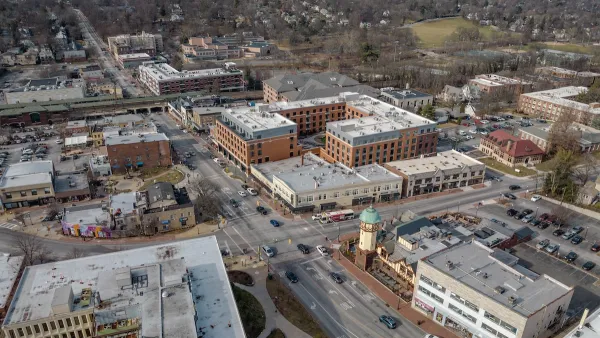
Off-Street Parking in the Midburbs
In several New Jersey cities, eliminating parking requirements has boosted local businesses.
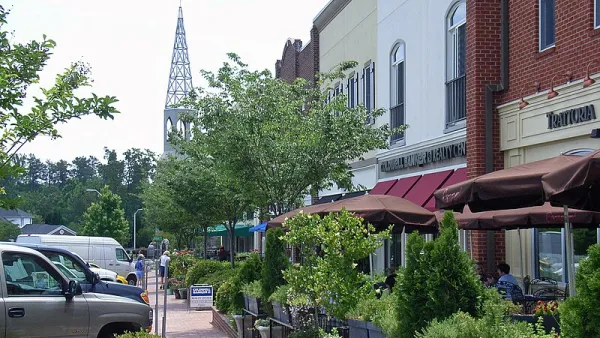
A ‘New Urbanism’ Travelogue
I visited three New Urbanist developments in North Carolina. Here's what I liked, what I didn't like, and what I learned.
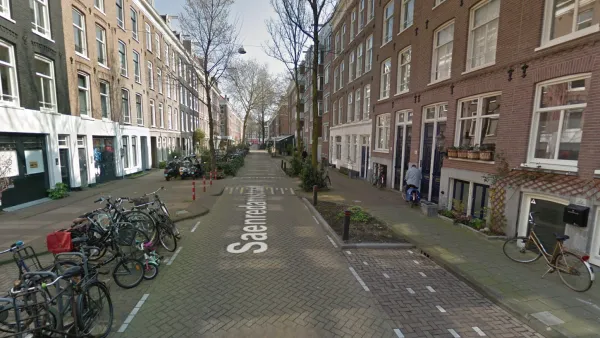
Watch: How to Remove Thousands of Parking Spaces
What the city of Amsterdam will gain by removing cars from on-street parking space.

Planetizen Federal Action Tracker
A weekly monitor of how Trump’s orders and actions are impacting planners and planning in America.

Amtrak, CN end decades-long dispute with eight-year agreement
The new operating agreement establishes an updated framework for the companies to work together, including processes to resolve disputes.

Northwest rail fans eager for Sept. 30 debut of Amtrak’s Airo fleet
Get ready for that new train smell and more seats. But they won’t go faster or run more frequently on the Cascades route in Washington and Oregon.

NYC to turn city-owned property into thousands of homes
The city has scheduled a public hearing regarding the development for October.

Buses travel at 5mph along this route in NYC. The Bronx's first-ever busway looks to change that
Prior to the busway, buses on the Bx36 route traveled as slowly as 5 miles per hour.

Pittsburg launches 'EZ permits,' aims for one-day turnaround for low-risk permits
The pilot ‘fast lane’ for permits is part of a bundle of modernization efforts for Pittsburg’s permitting process.

FREE Course: Walkable City 1: Why Walkability?
After describing his path towards focusing on walkability as the essence of good planning, Jeff Speck marches through his five principal reasons for making more walkable places.
Reinventing Malls: Planning Alchemy—Turning Gray Fields Into Gold
The course focuses on the opportunities and imperatives that shape reinvention of mall sites.

City of Thousand Oaks
City of Wisconsin Rapids
Harvard University Graduate School of Design
The Architects Foundation
University of Cincinnati Online
The Pocatello Development Authority
The Urban Renewal Agency of the City of Pocatello