In the latest installment of a year-long series about Los Angeles-focused books, Los Angeles Times architecture critic Christopher Hawthorne reads the 1981 book "L.A. Freeway: An Appreciative Essay," by David Brodsly.


"For most of "L.A. Freeway," Brodsly maintains a scholarly detachment in examining how various freeways were planned and paid for. But occasionally he drifts into Banhamesque reverie. ("Driving the freeway can create a rare, and distinctly urban, moment of joy when the car drives well, the freeway is uncrowded, and there is a good song on the radio.") And at several points he directly takes on the relationship between freeways and L.A.'s civic character.
Brodsly argues that the freeway system has radically "democratized transportation" in Southern California. He quotes an essay from the New York Times magazine making the case that in Los Angeles "the freeway allows you to create your own life. Your community is formed not by geography or community but by common interests."
He also looks at the alienation and separation freeway travel creates, and how that has affected the culture of the city.
Read the full story: Reading L.A.: David Brodsly's 'L.A. Freeway'
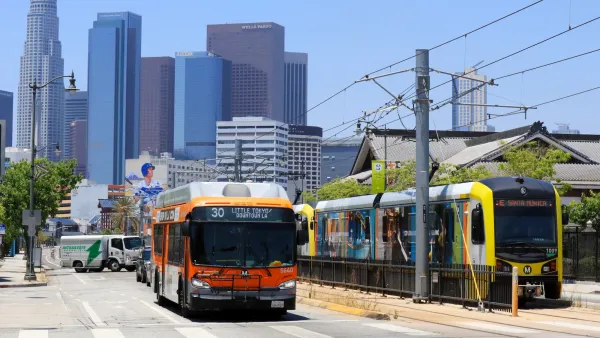
LA Metro Increases Highway Expansion Budget by 40%
Metro has plans to expand freeways including the 5, 105, and 405, among others.
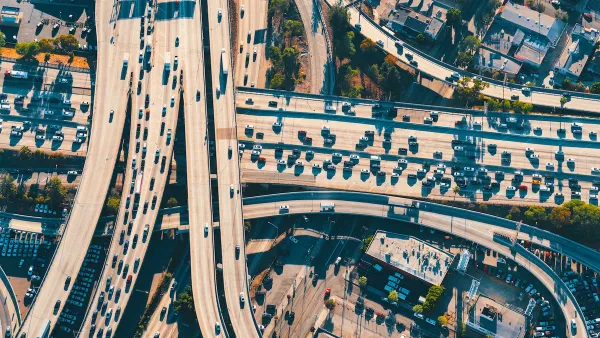
Audit: Caltrans Ignored Red Flags Before Freeway Fire
A lax inspection schedule contributed to the hazardous conditions that led to the massive blaze that shut down Interstate 10 in Los Angeles last year.
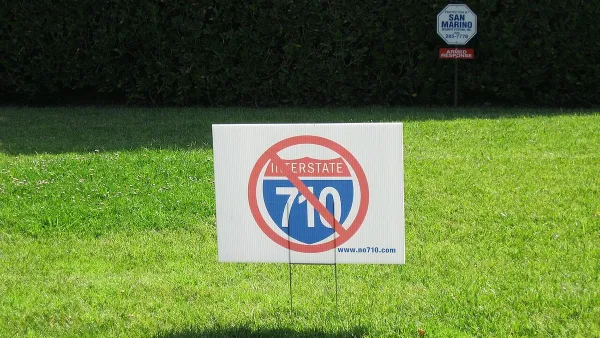
LA Metro Board Approves New 710 Freeway Plan
The newest plan for the 710 corridor claims it will not displace any residents.

Planetizen Federal Action Tracker
A weekly monitor of how Trump’s orders and actions are impacting planners and planning in America.

Eastern Nebraska is running out of electricity
Data centers and electrification are straining eastern Nebraska’s grid, throttling economic development.

Washington state to charge fee to drivers with fuel-efficient cars
Revenue from the fee will go towards supporting the state’s highways.

Instead of building new housing, LA developers are turning mansions into mega-mansions
In the richest areas, the number of houses valued at $30 million with demolition permits has skyrocketed since 2018.

Illinois considers spending $1 billion in taxpayer money on data center
A quantum computing campus and data center are currently under construction in Chicago.

As development costs rise, Boston moves to lessen affordable housing requirements
The Boston Zoning Commission and the City Council still need to approve Boston Mayor Michelle Wu’s proposed changes

FREE Course: Walkable City 1: Why Walkability?
After describing his path towards focusing on walkability as the essence of good planning, Jeff Speck marches through his five principal reasons for making more walkable places.
Reinventing Malls: Planning Alchemy—Turning Gray Fields Into Gold
The course focuses on the opportunities and imperatives that shape reinvention of mall sites.

City of Charlotte
City of Rosemead
Rutgers University, Edward J. Bloustein School of Planning and Public Policy
University of Michigan School for Environment and Sustainability (SEAS)
Hunter College, City University of New York (CUNY)
The Architects Foundation
University District Partnership
City of Cambridge
The Pocatello Development Authority