A city in decline for decades, Cleveland is showing signs of recovery, according to this article from Smithsonian.


Writer Charles Michener returns to his childhood home and finds much to like, despite the decline.
"During the 50 years since I left for college back East and a career in New York, Cleveland's population has declined to something around 430,000-less than half of what it was when, in 1950, it ranked as the seventh-largest city in America. The number of impoverished residents is high; the big downtown department stores are shuttered; many of the old factories are boarded up.
And yet four years ago, I couldn't resist a call to return. The spark had been an article I wrote about the world-famous Cleveland Orchestra, still flourishing in its opulent home, Severance Hall, where I acquired my love of classical music. Across the street, waterfowl still flocked to the lagoon at the Cleveland Museum of Art, which had begun a $350 million renovation to house its superb holdings of Egyptian mummies, classical sculpture, Asian treasures, Rembrandts and Warhols."
Read the full story: Cleveland’s Signs of Renewal

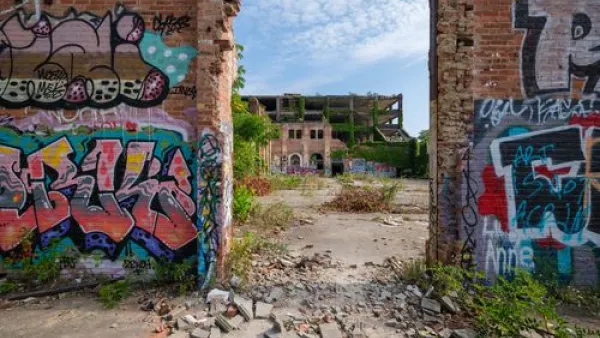
Cleveland is turning abandoned real estate into ‘housing innovation district,’ jobs
The city’s housing innovation district will bring pro-housing policies to disinvested neighborhoods.
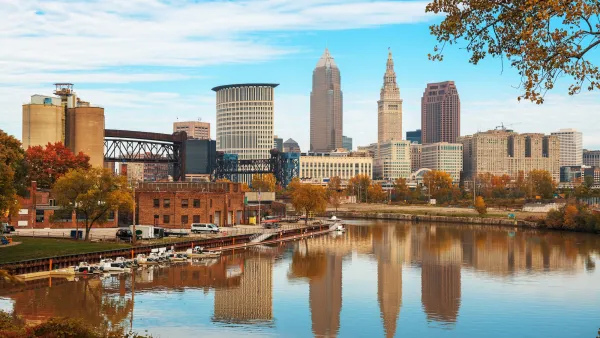
Cleveland program has housed 200 people since 2024
The A Home For Every Neighbor initiative successfully moves people into housing in under two weeks.

Is the built environment partly to blame for population decline?
The way communities are designed could be contributing to lower birth rates.

Planetizen Federal Action Tracker
A weekly monitor of how Trump’s orders and actions are impacting planners and planning in America.

Amtrak, CN end decades-long dispute with eight-year agreement
The new operating agreement establishes an updated framework for the companies to work together, including processes to resolve disputes.

Judges permit Denver to divert 77,000 acre feet from the Colorado River for reservoir expansion
Overuse and climate change have caused the Colorado River’s water levels to plummet.

Idaho may see an 18% drop in federal surface transit funding — the largest estimated cut in the US
Transit systems in rural communities are much more reliant on federal funding to provide their services.

How ‘post-disaster gentrification’ alters neighborhoods after natural calamities
After hurricanes, fires or other calamities, the original residents of a community are often replaced by younger, wealthier residents.

Maryland local governments examine if they should have more power to raise property taxes
Maryland’s housing market is out of reach for the majority of moderate-income residents.

FREE Course: Walkable City 1: Why Walkability?
After describing his path towards focusing on walkability as the essence of good planning, Jeff Speck marches through his five principal reasons for making more walkable places.
Reinventing Malls: Planning Alchemy—Turning Gray Fields Into Gold
The course focuses on the opportunities and imperatives that shape reinvention of mall sites.

Harvard University Graduate School of Design
KFH Group Inc.
Greater Baltimore Committee
The Architects Foundation
University of Cincinnati Online
The Pocatello Development Authority
The Urban Renewal Agency of the City of Pocatello