In 2006, Kaohsiung City recorded a paltry 4.3 percent share for public transportation usage. In the years since, the Kaohsiung City government launched an ambitious plan to increase ridership in Taiwan’s second largest urban area.


Benjamin Fox reports that the city has been investing heavily in its public transportation, and officials are working to get the system established before working to discourage automobile usage:
"The aspect of Kaohsiung's transportation upgrade that has been drawing the most attention is its ultra-modern mass rapid transit (MRT) system. Opening in March 2008, the Kaohsiung MRT is Taiwan's second urban subway system. The KMRT currently comprises two lines running along a horizontal-vertical axis, encompassing 36 stations and 42.7 kilometers of track. Paralleling its MRT development, Kaohsiung added hundreds of buses to the road, doubled MRT shuttle bus connectivity, and acquired 100 low-floor buses for wheelchair passengers."
Thanks to Jeffrey Riecke
FULL STORY: Kaohsiung’s Public Transportation Push

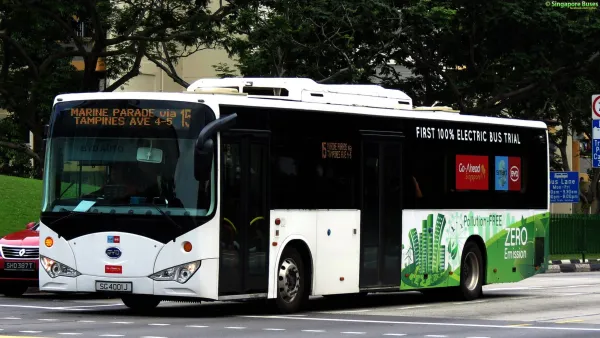
Trial Run of Driverless Buses Set to Start in Singapore
Singapore has ambitious plans for an autonomous public transportation system. New full-sized buses and an upcoming trial run will put the country closer to its goals.
Public Transit in the U.S. Could Be Better. So Why Isn’t It?
Transit ridership has surged in other countries but lags here in the United States. The possible reasons for this are varied as are proposed solutions for improving American transit systems.
For Better Public Transit, We Need Better Stories
Public transportation provides many often-overlooked benefits. We can do better at communicating the value of transit investments. We have good stories to tell.

The state-sanctioned urbicide of Austin
People don’t kill cities. Freeways do.

US to reduce Colorado River water deliveries to Mexico
A new Colorado Treaty amendment reduces Mexico’s Colorado River water allocation by 250,000 acre feet.

New Jersey’s second-largest city bans standalone data centers
Jersey City will continue to allow co-location facilities, such as those meant for research institutions that store their own data.

Amtrak not solely to blame for New Jersey commuter rail's unreliability, report finds
A new study from the Garden State Initiative found that NJ Transit’s budget grew 20% across a 4 year period, but reliability declined significantly over the same period.

EPA erases limits on planet-warming pollution from power plants
Under Monday’s plan, power plants would still have some limits on how much mercury, arsenic and other contaminants they can emit.

Phoenix announces new on-demand transit service, more frequent RAPID buses
Both new services will launch in October, and are part of Phoenix's Project Effective Access Solutions for Easing Congestion.

FREE Course: Walkable City 1: Why Walkability?
After describing his path towards focusing on walkability as the essence of good planning, Jeff Speck marches through his five principal reasons for making more walkable places.
Reinventing Malls: Planning Alchemy—Turning Gray Fields Into Gold
The course focuses on the opportunities and imperatives that shape reinvention of mall sites.

Eagle County Government
Harvard University Graduate School of Design
Nashville Planning Department
The Architects Foundation
University of Cincinnati Online
The Pocatello Development Authority
The Urban Renewal Agency of the City of Pocatello
Journal of the American Planning Association