Despite what seemed to be a drained post-industrial condition in the 1970s, Seattle has been growing. This post looks into why.


As economist Edward L. Glaeser writes, Seattle and Detroit were very much the same, but also very different.
"As Boeing scaled back its Seattle employment, the city floundered. By 1971, a much-discussed billboard read "Would the last person to leave Seattle please turn out the lights?"
But there was a crucial difference between Seattle and Detroit. Unlike Ford and General Motors, Boeing employed highly educated workers. Almost since its inception, Seattle has been committed to education and has benefited from the University of Washington, which is based there. Skills are the source of Seattle's strength.
Over the last three decades, human capital has become increasingly linked with urban growth outside the Sun Belt."
Read the full story: How Seattle Transformed Itself

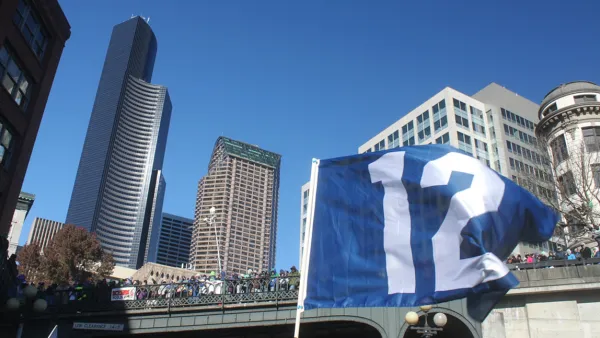
Seattle as the 'Next Detroit'
As the automotive industry of Detroit once inherited the wealth and assets of Pittsburgh's steel industry, one writer argues Seattle has now inherited the wealth and assets of the Silicon Valley.
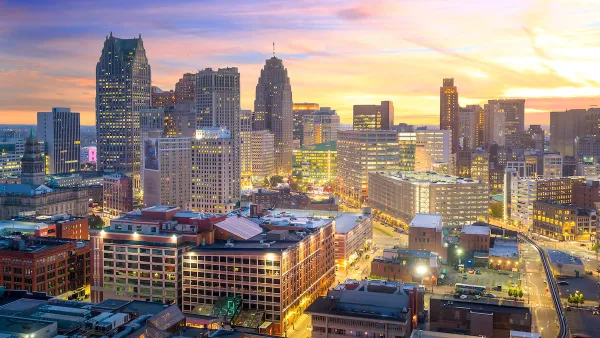
Detroit and Michigan on the Upswing
It's been 66 years since the Motor City last grew its population. Census data released last month revealed an increase of nearly 2,000 people last year, nearly half the state's population growth.

Detroit Floods as the Pacific Northwest Bakes: It's Time to Shift the Conversation About Climate Change
The record-breaking heatwave in the Pacific Northwest has mostly been depicted in the media by kids running through fountains, but images of flooded highways and stranded vehicles in Detroit tell a more accurate story of climate change.

Planetizen Federal Action Tracker
A weekly monitor of how Trump’s orders and actions are impacting planners and planning in America.

California plans to bury El Niño’s downpour
If the state plays its cards right, it may be able to store a billion acre-feet of El Niño’s water in aquifers.

Chicago breaks ground on $3 billion megadevelopment
The new neighborhood, titled Foundry Park, will one day host 3,700 residences.

California High-Speed Rail Authority CEO resigns after $600,000 scandal
Under Ian Choudri, the authority used taxpayer dollars to fund first class flights and trips to nightclubs.

Want to study the Missouri River? Soon, you may need unanimous approval from 10 states
Legislation would require 10 governors’ permission to study or build projects moving water outside the basin.

Desperate measures: Advocates weigh draining Lake Powell to fill Colorado River
Draining the reservoir could reduce evaporation losses by a couple hundred thousand acre-feet.

FREE Course: Walkable City 1: Why Walkability?
After describing his path towards focusing on walkability as the essence of good planning, Jeff Speck marches through his five principal reasons for making more walkable places.
Reinventing Malls: Planning Alchemy—Turning Gray Fields Into Gold
The course focuses on the opportunities and imperatives that shape reinvention of mall sites.

City of Rosemead
Rutgers University, Edward J. Bloustein School of Planning and Public Policy
One Hundred Miles
Hunter College, City University of New York (CUNY)
The Architects Foundation
University of Cincinnati Online
City of Cambridge
Montrose County
The Pocatello Development Authority