Parag Khanna suggests that cities are the building blocks of humanity, and will take increasing control over the future shape of the world in the coming decades.


Khanna notes that cities and mega-cities are playing a bigger role in determining how places change, especially in comparison with countries.
"The thing to notice is that the dots of light cascade across the Earth's surface without any reference to national borders. That's a good image for the global order now emerging. The 21st century will not be dominated by America or China, Brazil or India, but by The City. In a world that increasingly appears ungovernable, cities-not states-are the islands of governance on which the future world order will be built. Cities are humanity's real building blocks because of their economic size, population density, political dominance, and innovative edge. They are real "facts on the ground," almost immeasurably more meaningful to most people in the world than often invisible national borders."
Read the full story: When cities rule the world

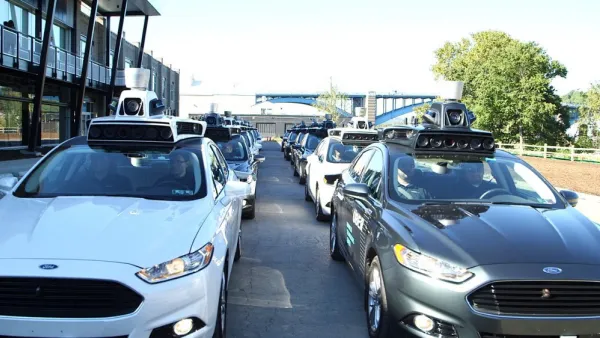
What the Future Looked Like Before the Coronavirus
Common Edge surveyed mayors and urban designers for ideas about what the next decade holds in store for cities. There were plenty of challenges in facing the world before the pandemic.
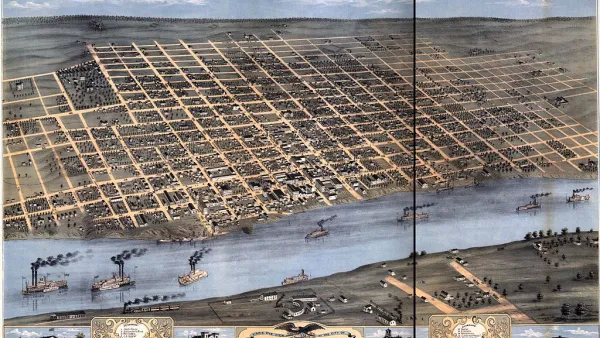
The Long-Term Thinking Cities Need
A roundtable of discussion of prominent urbanists examines the questions of urbanism with a long-term mindset.
Making the Cities of the Future Work
In this series from Glass House Conversations, journalist Greg Lindsay asks what the successful cities of the future will look like, and whether or not they should be built from scratch.

Planetizen Federal Action Tracker
A weekly monitor of how Trump’s orders and actions are impacting planners and planning in America.

‘Going backwards:’ Baltimore mayor, students rally against state's transit funding plan
Maryland's proposed six-year plan provides no funding for Baltimore’s BMORE bus program and reduces its road maintenance funding.

Detroit to transform waterfront with $2.2 billion investment
Developers will convert about 18 acres of unused parking lot space into civic spaces.

LA to transform part of water treatment facility into new park
By rebuilding some of the Los Angeles-Glendale Water Reclamation Plant’s infrastructure, the city will free up 18,000 square feet to create a new green space for the public.

San Antonio approves $1.1 billion transit agenda
The agency has also begun construction of its Via Rapid Green line, which will service passengers from the San Antonio International Airport.

Guerilla urbanists’ DIY benches joined by sanctioned seats in Chicago
The group behind the original homemade benches said they will continue installing them across bench-less bus stops in Chicago.

FREE Course: Walkable City 1: Why Walkability?
After describing his path towards focusing on walkability as the essence of good planning, Jeff Speck marches through his five principal reasons for making more walkable places.
Reinventing Malls: Planning Alchemy—Turning Gray Fields Into Gold
The course focuses on the opportunities and imperatives that shape reinvention of mall sites.

One Hundred Miles
County of Mendocino
planning NEXT
The Architects Foundation
University of Cincinnati Online
Montrose County
Northern Illinois Transit Authority (NITA)
The Pocatello Development Authority