A new study estimates there are at least 500 million off-street parking spaces in the U.S. This represents 0.5% to 12% of estimated lifecycle energy consumption and greenhouse emissions, and 24% to 81% other air pollutants.


A major study estimates there to be between 105 million and 2 billion parking spaces in the U.S. These results are incorporated into their life-cycle environmental analysis of various vehicles (sedans, sports utility vehicles, and pickups). The analysis indicates that parking facilities represent 0.5% to 12% of total estimated lifecycle energy consumption and greenhouse emissions, and 24% to 81% other air pollutants, depending on vehicle type and scenario. The environmental consequences of providing the parking spaces are discussed as well as the uncertainty in allocating paved area between parking and roadways.
The original study is Mikhail Chester, Arpad Horvath and Samer Madanat (2010), "Parking Infrastructure: Energy, Emissions, And Automobile Life-Cycle Environmental Accounting," published in Environmental Research Letters, *(http://dx.doi.org/10.1088/1748-9326/5/3/034001 ), an addition to "Environmental Life-cycle Assessment of Passenger Transportation: A Detailed Methodology for Energy, Greenhouse Gas and Criteria Pollutant Inventories of Automobiles, Buses, Light Rail, Heavy Rail and Air", UC Berkeley Center for Future Urban Transport: A Volvo Center of Excellence (www.sustainable-transportation.com)
Thanks to Todd Litman
Read the full story: First Nation-Wide Count of Parking Spaces Demonstrates Their High Environmental Cost: No Such Thing As Free Parking

EPA Plans “Largest Deregulatory Action” in History
The agency plans to repeal a key 2009 rule that underpins the government’s authority to regulate greenhouse gas emissions.
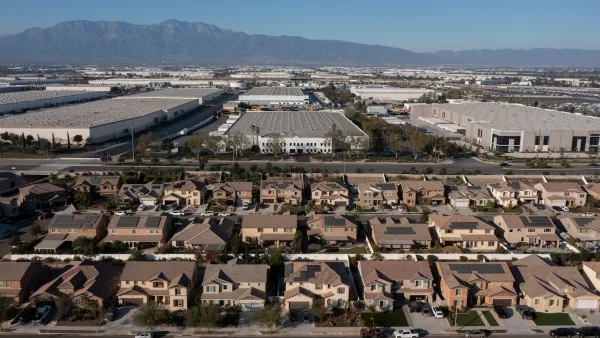
New California Law Regulates Warehouse Pollution
A new law tightens building and emissions regulations for large distribution warehouses to mitigate air pollution and traffic in surrounding communities.
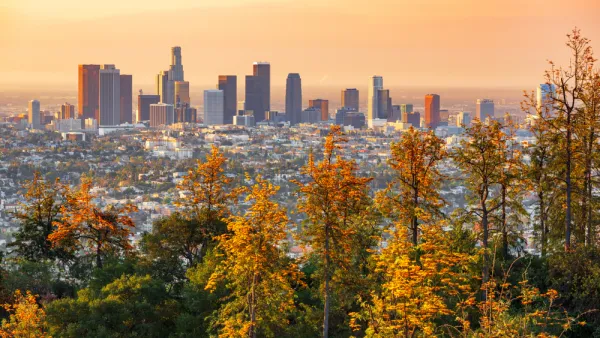
LA’s Trees Absorb More Carbon Than Expected, But Can’t Do It Alone
A USC study finds that Los Angeles’ urban trees absorb more carbon than expected, but while they provide crucial environmental benefits, they cannot replace the urgent need for systemic emissions reductions.

Planetizen Federal Action Tracker
A weekly monitor of how Trump’s orders and actions are impacting planners and planning in America.

Amtrak, CN end decades-long dispute with eight-year agreement
The new operating agreement establishes an updated framework for the companies to work together, including processes to resolve disputes.

Colorado’s Largest Data Center Could Rise Next to Homes — Without a Public Hearing
The proposed campus would consume 11 times the power of Denver International Airport; as it has across the country, opposition mounts.

'This is going to be painful:’ Virginia stares down $1.7 billion funding gap for highway maintenance
The state may address the deficit by shifting $290 million from its construction budget to maintenance projects.

Judges permit Denver to divert 77,000 acre feet from the Colorado River for reservoir expansion
Overuse and climate change have caused the Colorado River’s water levels to plummet.
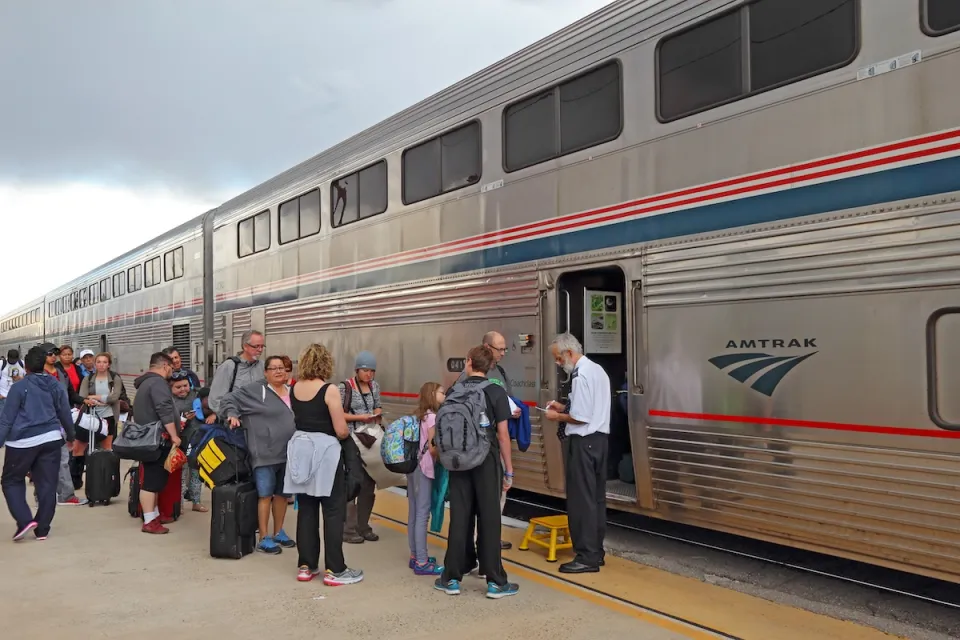
Amtrak, CN end decades-long dispute with eight-year agreement
The new operating agreement establishes an updated framework for the companies to work together, including processes to resolve disputes.

FREE Course: Walkable City 1: Why Walkability?
After describing his path towards focusing on walkability as the essence of good planning, Jeff Speck marches through his five principal reasons for making more walkable places.
Reinventing Malls: Planning Alchemy—Turning Gray Fields Into Gold
The course focuses on the opportunities and imperatives that shape reinvention of mall sites.

KFH Group Inc.
Greater Baltimore Committee
Eagle County Government
The Architects Foundation
University of Cincinnati Online
The Pocatello Development Authority
The Urban Renewal Agency of the City of Pocatello