In San Francisco, Bernal Hill residents with dubious claims of health risks from microwave antennas have persuaded their supervisor to kill a wireless service providers plan to add to an already existing antenna, says Todd Lappin.


Bernal supervisor David Campos managed to block the antennas despite federal regulations saying he couldn't:
"Under federal law, SF's Board of Supervisors cannot deny a permit for wireless antennas on the basis of scientifically unproven health risks. The antennas themselves are regulated by the Federal Communications Commission, so if a Supervisor wants to kill the antennas, he needs to come up with a different reason. Ergo, barring the antennas because the tower's control station is covered with graffiti."
The anti-antenna residents have insisted that the project complete an environmental impact report.
Read the full story: Why Your Mobile Service Sucks, and Will Continue to Suck: Blame NIMBY Neighbors and Your San Francisco Supervisors


Feds say Arizona, California and Nevada must cut Colorado River water use by 1.25 million acre-feet
The new plan does not apply mandatory cuts to any of the river’s upper basin states.

What Has Measure ULA Achieved?
Los Angeles has imposed an additional tax on luxury home sales to generate millions for housing efforts in the city. Shelterforce checks in on where the money has gone, and what’s to come.
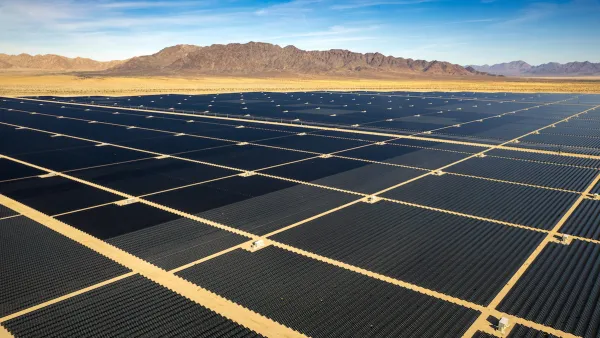
AI-Powered Permitting is Speeding up Solar Deployments in California
AI-powered permitting is accelerating solar deployments in cities across California, automating compliance checks and approvals for efficient and rapid solar project installations.

Planetizen Federal Action Tracker
A weekly monitor of how Trump’s orders and actions are impacting planners and planning in America.

Amtrak, CN end decades-long dispute with eight-year agreement
The new operating agreement establishes an updated framework for the companies to work together, including processes to resolve disputes.
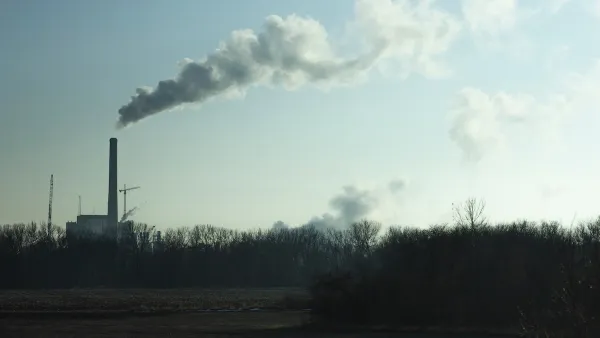
Nation's most wind-powered state turns to coal as data centers increase energy demand
For the first time in decades, Iowa has increased its generation of coal power.

Alabama scores up to $2.5 billion federal loan for largest infrastructure project in state’s history
The Mobile River Bridge and Bayway Project aims to ease congestion at Alabama’s worst bottleneck.

Trump is considering data centers on 6 states' public land — some state officials say they had no idea
If the administration approves the proposed projects, data center and data center-related developments will cover 17,600 acres of public land.

Despite court ruling, Trump is keeping nearly all wind projects in the US on hold
At least 110 wind energy projects have not heard from the government since a federal judge ruled that the Trump administration's freeze on wind turbine clearances was likely illegal.

FREE Course: Walkable City 1: Why Walkability?
After describing his path towards focusing on walkability as the essence of good planning, Jeff Speck marches through his five principal reasons for making more walkable places.
Reinventing Malls: Planning Alchemy—Turning Gray Fields Into Gold
The course focuses on the opportunities and imperatives that shape reinvention of mall sites.

KFH Group Inc.
Greater Baltimore Committee
Eagle County Government
The Architects Foundation
University of Cincinnati Online
The Pocatello Development Authority
The Urban Renewal Agency of the City of Pocatello