Owen McShane argues the newly consolidated Auckland Region government is turning to rail transit initiatives without any evidence that such projects actually work.


Like many governments before it, the Regional Council of Auckland Region has "fallen for the notion" that investment in heavy rail will spur economic growth, says McShane. The Council's new Vision for Auckland plan proposes a rail link to the Airport, a CBD rail loop, light rail on the surface streets, and a rail tunnel under the Waitemata harbour. However, McShane notes, rail projects rarely meet ridership or performance projections and typically experience large cost overruns, as evidenced by projects from the English Channel Tunnel to Denmark to Bay Area Rapid Transit's connection to Oakland airport.
There is little reason to believe Auckland's Vision plan will succeed where others have failed, McShane writes:
"No investment in rail in New World cities since the 1980s has resulted in a reduction in congestion. In most cases congestion has increased and public transport market share has diminished because the investment into rail has diminished funds for roads, buses and High Occupancy Toll lanes, measures that actually work to increase mobility."
Read the full story: Retro Rail Alert

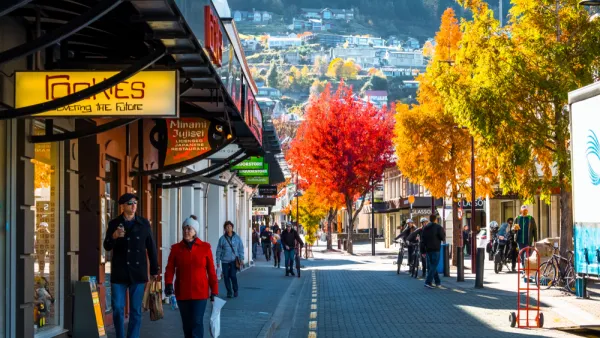
Zoning Reform: Lessons From New Zealand
The island nation is mandating mid-density zoning requirements and transit-oriented development in an effort to increase housing affordability and encourage compact development.
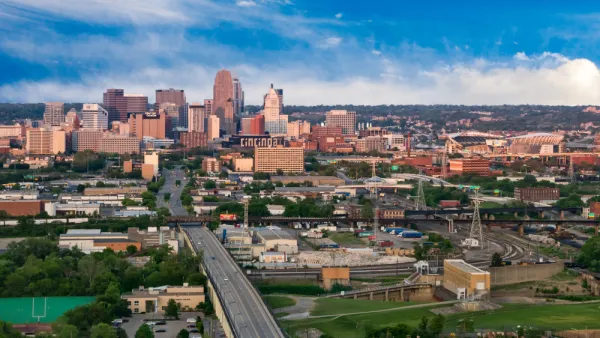
'Economic Mapping' to Help Regional Planning
Identifying potential hubs and activity centers allows regions to foster economic growth and density.
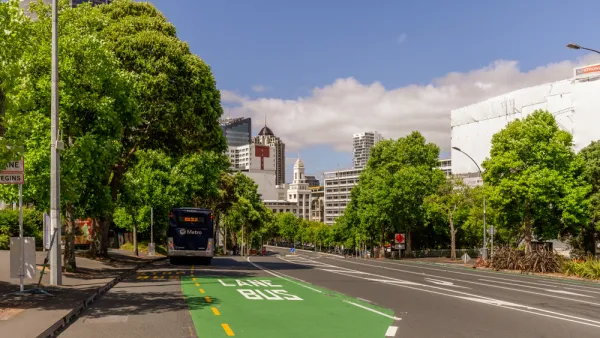
Smashing Transit Ridership Success in New Zealand
The city of Auckland, in New Zealand, set a goal to double its transit ridership in ten years. With a little under four years left to achieve that goal, the city is already well on its way.

Planetizen Federal Action Tracker
A weekly monitor of how Trump’s orders and actions are impacting planners and planning in America.

Amtrak, CN end decades-long dispute with eight-year agreement
The new operating agreement establishes an updated framework for the companies to work together, including processes to resolve disputes.

Judges permit Denver to divert 77,000 acre feet from the Colorado River for reservoir expansion
Overuse and climate change have caused the Colorado River’s water levels to plummet.

Boston has spent millions making the Green Line more accessible — and there’s no end in sight
While the city has invested millions into expanding and adding platforms to the Green Line to make it more accessible, new train cars set to arrive next year will be too tall for disabled passengers to board without raising the current platforms.

Idaho may see an 18% drop in federal surface transit funding — the largest estimated cut in the US
Transit systems in rural communities are much more reliant on federal funding to provide their services.

How ‘post-disaster gentrification’ alters neighborhoods after natural calamities
After hurricanes, fires or other calamities, the original residents of a community are often replaced by younger, wealthier residents.

FREE Course: Walkable City 1: Why Walkability?
After describing his path towards focusing on walkability as the essence of good planning, Jeff Speck marches through his five principal reasons for making more walkable places.
Reinventing Malls: Planning Alchemy—Turning Gray Fields Into Gold
The course focuses on the opportunities and imperatives that shape reinvention of mall sites.

Harvard University Graduate School of Design
KFH Group Inc.
Greater Baltimore Committee
The Architects Foundation
University of Cincinnati Online
The Pocatello Development Authority
The Urban Renewal Agency of the City of Pocatello