A master-planned town in Quebec built by an American industrialist as a "workingman's utopia" is being touted as a potential UNESCO World Heritage Site.


Arvida was once an experiment hailed at the time as "the city built in 135 days". To recognize this legacy, a group of boosters is hoping to have the town named a World Heritage site.
According to the Globe and Mail:
"[Arvida] was to be no ordinary boom town. By the 1920s, [aluminum magnate Arthur Vining Davis] recruited a New York planner and shaped both a company town and a model metropolis, 240 kilometres north of Quebec City. A century on, his 'utopia' is still standing. The tidy 'workmen's' homes built as part of Arvida's original scheme still rise on spacious lots on winding, tree-lined streets – no grid-like monotony here. Each house was built with a garden and distinctive architectural style. Arvida was planned down to compulsory dog licences. The town got schools, churches and a way of life that included free Saturday night dances for the workers.
This month organizers will present their case for [recognizing Arvida as a World Heritage site] to Parks Canada, a critical first step before reaching UNESCO."
Read the full story: Town that aluminum built hopes to join World Heritage list
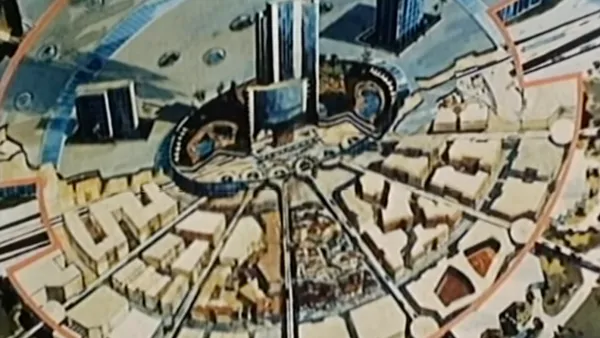
EPCOT: The Original 'Smart City'
What can today’s futurists learn from Disney’s unrealized utopia?

Op-Ed: Utopian Thinking Poses Continued Dangers for Urbanists
Charles Wolfe calls attention to similarities between contemporary urbanism and yesterday's debunked utopias. The two may differ in substance, but both tend toward a certain level of dogma that isn't necessarily helpful on the ground.

Planetizen Federal Action Tracker
A weekly monitor of how Trump’s orders and actions are impacting planners and planning in America.

California plans to bury El Niño’s downpour
If the state plays its cards right, it may be able to store a billion acre-feet of El Niño’s water in aquifers.

Desperate measures: Advocates weigh draining Lake Powell to fill Colorado River
Draining the reservoir could reduce evaporation losses by a couple hundred thousand acre-feet.

In Texas, data centers are swallowing promised parkland
Residents who moved to Taylor, Texas for a rural community now have to contend with three data centers in their backyard.

How a Chicago-sized wind farm beat the odds and powered on
The project spanned five presidential administrations and a standoff with a U.S. military base.

MTA gives itself 30 days to transform pit into basketball court
The site has been under construction since 2022; the city originally estimated it would finish the court in 2024.

FREE Course: Walkable City 1: Why Walkability?
After describing his path towards focusing on walkability as the essence of good planning, Jeff Speck marches through his five principal reasons for making more walkable places.
Reinventing Malls: Planning Alchemy—Turning Gray Fields Into Gold
The course focuses on the opportunities and imperatives that shape reinvention of mall sites.

City of Rosemead
Rutgers University, Edward J. Bloustein School of Planning and Public Policy
One Hundred Miles
Hunter College, City University of New York (CUNY)
The Architects Foundation
University of Cincinnati Online
City of Cambridge
Montrose County
The Pocatello Development Authority