Small enclaves of low-wage workers in Beijing have been walled off from their surroundings in an effort to reduce crime. The separating walls have become a local controversy.


This article looks at the area of Shoubaozhuang, one of many small villages of migrant workers that have developed in and around Beijing.
"It was chosen, along with 15 other areas in the Daxing district of Beijing, to be walled off to outsiders, in what officials say is an experimental effort to curb crime. The authorities say the experiment has been a success - the Communist Party-run People's Daily said the crime rate in the walled villages in Daxing district dropped by 73 percent from April to July this year - and the "walled village" concept is being quickly expanded to other districts outside Beijing's center that are populated by migrant workers.
Ultimately, the project could encompass an area of 291 square miles with a population of 3.4 million people, more than 80 percent of them migrant workers."
Read the full story: Migrant ‘Villages’ Within a City Ignite Debate

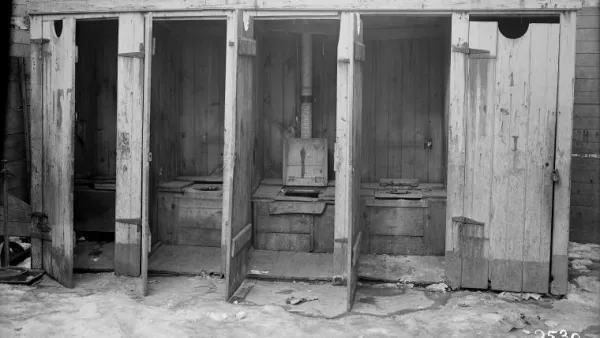
Jim Crow lives on in our public bathrooms
Using budgets to devalue public spaces and their patrons was one of segregationists’ key moves. Their legacy still plagues our public bathrooms.
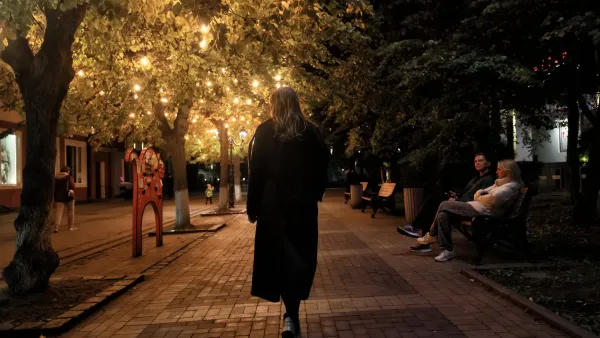
How urban design can deter crime
Well-designed public spaces and good lighting can prevent crime and make residents feel safer.
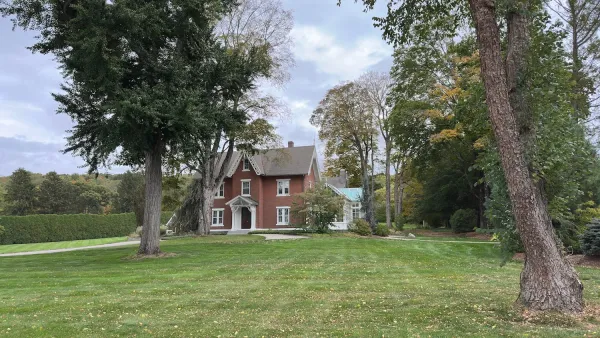
Study: Minimum lot sizes reinforce racial disparities
A Connecticut study found that zoning rules perpetuate residential segregation.

Planetizen Federal Action Tracker
A weekly monitor of how Trump’s orders and actions are impacting planners and planning in America.

Amtrak, CN end decades-long dispute with eight-year agreement
The new operating agreement establishes an updated framework for the companies to work together, including processes to resolve disputes.

Judges permit Denver to divert 77,000 acre feet from the Colorado River for reservoir expansion
Overuse and climate change have caused the Colorado River’s water levels to plummet.

NYC DOT wants faster, more permanent street upgrades
The city is examining ways to build more concrete infrastructure without getting entangled in 'decades-long' projects.

'Something we’ve never seen before:' rising utility rates could strain city finances nationwide
Data centers, climate change and other factors have caused utility rates in the United States to increase by 38% since 2020.

Trump to overrule local leaders, lease millions of acres of America’s Pacific Island territories’ seafloors to mining companies
International law says that the Indigenous people of America’s territories have a right to prior and informed consent regarding projects that impact their countries.

FREE Course: Walkable City 1: Why Walkability?
After describing his path towards focusing on walkability as the essence of good planning, Jeff Speck marches through his five principal reasons for making more walkable places.
Reinventing Malls: Planning Alchemy—Turning Gray Fields Into Gold
The course focuses on the opportunities and imperatives that shape reinvention of mall sites.

Harvard University Graduate School of Design
KFH Group Inc.
Greater Baltimore Committee
The Architects Foundation
University of Cincinnati Online
The Pocatello Development Authority
The Urban Renewal Agency of the City of Pocatello