One-way streets are a relatively new phemenon and encourage drivers to drive faster, says John Calimente. He argues it's time to convert Vancouver's one-ways back to their two-way pasts.


Calimente says that one-way streets were a by-product of the expansion of freeways, and that today we know that faster isn't necessarily better when it comes to cities:
"There is much evidence that two way streets are good for business. It makes sense that two way streets encourage slower speeds that also result in drivers paying more attention to businesses they drive by. Cities large and small in the U.S. have been moving away from one way streets, primarily to increase economic development."
Calimente maps out Vancouver's remaining one-way streets (not that many, actually) and recommends that the city convert them back.
Read the full story: Do we still need one way streets in Vancouver?

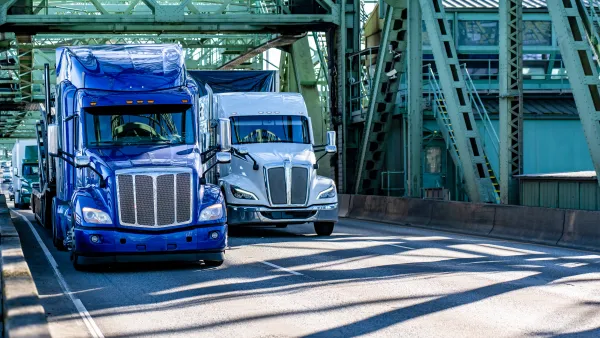
Budget constraints threaten light rail for Oregon, Washington’s new bridge
The current proposal includes only the infrastructure for the light rail, without funding for the train and tracks.
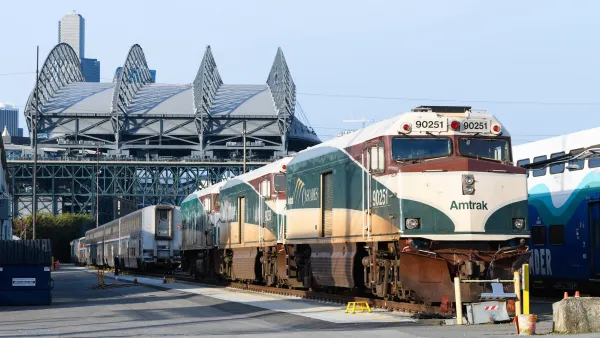
Amtrak opens border preclearance facility for travelers entering US from Vancouver
The first-of-its-kind facility streamlines the border crossing experience, eliminating long waits.
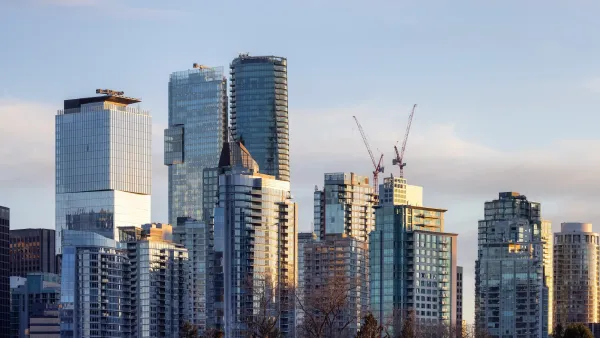
Vancouver Set to Adopt Game-changing Citywide Development Plan
To comply with new provincial law, Vancouver will adopt a new city plan aimed at guiding development for the next three decades.

Planetizen Federal Action Tracker
A weekly monitor of how Trump’s orders and actions are impacting planners and planning in America.

Amtrak, CN end decades-long dispute with eight-year agreement
The new operating agreement establishes an updated framework for the companies to work together, including processes to resolve disputes.
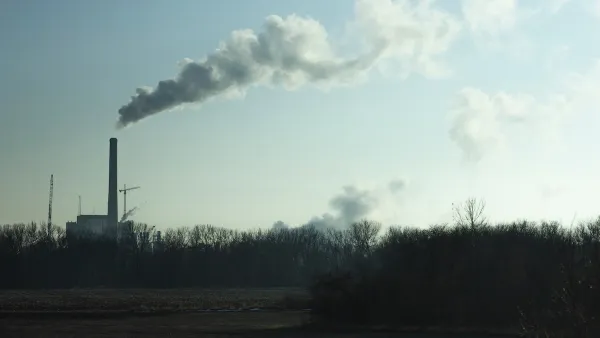
Nation's most wind-powered state turns to coal as data centers increase energy demand
For the first time in decades, Iowa has increased its generation of coal power.

Alabama scores up to $2.5 billion federal loan for largest infrastructure project in state’s history
The Mobile River Bridge and Bayway Project aims to ease congestion at Alabama’s worst bottleneck.

Trump is considering data centers on 6 states' public land — some state officials say they had no idea
If the administration approves the proposed projects, data center and data center-related developments will cover 17,600 acres of public land.

Despite court ruling, Trump is keeping nearly all wind projects in the US on hold
At least 110 wind energy projects have not heard from the government since a federal judge ruled that the Trump administration's freeze on wind turbine clearances was likely illegal.

FREE Course: Walkable City 1: Why Walkability?
After describing his path towards focusing on walkability as the essence of good planning, Jeff Speck marches through his five principal reasons for making more walkable places.
Reinventing Malls: Planning Alchemy—Turning Gray Fields Into Gold
The course focuses on the opportunities and imperatives that shape reinvention of mall sites.

KFH Group Inc.
Greater Baltimore Committee
Eagle County Government
The Architects Foundation
University of Cincinnati Online
The Pocatello Development Authority
The Urban Renewal Agency of the City of Pocatello