A new report from The Reason Foundation finds that the nation's roads and highways are in the best shape of the last 19 years. The authors contend that this fact is largely a result of fewer people driving due to the recession.


"The annual Reason Foundation study measures the condition and cost-effectiveness of state-owned roads in 11 categories, including deficient bridges, urban traffic congestion, fatality rates, pavement condition on urban and rural Interstates and on major rural roads, and the number of unsafe narrow rural lanes. National performance in all of those key areas improved in 2008, the most recent year with complete data available.
Drivers in California, Minnesota, Maryland, Michigan and Connecticut are stuck in the worst traffic. Over 65 percent of all urban Interstates are congested in each of those five states. But nationally, the percentage of urban Interstates that are congested fell below 50 percent for the first time since 2000, when congestion standards were revised."
The recession-related drop in driving has also decreased road fatalities, according to the report.
Read the full story: 19th Annual Highway Report

Traffic deaths rise by 15% on major album release days
Enjoy those new tracks, but don't forget to keep your eyes on the road.
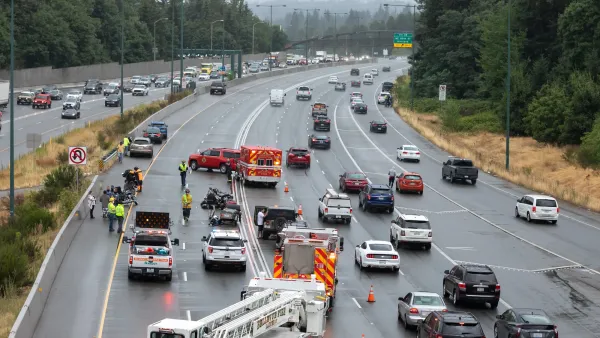
Commentary: Counting Road Deaths by VMT Minimizes the Harm and Normalizes Traffic Violence
When measured per capita, traffic fatalities in the United States far outstrip those in peer countries.
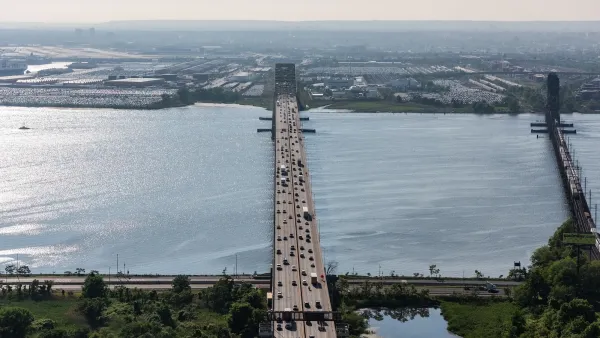
New Jersey Governor Kills ‘Boondoggle’ Highway Expansion
Gov. Sherrill ‘right-sized’ the Newark Bay Bridge reconstruction project, nixing a second proposed bridge and road expansion.

Planetizen Federal Action Tracker
A weekly monitor of how Trump’s orders and actions are impacting planners and planning in America.

California plans to bury El Niño’s downpour
If the state plays its cards right, it may be able to store a billion acre-feet of El Niño’s water in aquifers.

Desperate measures: Advocates weigh draining Lake Powell to fill Colorado River
Draining the reservoir could reduce evaporation losses by a couple hundred thousand acre-feet.

In Texas, data centers are swallowing promised parkland
Residents who moved to Taylor, Texas for a rural community now have to contend with three data centers in their backyard.

How a Chicago-sized wind farm beat the odds and powered on
The project spanned five presidential administrations and a standoff with a U.S. military base.

MTA gives itself 30 days to transform pit into basketball court
The site has been under construction since 2022; the city originally estimated it would finish the court in 2024.

FREE Course: Walkable City 1: Why Walkability?
After describing his path towards focusing on walkability as the essence of good planning, Jeff Speck marches through his five principal reasons for making more walkable places.
Reinventing Malls: Planning Alchemy—Turning Gray Fields Into Gold
The course focuses on the opportunities and imperatives that shape reinvention of mall sites.

City of Rosemead
Rutgers University, Edward J. Bloustein School of Planning and Public Policy
One Hundred Miles
Hunter College, City University of New York (CUNY)
The Architects Foundation
University of Cincinnati Online
City of Cambridge
Montrose County
The Pocatello Development Authority