The annual arts festival Burning Man is underway in Northwestern Nevada. This year's theme of Metropolis highlights the event's city-like nature.


Writing for Next American City, Greg Scruggs has a series of posts about the event, the temporary city it forms and how the artists have responded to this year's theme.
"In addition to the bustling streets full of theme camps and villages that offer the above services (and many more, from fresh fruit to massages to movies to just about anything you can imagine), Black Rock City and the surrounding open playa is peppered with extravagant public art projects. The sheer space and lack of restrictions that Burning Man presents to artists leads to breathtaking works, whose size, scale, and interactivity cannot be replicated in other settings. The Burning Man LLC supports this public art through grants, as well as provisions for the basics of Black Rock City: a street plan with demarcated space for registered camps, portable toilets, the Black Rock Rangers who help mediate conflicts."
Read the full story: Building a City at Burning Man

Urbanist Thinking at the Temporary Metropolis of Burning Man
It's already disappearing. The temporary city that forms during the annual Burning Man event is fading away, as the tens of thousands of people who traveled out to live in the desert of northwestern Nevada for the past week have filed out of the void and returned back to the rest of the world. The event's organizers and volunteers are still erasing the traces of the event, from demolishing structures to removing fencing to picking up trash. Within another week or so, the entire city will have disappeared. It's an interesting way for a city to exist -- just a few weeks at a time, once a year. But it's been working for Burning Man and Black Rock City, the name of that temporary city that forms and disbands almost as soon as it comes to full life. On top of what's already a unique experiment in citymaking, the theme of this year's event was Metropolis, which spurred the tens of thousands of people and artists who make up the city to think a little more about how their "party in the desert" is actually a little city and community (the fourth largest city in Nevada during its run), and how it relates to their world beyond the desert.
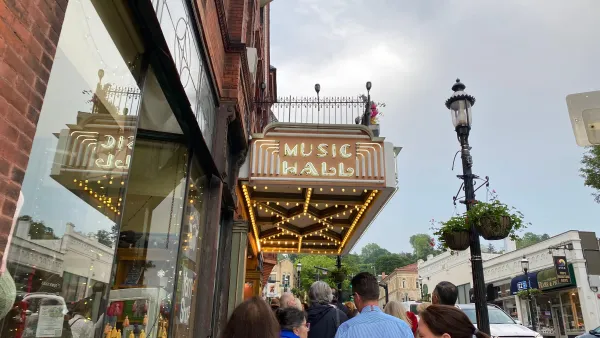
Why city hall doesn't know your music venue is a music venue (and why that matters)
Data shows that cultural venues have long lacked proper classification — which is why so many fall through the cracks.
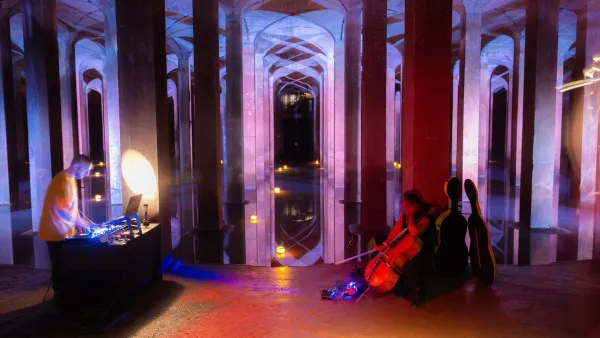
A 1920s Poughkeepsie cistern sees new life as art venue
For decades, it secured the city's water supply. Now, it could become its hottest new performance venue.

Planetizen Federal Action Tracker
A weekly monitor of how Trump’s orders and actions are impacting planners and planning in America.

Amtrak, CN end decades-long dispute with eight-year agreement
The new operating agreement establishes an updated framework for the companies to work together, including processes to resolve disputes.

Judges permit Denver to divert 77,000 acre feet from the Colorado River for reservoir expansion
Overuse and climate change have caused the Colorado River’s water levels to plummet.

Boston has spent millions making the Green Line more accessible — and there’s no end in sight
While the city has invested millions into expanding and adding platforms to the Green Line to make it more accessible, new train cars set to arrive next year will be too tall for disabled passengers to board without raising the current platforms.

Idaho may see an 18% drop in federal surface transit funding — the largest estimated cut in the US
Transit systems in rural communities are much more reliant on federal funding to provide their services.

How ‘post-disaster gentrification’ alters neighborhoods after natural calamities
After hurricanes, fires or other calamities, the original residents of a community are often replaced by younger, wealthier residents.

FREE Course: Walkable City 1: Why Walkability?
After describing his path towards focusing on walkability as the essence of good planning, Jeff Speck marches through his five principal reasons for making more walkable places.
Reinventing Malls: Planning Alchemy—Turning Gray Fields Into Gold
The course focuses on the opportunities and imperatives that shape reinvention of mall sites.

City of Wisconsin Rapids
Harvard University Graduate School of Design
KFH Group Inc.
The Architects Foundation
University of Cincinnati Online
The Pocatello Development Authority
The Urban Renewal Agency of the City of Pocatello