The idea of a magnetic levitation train has been bubbling for decades, but has yet to materialize in the U.S. Some say the idea is a pipe dream, but this column from The Baltimore Sun says the idea just needs the right home.


"If the United States still had an open frontier, it would be a no-brainer to build the best possible surface rail transportation system to connect cities fewer than 500 miles apart. Over relatively short distances, rail makes a lot more sense than either private cars or air travel. There's no reason Maglev wouldn't be able to compete on its merits.
But the frontier has been closed in this country for a long time - especially in crowded areas such as the Northeast corridor. We have a lot of existing rail infrastructure - much of it decrepit and woefully inefficient - occupying right-of-way that is, for now, the only game in town. Maglev can be the best technology in the world, but without a strip of land a few yards wide and hundreds of miles long, it's no more than a fantasy."
Proposals for a maglev train in Baltimore have had the ears of a handful of politicians in recent years, but many argue that the area is too densely developed to have room for the train.
Read the full story: Maglev is for dreamers, but what's wrong with dreaming?

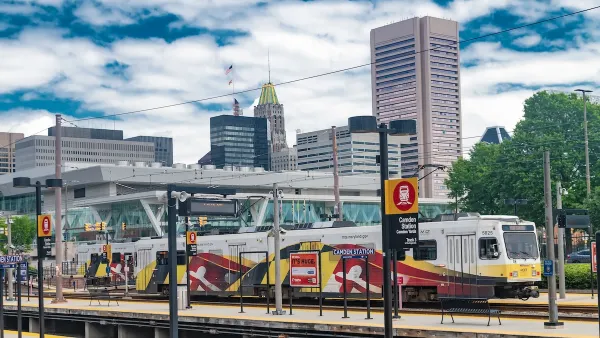
Feds Cancel Baltimore-to-DC High-Speed Rail Project
The Federal Railroad Administration cited concerns about disruptions to federally owned properties along the proposed HSR line, which would take passengers from Baltimore and D.C. in 15 minutes.

The World’s 10 Fastest Trains
From Japan to Morocco to China, these passenger trains travel at speeds of up to 311 miles per hour.
Mag-Lev Project Meets Approval in Japan
Japanese officials recently approved plans to build a 320-mile magnetic levitation train system. The $114 billion project is expected to begin construction in 2014.

Planetizen Federal Action Tracker
A weekly monitor of how Trump’s orders and actions are impacting planners and planning in America.

HUD modernizes 50-year-old manufactured housing framework
The Next Generation Manufactured Housing Action Plan establishes new energy-efficiency standards for manufactured homes, and new guidelines for anchoring them.

Data reveals that NYC’s bet on congestion pricing has paid off
After almost two years of the program, reports show positive impacts on traffic and air quality and no disruptions to parking.

A gas leak in NYC is costing residents $300 million
More than 90% of NYC’s electricity is from natural gas. About 2% of that gas is leaking and escaping into the air.

CA officials have the power to fix the state’s riskiest dams. They’ve never used it
California’s 40 most hazardous dams would endanger up to 1.5 million people if they failed.

Trump is shattering Pennsylvania's dreams of becoming a leader in hydrogen energy
Progress on both of the state’s planned hydrogen hubs ground to a halt after Trump took office.

FREE Course: Walkable City 1: Why Walkability?
After describing his path towards focusing on walkability as the essence of good planning, Jeff Speck marches through his five principal reasons for making more walkable places.
Reinventing Malls: Planning Alchemy—Turning Gray Fields Into Gold
The course focuses on the opportunities and imperatives that shape reinvention of mall sites.

One Hundred Miles
County of Mendocino
planning NEXT
The Architects Foundation
University of Cincinnati Online
Montrose County
Northern Illinois Transit Authority (NITA)
The Pocatello Development Authority