From Japan to Morocco to China, these passenger trains travel at speeds of up to 311 miles per hour.



In a slideshow on Jalopnik, Collin Woodard lists the world’s 10 fastest trains — none of which are in the United States.
In Italy, the Trenitalia Frecciarossa 1000 runs at speeds of up to 242 miles per hour. Morocco’s ONCF Al Boraq has a travel speed of 199 mph, with a top speed of 222 mph. Japan’s famous JR Shinkansen also travels at 199 mph, with a top speed of 275 mph.
The top three fastest trains in the world are all in China: the Shanghai Maglev takes the top spot with a travel speed of 286 mph and a top speed of 311 mph.
By contrast, most Amtrak passenger routes have a maximum speed of around 79 mph, with some exceptions like the Acela Express, which can travel at up to 150 mph in some areas. On most routes, the average travel speed is between 50 and 70 mph.
FULL STORY: These Are The Fastest Trains In The World

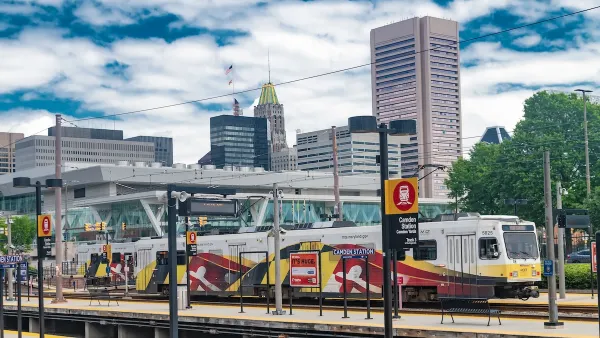
Feds Cancel Baltimore-to-DC High-Speed Rail Project
The Federal Railroad Administration cited concerns about disruptions to federally owned properties along the proposed HSR line, which would take passengers from Baltimore and D.C. in 15 minutes.
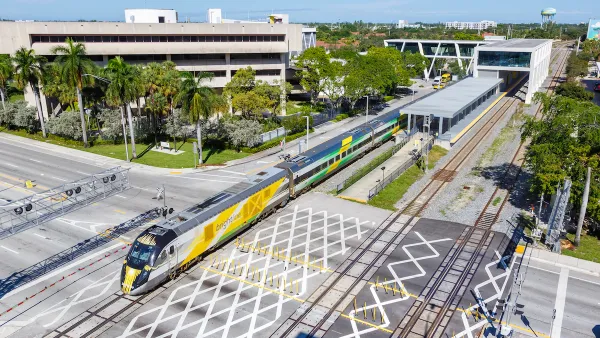
Brightline Founder Predicts a Passenger Rail Resurgence
The HSR operator wants to expand to more US regions.
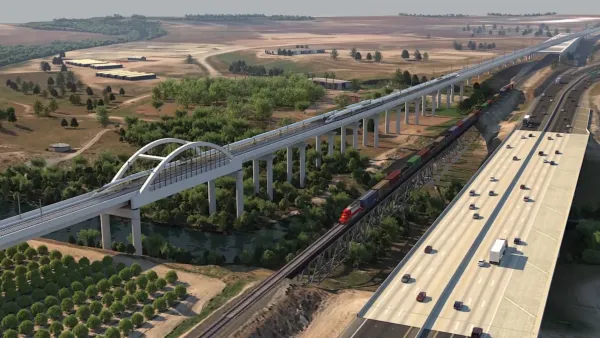
Report Quantifies the Potential Benefits of High-Speed Rail
Building more high-speed passenger rail in the United States could have significant economic and environmental impacts, creating jobs and reducing carbon emissions.

Planetizen Federal Action Tracker
A weekly monitor of how Trump’s orders and actions are impacting planners and planning in America.

The state-sanctioned urbicide of Austin
People don’t kill cities. Freeways do.

US to reduce Colorado River water deliveries to Mexico
A new Colorado Treaty amendment reduces Mexico’s Colorado River water allocation by 250,000 acre feet.

5 New England states march closer to 800 megawatt wind energy project
Securing federal approval for the project may be complicated under the Trump administration, which has historically been hostile towards domestic wind power.

Baltimore to break ground on $50 million Transit Priority Project
The project will bring faster bus trips, safer streets and better bike connections to Baltimore.

Airbnb launches $250 million 'last-dollar financing' housing accelerator, makes first investment in Austin
The company will put $6.4 million towards affordable housing development in Texas’ capital.

FREE Course: Walkable City 1: Why Walkability?
After describing his path towards focusing on walkability as the essence of good planning, Jeff Speck marches through his five principal reasons for making more walkable places.
Reinventing Malls: Planning Alchemy—Turning Gray Fields Into Gold
The course focuses on the opportunities and imperatives that shape reinvention of mall sites.

Eagle County Government
Harvard University Graduate School of Design
Nashville Planning Department
The Architects Foundation
University of Cincinnati Online
The Pocatello Development Authority
The Urban Renewal Agency of the City of Pocatello
Journal of the American Planning Association