When she read over the ridership estimates behind California's HSR plans, Elizabeth Alexis was expecting to have "obscure arguments over the standard deviations," but instead found glaringly obvious "math" mistakes.


Martina Castro and Nathanael Johnson examine California's drive to construct the nations first high speed rail line.
The state senate ordered a second independent review led by a team at UC Berkely. It found major errors in the original report of more than plus or minus 50%. Sameer Mandanat reminds us that while "travel demand models are useful but always have to be taken with a grain of salt." The fact that these estimates have been used as accurate figures by politicians and planners has become problematic.
Bent Flyvbjerg a leading academic at Oxford University's BT Centre for Major Programme Management suggests "there needs to be a study of whether the decision is biased. Meaning whether it's optimistic or whether there is strategic misrepresentation."
Read the full story: Planning Problem: A Documentary on High Speed Rail
California Should Alter Its HSR Plans to Save Money
Thomas Elias argues that California's HSR plans should be altered to reduce costs and avoid some urban municipalities against the plans. This would reduce the $25 billion funding gap and allow construction to move ahead.

California High-Speed Rail Authority picks trainset manufacturer
The California High-Speed Rail Authority aims to start servicing passengers by 2033.
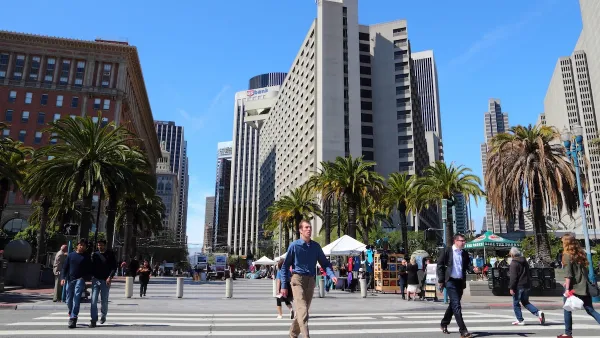
New density bill would require 7 California cities to establish regional transit hubs
The bill would also require major cities in California to permit high-rise residential buildings.

Planetizen Federal Action Tracker
A weekly monitor of how Trump’s orders and actions are impacting planners and planning in America.

California plans to bury El Niño’s downpour
If the state plays its cards right, it may be able to store a billion acre-feet of El Niño’s water in aquifers.

Desperate measures: Advocates weigh draining Lake Powell to fill Colorado River
Draining the reservoir could reduce evaporation losses by a couple hundred thousand acre-feet.

US buildings threatened, destroyed by fires set to triple by 2060
Researchers found a high fire risk for socioeconomically vulnerable neighborhoods in the American West.

LA residents may be allowed to paint their own crosswalks
Councilwoman Katy Yaroslavsky put out a motion instructing the Los Angeles Department of Public Transportation to study the feasibility of allowing volunteers to paint crosswalks.

Dallas moves to overhaul its zoning code
The city's zoning reform will allow more multi-family and mixed-use developments.

FREE Course: Walkable City 1: Why Walkability?
After describing his path towards focusing on walkability as the essence of good planning, Jeff Speck marches through his five principal reasons for making more walkable places.
Reinventing Malls: Planning Alchemy—Turning Gray Fields Into Gold
The course focuses on the opportunities and imperatives that shape reinvention of mall sites.

City of Rosemead
Rutgers University, Edward J. Bloustein School of Planning and Public Policy
One Hundred Miles
Hunter College, City University of New York (CUNY)
The Architects Foundation
University of Cincinnati Online
City of Cambridge
Montrose County
The Pocatello Development Authority