A recent study shows that traffic fatality rates are lower for children in areas where public transit is widely used.


The 2010 Report from the Child Fatality Review Team, available at www.nyc.gov/health, found that in New York City, "where kids rely much more on public transit, they die in traffic accidents at less than one-third the national rate according to a new report from the New York City Department of Health. Injury deaths for children in NYC are about half the national average.
According to the report, between 2001 and 2008, the national rate was 8.9 injury deaths per 100,000 children. In New York, the city recorded 4.2 injury deaths per 100,000. (Injury deaths were still the highest cause of death among children one to twelve, at 29 percent.)
Still, there were disparities across the city: children in low-income communities were more likely to die of injuries, and younger children and boys were more likely to be affected."
Thanks to Garrett Bradford
Read the full story: Kids Safer on the Subway

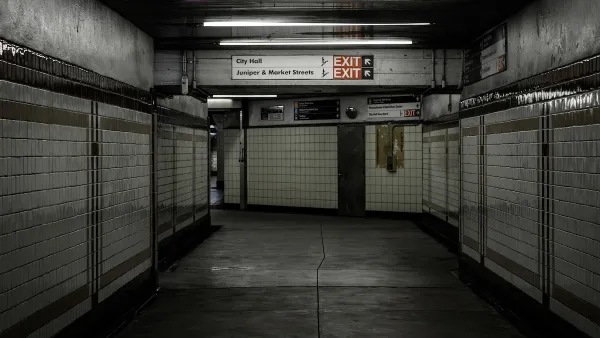
How Does Air Quality in a Philly Subway Station Compare to the Outdoors?
A team of researchers found much higher levels of particulate matter inside the City Hall subway station than on the street-level sidewalks directly above the station.
COVID-19 and Big, Dense Cities That Aren't New York
As in metropolitan New York, big, dense cities don't always suffer from coronavirus to a greater extent than their car-oriented suburbs.
Time-Based or Distance-Based Transit Fares: Is One Better Than the Other?
Is there a difference between the two most common fare structures in public transit?

Planetizen Federal Action Tracker
A weekly monitor of how Trump’s orders and actions are impacting planners and planning in America.

Amtrak, CN end decades-long dispute with eight-year agreement
The new operating agreement establishes an updated framework for the companies to work together, including processes to resolve disputes.
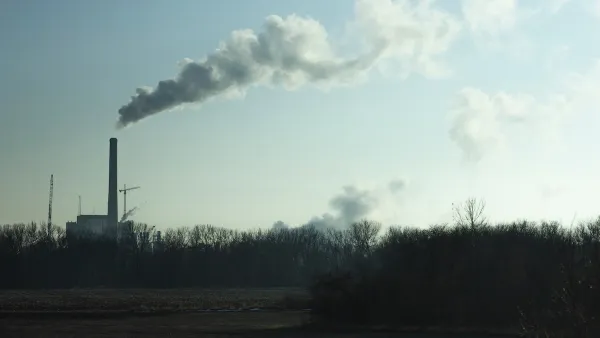
Nation's most wind-powered state turns to coal as data centers increase energy demand
For the first time in decades, Iowa has increased its generation of coal power.

Alabama scores up to $2.5 billion federal loan for largest infrastructure project in state’s history
The Mobile River Bridge and Bayway Project aims to ease congestion at Alabama’s worst bottleneck.

Trump is considering data centers on 6 states' public land — some state officials say they had no idea
If the administration approves the proposed projects, data center and data center-related developments will cover 17,600 acres of public land.

Despite court ruling, Trump is keeping nearly all wind projects in the US on hold
At least 110 wind energy projects have not heard from the government since a federal judge ruled that the Trump administration's freeze on wind turbine clearances was likely illegal.

FREE Course: Walkable City 1: Why Walkability?
After describing his path towards focusing on walkability as the essence of good planning, Jeff Speck marches through his five principal reasons for making more walkable places.
Reinventing Malls: Planning Alchemy—Turning Gray Fields Into Gold
The course focuses on the opportunities and imperatives that shape reinvention of mall sites.

KFH Group Inc.
Greater Baltimore Committee
Eagle County Government
The Architects Foundation
University of Cincinnati Online
The Pocatello Development Authority
The Urban Renewal Agency of the City of Pocatello