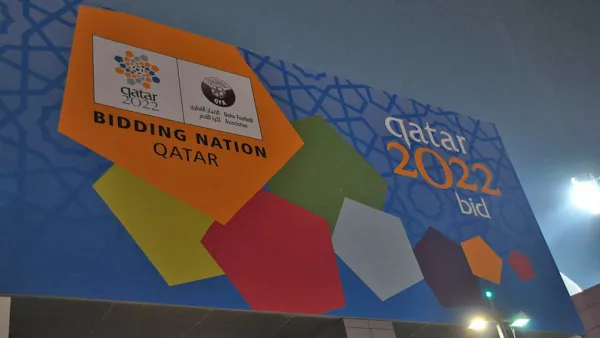
The desert nation of Qatar is trying to win hosting duties for the 2022 World Cup. A new plan to build temporary stadia is helping to increase the country's chances.


By planning temporary venues for the multi-city event, organizers in Qatar are hoping to reduce the "white elephants" that these mega events tend to leave as a burden on the host.
"The idea is an expanded version of the original vision for London's 2012 Olympic Stadium in Stratford, which was to have been reduced from 80,000 to 28,000 seats after the Games but may now remain at a larger capacity. In-stadium cooling technology that is being developed to reduce temperatures for players and spectators that can average a sweltering 41 degrees in June – a huge handicap for any Middle Eastern bid – will also be shared with other countries that have to date found their climates incompatible with hosting major events."
Read the full story: Qatar build up 2022 World Cup bid with flat-pack stadiums

Qatar Plans to Avoid White Elephants from 2022 World Cup
With plans to greatly reduce seating capacities and export an entire stadium, Qatar is hoping to reduce the negative long-term impact of its hosting of the 2022 World Cup.
Qatar's X-Rated Stadium and the Dangers of Designing "Readable" Buildings
With the help of Buzzfeed, Zaha Hadid's design for Qatar's new Al-Wakrah sports stadium - which happens to bear a resemblance to "lady parts" - went viral this week. Philip Kennicott examines Qatar's "awkward moment".
Analyst Says Economic Benefit of L.A. Stadium Would Be Minimal
As the city of Los Angeles considers a plan to allow construction of a football stadium downtown, some have called into question the economic projections of developers.

Planetizen Federal Action Tracker
A weekly monitor of how Trump’s orders and actions are impacting planners and planning in America.

Chicago breaks ground on $3 billion megadevelopment
The new neighborhood, titled Foundry Park, will one day host 3,700 residences.

This MA town is drowning in its own sewage — and residents like it that way
Susan Murcott, a waste water expert, said if Carlisle didn't address their leaking sewage, the problem could turn “deadly.”

Amtrak cuts ribbon on Seattle Airo maintenance facility
The $250 million, nearly 100,000-square-foot building can house an entire Cascades Airo trainset.

To power data centers, Google seeks autonomous control of thousands of homes’ electricity
The tech company has signed a deal to indirectly pay Mid-Atlantic residents to reduce their power demand when the grid is strained.

From robotaxis to robotrains: LA, DC weigh driverless transit
If approved, the projects will take years to implement and face financial and technical hurdles.

FREE Course: Walkable City 1: Why Walkability?
After describing his path towards focusing on walkability as the essence of good planning, Jeff Speck marches through his five principal reasons for making more walkable places.
Reinventing Malls: Planning Alchemy—Turning Gray Fields Into Gold
The course focuses on the opportunities and imperatives that shape reinvention of mall sites.

City of Rosemead
Rutgers University, Edward J. Bloustein School of Planning and Public Policy
One Hundred Miles
The Architects Foundation
University of Cincinnati Online
Montrose County
The Pocatello Development Authority
The Urban Renewal Agency of the City of Pocatello