New research from the Natural Resources Defense Council shows that the chance of foreclosure is higher in places with limited access to public transit.


The study looked at 40,000 mortgages in Chicago, Jacksonville and San Francisco, and also used data from the Center for Neighborhood Technology.
"The link became more obvious in looking at foreclosures after July 2008, when gas spiked over $4 a gallon, said CNT President Scott Bernstein, who studied foreclosures in the Chicago area. Bernstein found that gas price spikes provide an "early warning" of a rise in foreclosures in car-dependent communities.
'Nobody should be surprised this is happening,' said Bernstein, noting that the cost of a gallon of gas doubled between 2000 and 2008. 'In the suburbs, two or three cars and all that driving can cost more than the mortgage,' Bernstein said. 'If gas prices go up, some percentage of people will find those pressures to be too much.'"
FULL STORY: Can living near a train station save you from foreclosure?

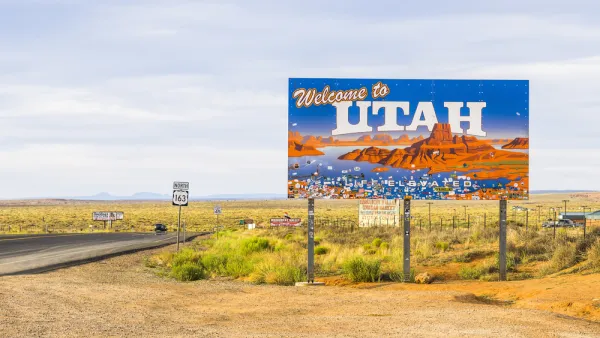
'15-Minute City' To Be Built in Utah
A community that focuses on reducing the need for car ownership and providing effective multimodal transportation and diverse land uses will be built from scratch on the site of the decommissioned Utah State Prison.
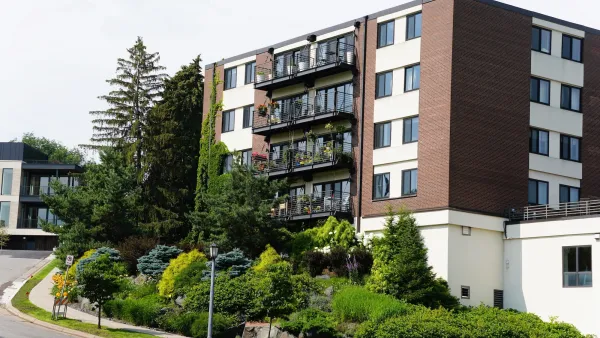
How policy changes helped Minneapolis beat rent inflation
Despite a boom in population, Minneapolis has managed to keep rents relatively steady through a combination of legislative action and private investment.
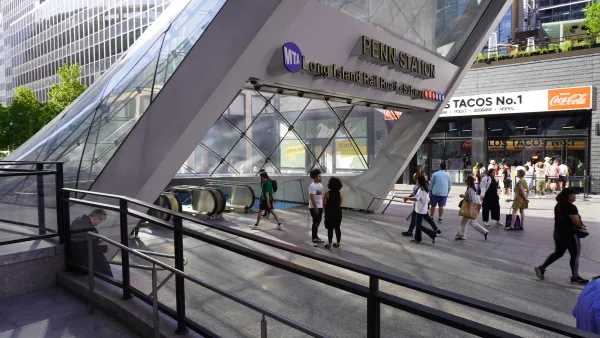
Which US cities have the most housing near transit?
Concentrating housing near frequent, reliable transit offers advantages to both residents and transit agencies, who can serve more riders more efficiently.

Planetizen Federal Action Tracker
A weekly monitor of how Trump’s orders and actions are impacting planners and planning in America.

The state-sanctioned urbicide of Austin
People don’t kill cities. Freeways do.

US to reduce Colorado River water deliveries to Mexico
A new Colorado Treaty amendment reduces Mexico’s Colorado River water allocation by 250,000 acre feet.

5 New England states march closer to 800 megawatt wind energy project
Securing federal approval for the project may be complicated under the Trump administration, which has historically been hostile towards domestic wind power.

Baltimore to break ground on $50 million Transit Priority Project
The project will bring faster bus trips, safer streets and better bike connections to Baltimore.

Airbnb launches $250 million 'last-dollar financing' housing accelerator, makes first investment in Austin
The company will put $6.4 million towards affordable housing development in Texas’ capital.

FREE Course: Walkable City 1: Why Walkability?
After describing his path towards focusing on walkability as the essence of good planning, Jeff Speck marches through his five principal reasons for making more walkable places.
Reinventing Malls: Planning Alchemy—Turning Gray Fields Into Gold
The course focuses on the opportunities and imperatives that shape reinvention of mall sites.

Eagle County Government
Harvard University Graduate School of Design
Nashville Planning Department
The Architects Foundation
University of Cincinnati Online
The Pocatello Development Authority
The Urban Renewal Agency of the City of Pocatello
Journal of the American Planning Association