In April, 2008, the state assembly rejected Mayor Bloomberg's congestion pricing plan. In this recent panel, the experts agree that the revenue the project would have produced for improving city transportation infrastructure is vital to its future.


"At a panel put on by the New School last week, some of New York's biggest players in transportation and planning came together to discuss the future of the city's infrastructure. They all seemed to agree: The city can't keep up with its global competitors without new sources of revenue."
Panelists discussed the need to finance the many, huge transit projects underway, and suggested real estate 'value capture' finance be enacted. In addition, bus-rapid-transit has a greater role to play as a less expensive addition to the transport infrastructure, some suggested.
Christopher Ward, the executive director of the Port Authority, claimed that "the congestion pricing initiative will return time and time again until we get it right."
"Robert Yaro, the president of Regional Plan Association, agreed: "Congestion pricing is going to be back."
Thanks to Streetsblog Daily
Read the full story: Infrastructure Bigs: To Compete, NYC Needs Congestion Pricing, Tolls
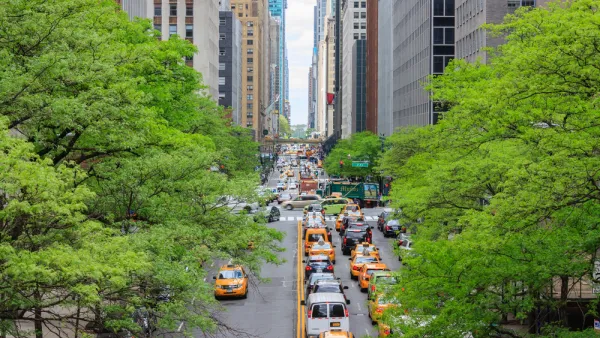
Value Capture Replaces Congestion Pricing as Governor Cuomo's Subway Funding Fix
Gov. Andrew Cuomo (D-N.Y.) appears to be backing away from a controversial plan to toll midtown Manhattan but shows no reservations about embracing land value capture, which some regard as a "taking" by taxing land proximate to subway stations.
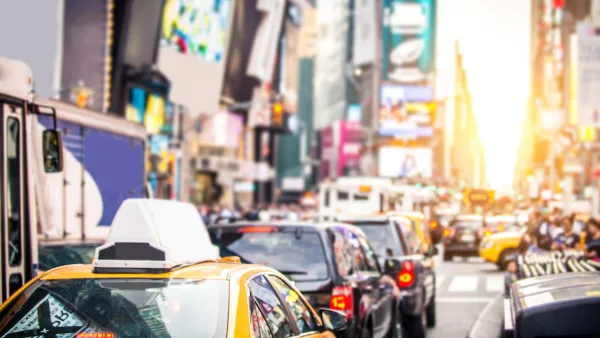
Report Reveals Proposed NYC Congestion Pricing Details
The draft proposal indicates most drivers would pay $15 to enter the Central Business District.
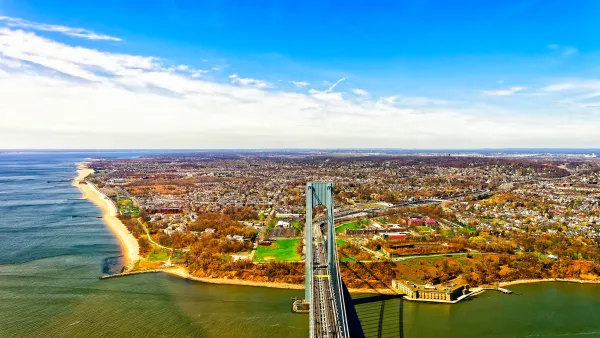
Staten Island Sues Over Congestion Pricing, Too
The borough’s president says the plan would bring more traffic to Staten Island and unjustly burden its residents with air pollution and tolls.

Planetizen Federal Action Tracker
A weekly monitor of how Trump’s orders and actions are impacting planners and planning in America.

Eastern Nebraska is running out of electricity
Data centers and electrification are straining eastern Nebraska’s grid, throttling economic development.

Study reveals best places in the U.S. for cycling, walking
New research from Streetlight Data examines bicycle and pedestrian miles per capita in the 100 largest U.S. cities by population.

DSA members accuse Mamdani of 'abandoning values' over housing redevelopment
New York City's mayor plans to replace about 2,000 units of public housing with private, mixed-income housing.

All sides of BRT debate unhappy with CDOT’s most recent move
The Colorado Department of Transportation is no longer considering center-running bus lanes for Colorado Boulevard.

Massachusetts bogs generate both power, and cranberries
Putting solar panels above farmland is one way Massachusetts is advancing toward its goal of net-zero carbon emissions by 2050.

FREE Course: Walkable City 1: Why Walkability?
After describing his path towards focusing on walkability as the essence of good planning, Jeff Speck marches through his five principal reasons for making more walkable places.
Reinventing Malls: Planning Alchemy—Turning Gray Fields Into Gold
The course focuses on the opportunities and imperatives that shape reinvention of mall sites.

City of Rosemead
Rutgers University, Edward J. Bloustein School of Planning and Public Policy
One Hundred Miles
University of Michigan School for Environment and Sustainability (SEAS)
Hunter College, City University of New York (CUNY)
The Architects Foundation
City of Cambridge
The Pocatello Development Authority
The Urban Renewal Agency of the City of Pocatello