A new luxury hotel with subway access on the ground floor has opened in L.A., creating what Los Angeles Times architecture critic Christopher Hawthorne sees as a bizarre mix of vanity and transit.


"As urban real-estate developments begin to combine high-end hotel rooms with residential and retail space, they are presenting fresh challenges for architects, primarily having to do with producing separate lobbies and dedicated elevators for each section of a building. The W, rising on land owned by the Metropolitan Transportation Authority and a full decade in the making, adds another layer of complexity to that equation. Along with channeling flows of tourists, hotel guests, commuters, tenants and diners, it has to account for the peculiar whims of Hollywood vanity -- accommodating bold-faced names who on some visits will be ready to meet the cameras and on others anxious to slip inside unnoticed."
He calls the project an urban planning experiment. But the colliding worlds of luxury hotel space, tourism, and public transportation make it much more than that.
Read the full story: The W Hollywood Hotel & Residences: An urban complexity

L.A. Subway Ridership Spikes in 2008
With gas prices rising beyond the comfort zones of many drivers, ridership on L.A.'s train system has seen record highs in the early months of 2008. For many in the city, the price is prompting a major paradigm shift in terms of mobility.

Op-ed: Finding the value in LA’s emptiest parks
Los Angeles has the nation's largest dog population, but a measly 14 dog parks. Adaptive reuse can help bridge this gap.
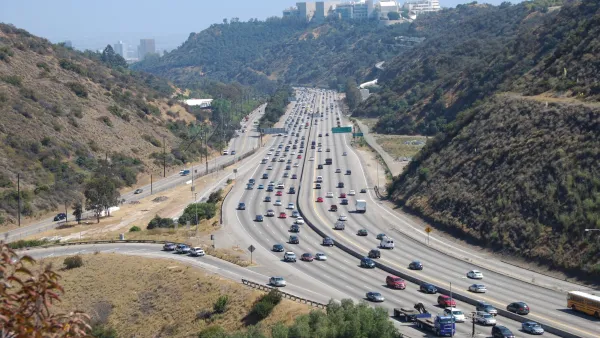
LA Metro Board Approves New Subway for One of Nation’s Busiest Freeway Corridors
The new subway could cut the hour-long trip between west Los Angeles and the San Fernando Valley to 20 minutes.

Planetizen Federal Action Tracker
A weekly monitor of how Trump’s orders and actions are impacting planners and planning in America.

Chicago breaks ground on $3 billion megadevelopment
The new neighborhood, titled Foundry Park, will one day host 3,700 residences.

Denver is solving homelessness. Why aren't the rest of us?
Since 2023, Denver's street homeless population has decreased by 64%, proving that effective tools exist to support those in need of housing.

LA accused of breaching $1.4 billion sidewalk repair settlement
The city faces a backlog of nearly 5,000 street repair requests.

MTA kicks off six-year, $1 billion transit upgrade project
The authority is replacing the roughly 90-year-old train signals on the A and C line with modern technology.

Developers may expand largest gas pipeline network in Northwest
Pipeline giant Williams has proposed new expansions for its Northwest Pipeline from the Colorado Rockies through Idaho, Oregon and Washington.

FREE Course: Walkable City 1: Why Walkability?
After describing his path towards focusing on walkability as the essence of good planning, Jeff Speck marches through his five principal reasons for making more walkable places.
Reinventing Malls: Planning Alchemy—Turning Gray Fields Into Gold
The course focuses on the opportunities and imperatives that shape reinvention of mall sites.

City of Rosemead
Rutgers University, Edward J. Bloustein School of Planning and Public Policy
One Hundred Miles
The Architects Foundation
University of Cincinnati Online
Montrose County
Northern Illinois Transit Authority (NITA)
The Pocatello Development Authority