An exhibit currently at the National Building Museum in Washington, D.C. explains how the architecture and design of parking lots evolved, and why. Meanwhile, the Parking Show of Shows conference takes place nearby with a different take.


In the early days, cars were more sensitive to weather conditions so they had to be stored in dry garage spaces that looked like any other building.
"As cars grew up, as gasoline became an all-weather commodity and cars became comfortable cocoons with sturdy metal shells, garages no longer needed to be impervious to weather. (...) A basic tolerance for ugly parking structures, a particularly soul-killing type of architecture that would blight whole neighborhoods and rend the urban fabric of so many once-walkable downtowns, had entered the American system."
Philip Kennicott explains the exhibit's thesis in full, and also pays a visit to the parking conference. Donald Shoup, of course, makes an appearance.
Read the full story: On the spot: Putting parking in its proper place

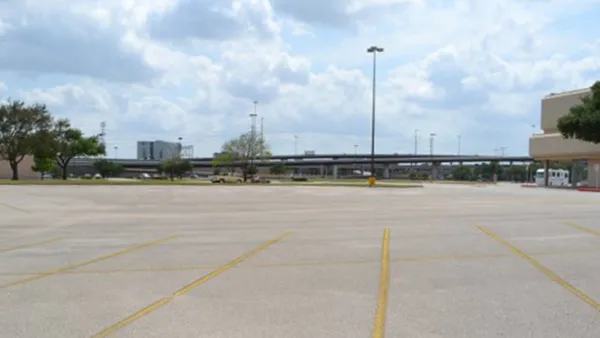
'Tis the Season for Abundant Parking
On what is arguably a peak parking day, parking lots around the country still had plenty of space.
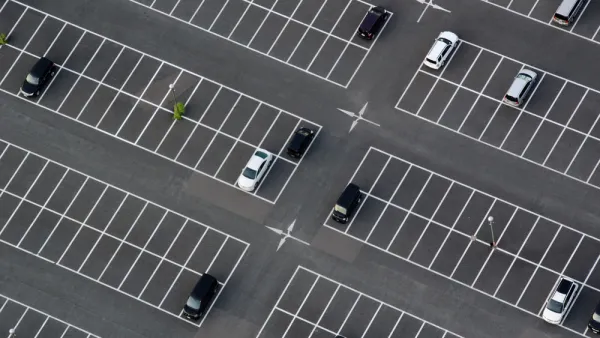
How Cities Are Slimming Down on Parking
Cities around the world are finding ways to go on a parking diet, freeing up unused space. San Francisco and Philadelphia are two U.S. leaders, while cities like Paris, Copenhagen, and Zurich pursue even more aggressive measures.
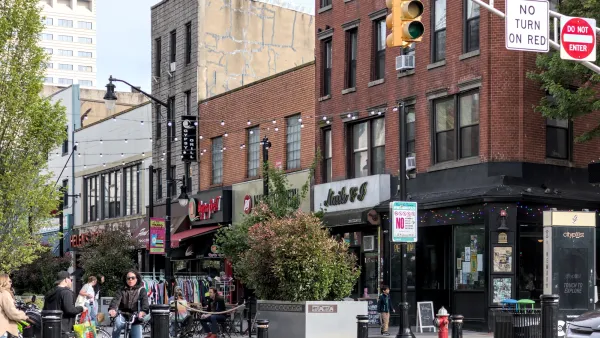
Jersey City could build 700 homes on city-owned parking lots
If approved, a redevelopment proposal would build hundreds of new homes on a pair of city parking lots.

Planetizen Federal Action Tracker
A weekly monitor of how Trump’s orders and actions are impacting planners and planning in America.

Amtrak, CN end decades-long dispute with eight-year agreement
The new operating agreement establishes an updated framework for the companies to work together, including processes to resolve disputes.

Judges permit Denver to divert 77,000 acre feet from the Colorado River for reservoir expansion
Overuse and climate change have caused the Colorado River’s water levels to plummet.

NYC DOT wants faster, more permanent street upgrades
The city is examining ways to build more concrete infrastructure without getting entangled in 'decades-long' projects.

'Something we’ve never seen before:' rising utility rates could strain city finances nationwide
Data centers, climate change and other factors have caused utility rates in the United States to increase by 38% since 2020.

Trump to overrule local leaders, lease millions of acres of America’s Pacific Island territories’ seafloors to mining companies
International law says that the Indigenous people of America’s territories have a right to prior and informed consent regarding projects that impact their countries.

FREE Course: Walkable City 1: Why Walkability?
After describing his path towards focusing on walkability as the essence of good planning, Jeff Speck marches through his five principal reasons for making more walkable places.
Reinventing Malls: Planning Alchemy—Turning Gray Fields Into Gold
The course focuses on the opportunities and imperatives that shape reinvention of mall sites.

Harvard University Graduate School of Design
KFH Group Inc.
Greater Baltimore Committee
The Architects Foundation
University of Cincinnati Online
The Pocatello Development Authority
The Urban Renewal Agency of the City of Pocatello