What's this? The Wall Street Journal's 'car guy' - the reporter who writes about cars and roads, is .....without a car? As difficult as it may be to believe, Joseph White is now a carless urbanite in DC. Here is his first column in his new lifestyle.


White understands that it's not just about not having a car - it's about the urban landscape that makes it possible and even beneficial - to the resident as well as the environment.
Trading in Wheels for Shoes and a Fare Pass
"After 30 years behind the wheel, former suburbanite and Journal editor Joseph White tries on life in the city -- without his automobile.
I didn't dump my car because of a concern about the climate or a desire to embrace urban life. We moved to Washington for career reasons. Letting go of my car seemed to be an economically sensible choice once we decided that life in Capitol Hill would be more fun than fighting the Washington Beltway's horrendous traffic.
My new life evidently makes me part of a trend. I am a New Urbanist, a Third Life Boomer or, to the green movement, an exemplar of the new sustainable lifestyle who leaves a lighter, smaller carbon footprint on our planet by driving less, walking more and forgoing the energy-intensive life that goes with owning an edge-city McMansion and two sport-utility vehicles."
Thanks to Ed Braddy
Read the full story: Dude, Where's My Car?

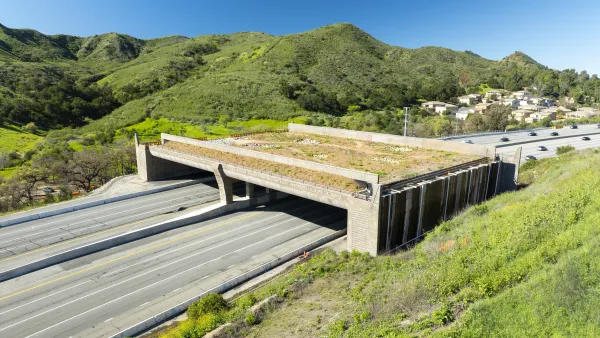
California invests $2.7 billion in over 150 transportation projects
The fund allocates money to transit upgrades and safety improvements to streets surrounding schools, among other ventures.
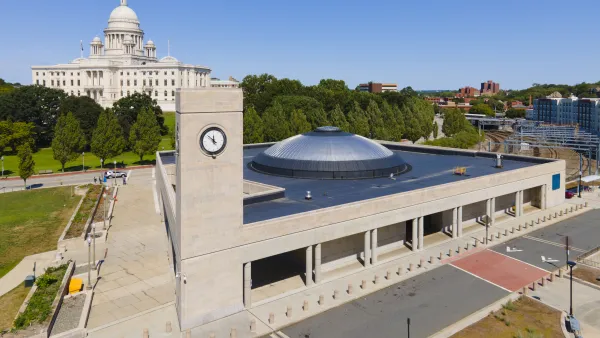
Providence train station to gain new bus hub
The new hub will replace the one currently located at Kennedy Plaza.
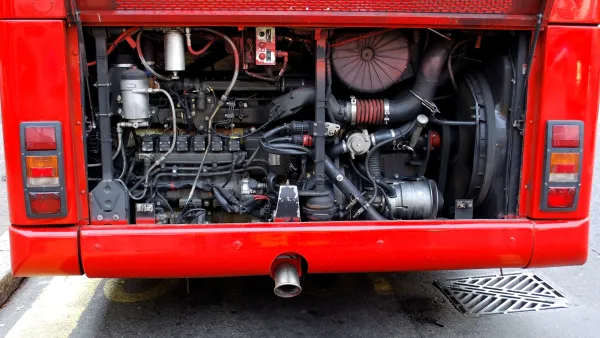
APTA Requests CDL Testing Change to Address Bus Operator Shortage
Eighty-four percent of U.S. transit agencies surveyed said CDL complexity was a hiring obstacle, with the “under-the-hood” requirement being the most challenging.

Amtrak, CN end decades-long dispute with eight-year agreement
The new operating agreement establishes an updated framework for the companies to work together, including processes to resolve disputes.

Judges permit Denver to divert 77,000 acre feet from the Colorado River for reservoir expansion
Overuse and climate change have caused the Colorado River’s water levels to plummet.
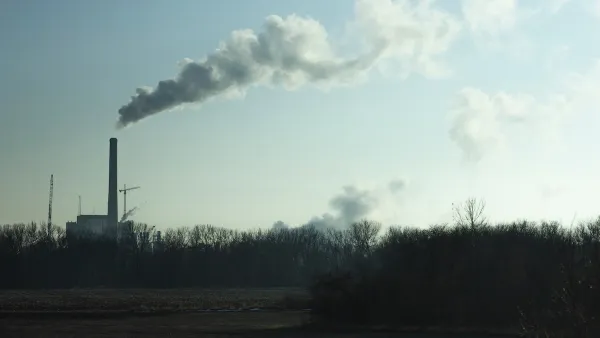
Nation's most wind-powered state turns to coal as data centers increase energy demand
For the first time in decades, Iowa has increased its generation of coal power.

Boston has spent millions making the Green Line more accessible — and there’s no end in sight
While the city has invested millions into expanding and adding platforms to the Green Line to make it more accessible, new train cars set to arrive next year will be too tall for disabled passengers to board without raising the current platforms.

Idaho may see an 18% drop in federal surface transit funding — the largest estimated cut in the US
Transit systems in rural communities are much more reliant on federal funding to provide their services.

How ‘post-disaster gentrification’ alters neighborhoods after natural calamities
After hurricanes, fires or other calamities, the original residents of a community are often replaced by younger, wealthier residents.

FREE Course: Walkable City 1: Why Walkability?
After describing his path towards focusing on walkability as the essence of good planning, Jeff Speck marches through his five principal reasons for making more walkable places.
Reinventing Malls: Planning Alchemy—Turning Gray Fields Into Gold
The course focuses on the opportunities and imperatives that shape reinvention of mall sites.

City of Wisconsin Rapids
Harvard University Graduate School of Design
KFH Group Inc.
The Architects Foundation
University of Cincinnati Online
The Pocatello Development Authority
The Urban Renewal Agency of the City of Pocatello