This article reviews the lengths Rio and Chicago went to show the Olympic Committee their green ambitions. Hint: both planted trees.


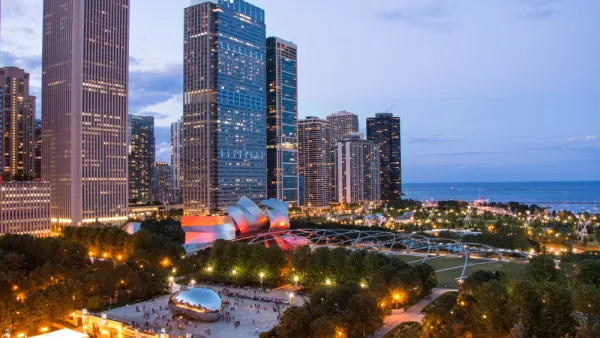
"The dust has settled on Rio's big win over Chicago in the bid for the 2016 Olympic Games, and we're left wondering why the South American city trumped a city that was supposed to be a guaranteed winner. According to Jim Scher, the former CEO of the U.S. Olympic Committee, "Rio had advantages that Chicago was always going to have trouble overcoming." It's hard to say what exactly those advantages are, but we do know that both cities upped their sustainability quotients prior to the decision. So if we had to pick a winner based on green efforts, which city would take the gold?"
Read the full story: Which Is the Greenest Olympic City of Them All?
Room for Improvement in Prospective Olympic Host Cities
A new report from the International Olympic Committee has evaluated the four host candidates for the 2016 Summer Olympics and found many places for improvement ahead of its October 2 decision.

‘Passive House’ Standard Gaining Ground in Multifamily Housing
Developers in Chicago and around the country are taking notice of a design standard that encourages energy efficiency and sustainable materials.
Chicago To Issue Climate Resilience Grants
Small businesses and nonprofits are eligible for a $5 million fund designed to help the city reach its emissions reduction goals.

Planetizen Federal Action Tracker
A weekly monitor of how Trump’s orders and actions are impacting planners and planning in America.

California plans to bury El Niño’s downpour
If the state plays its cards right, it may be able to store a billion acre-feet of El Niño’s water in aquifers.

Desperate measures: Advocates weigh draining Lake Powell to fill Colorado River
Draining the reservoir could reduce evaporation losses by a couple hundred thousand acre-feet.

Mamdani’s pied-à-terre tax survives legal challenge
A panel of judges found that the plaintiffs failed to demonstrate injury as a result of New York City's implementation of the tax.

Eastern Nebraska is running out of electricity
Data centers and electrification are straining eastern Nebraska’s grid, throttling economic development.

Seattle passes record-breaking transit services expansion
Proposition 1 will double the city’s transit tax to add 95,000 more bus trips and preserve 180,000 bus trips annually.

FREE Course: Walkable City 1: Why Walkability?
After describing his path towards focusing on walkability as the essence of good planning, Jeff Speck marches through his five principal reasons for making more walkable places.
Reinventing Malls: Planning Alchemy—Turning Gray Fields Into Gold
The course focuses on the opportunities and imperatives that shape reinvention of mall sites.

City of Rosemead
Rutgers University, Edward J. Bloustein School of Planning and Public Policy
One Hundred Miles
University of Michigan School for Environment and Sustainability (SEAS)
Hunter College, City University of New York (CUNY)
The Architects Foundation
City of Cambridge
Montrose County
The Pocatello Development Authority