The Pittsburgh Marathon was canceled for five years due to budget constraints, but a recent study shows that the 2009 race generated over $22 million in spending.


The Dick's Sporting Goods Pittsburgh Marathon generated $21.6 million in spending and another $900,000 in state, city and county tax revenues, a tidy sum that means its back to stay.
"We knew we had impact, but knowing exactly what it was is really beneficial in terms of showing its value to the city of Pittsburgh," says race director Patrice Matamoros. "We're already well on our way to planning the 2010 race with more than 1,700 registered participants, which is way up from where we were last year at this time."
Some 10,600 runners hit the streets last May; more than 5,500 arrived from outside of Allegheny County. The marathon attracted more than 45,000 racers and participants to the Golden Triangle and another 50,000 lined the streets to cheer. The 3-day weekend contributed $2.4 million to restaurants and bars another 21.7% of the runners stayed in local hotels, pumping $275,000 into local hotel revenues.
Thanks to Franny Ritchie
Read the full story: Pittsburgh Marathon pumped $22M into local economy, study says

Children in 55 countries are redesigning their cities in Minecraft
A U.N.-backed program lets students and community members reimagine sites in their neighborhoods in the game — and translate them into real-life buildings.
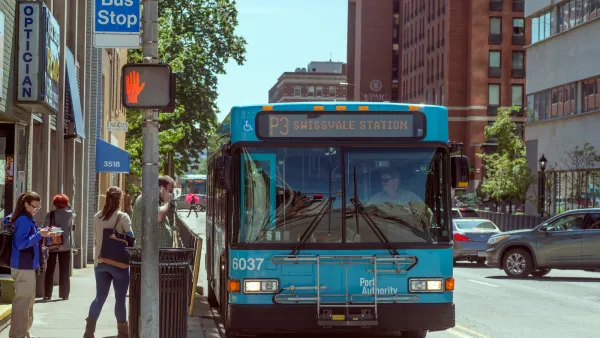
750 Pittsburgh city workers to get free transit passes
City employees working downtown will have access to free transit from Pittsburgh Regional Transit.
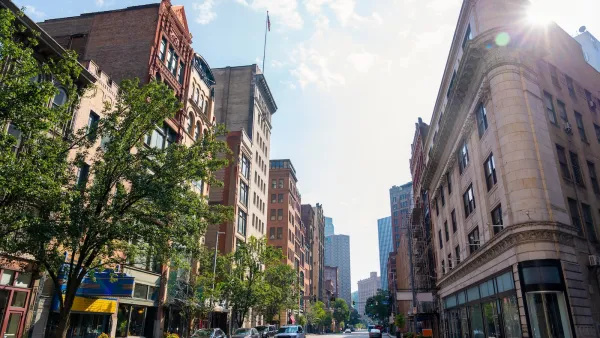
Pittsburgh downtown tax diversion plan draws criticism for lack of transparency
A proposed new development tax faces opposition from transit advocates.

Planetizen Federal Action Tracker
A weekly monitor of how Trump’s orders and actions are impacting planners and planning in America.

Washington state to charge fee to drivers with fuel-efficient cars
Revenue from the fee will go towards supporting the state’s highways.

Illinois considers spending $1 billion in taxpayer money on data center
A quantum computing campus and data center are currently under construction in Chicago.

Did data centers change how voters cast their ballots?
Texas, Ohio, and Georgia all flipped party control. But in rural counties, the effect of local data centers was mixed.

Amtrak invests in eight new Airo trainsets
The new trainsets will begin serving passengers in 2031.

HUD to end aid for mixed-immigration-status households
The new rule is projected to impact 80,000 people, nearly half of whom are children.

FREE Course: Walkable City 1: Why Walkability?
After describing his path towards focusing on walkability as the essence of good planning, Jeff Speck marches through his five principal reasons for making more walkable places.
Reinventing Malls: Planning Alchemy—Turning Gray Fields Into Gold
The course focuses on the opportunities and imperatives that shape reinvention of mall sites.

City of Charlotte
City of Rosemead
Rutgers University, Edward J. Bloustein School of Planning and Public Policy
University of Michigan School for Environment and Sustainability (SEAS)
Hunter College, City University of New York (CUNY)
The Architects Foundation
University District Partnership