Inspired by the revelation that Oakland, CA is stepping up their traffic and parking enforcement to make up a budget shortfall, Geoff Manaugh rethinks the entire process of how we fund our cities.


"That is, what method of payment do we wish to use when it comes to living in a functioning metropolis? If we find ourselves paying no tax at all, for instance – no income tax, no sales tax, no property tax – would we be happy to pay parking tickets that hit upper limits of, say, $2000 or more each time, if this is what it takes to keep the city running? Conversely, would we be happy to pay more sales tax in order to avoid things like road tolls altogether? How exactly do we mix and match these urban outlays and receipts?"
Read the full story: City of Fees and Services
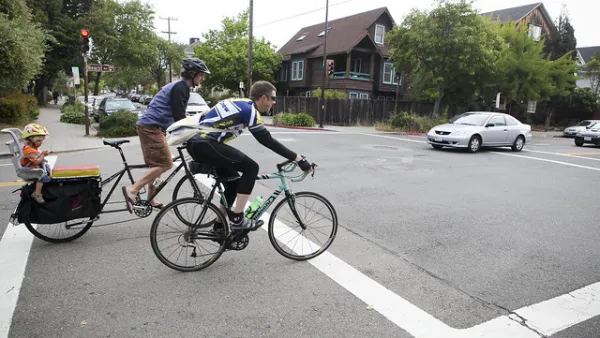
City to Bicyclists: Berkeley Not in Idaho
Berkeley, California might have a reputation of a very progressive city, but when it comes to cycling, it appears to have little tolerance for cyclists who roll through stop signs. Police are justifying the crackdown on the terms of a state grant.
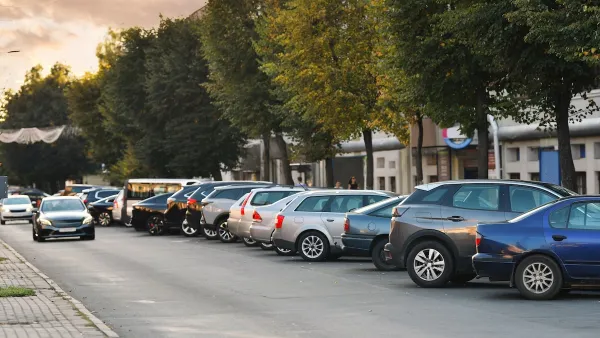
Less housing, wasted money: study reveals impact of city parking mandates
The study found that 71% of carless households in the United States pay for a parking space they don’t use.
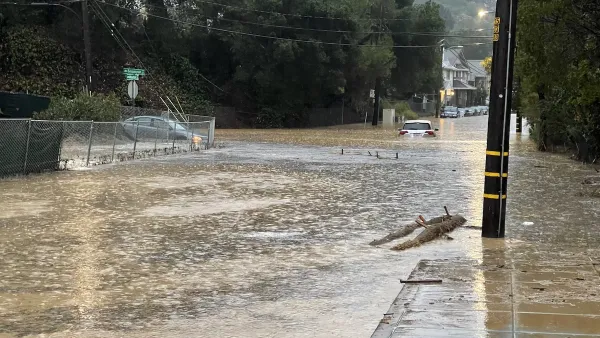
A multi-billion dollar problem is brewing under Oakland’s streets
Oakland’s stormwater drainage systems are in desperate need of upgrades and repairs. The El Niño will only further strain the city’s infrastructure.

Planetizen Federal Action Tracker
A weekly monitor of how Trump’s orders and actions are impacting planners and planning in America.

Eastern Nebraska is running out of electricity
Data centers and electrification are straining eastern Nebraska’s grid, throttling economic development.

Washington state to charge fee to drivers with fuel-efficient cars
Revenue from the fee will go towards supporting the state’s highways.

Instead of building new housing, LA developers are turning mansions into mega-mansions
In the richest areas, the number of houses valued at $30 million with demolition permits has skyrocketed since 2018.

Illinois considers spending $1 billion in taxpayer money on data center
A quantum computing campus and data center are currently under construction in Chicago.

As development costs rise, Boston moves to lessen affordable housing requirements
The Boston Zoning Commission and the City Council still need to approve Boston Mayor Michelle Wu’s proposed changes

FREE Course: Walkable City 1: Why Walkability?
After describing his path towards focusing on walkability as the essence of good planning, Jeff Speck marches through his five principal reasons for making more walkable places.
Reinventing Malls: Planning Alchemy—Turning Gray Fields Into Gold
The course focuses on the opportunities and imperatives that shape reinvention of mall sites.

City of Charlotte
City of Rosemead
Rutgers University, Edward J. Bloustein School of Planning and Public Policy
University of Michigan School for Environment and Sustainability (SEAS)
Hunter College, City University of New York (CUNY)
The Architects Foundation
University District Partnership
City of Cambridge
The Pocatello Development Authority