Hundreds marched in San Antonio, Texas, in defiance of new street procession fees that the organizations believe will stifle free speech.


A clause in the ordinance allowing for free protests on sidewalks doesn't satisfy San Antonio residents.
"its opponents argue that the city's sidewalks are sparse and often not accessible to disabled people.
Graciela Sanchez, executive director of the Esperanza Peace and Justice Center, said the ordinance also allows for "spontaneous marches," a concept the protesters tested about an hour into the demonstration.
'Let's take it to the streets!' a woman yelled.
A police officer on a motorcycle who had been observing the protest immediately rode onto West Commerce Street and ordered people to move to the sidewalk. The group ignored him and continued walking west on the roadway.
'They're creating a problem here. It's a traffic jam,' said the officer, who refused to give his name. 'They have the right to protest, but they better do it right.'
Protesters - some who had come equipped with bicycles and reflective vests - blocked traffic and directed fellow marchers into Market Square."
Read the full story: Protestors Take To Streets to Defy Ordinance, Officers
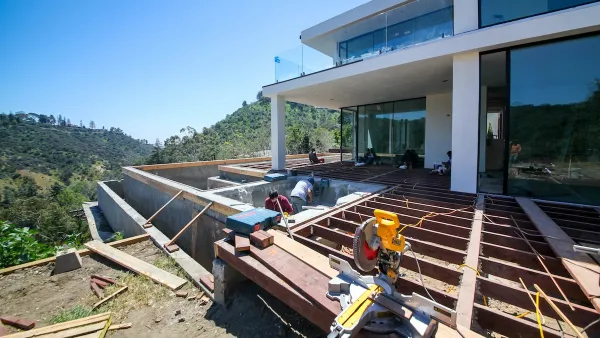
Instead of building new housing, LA developers are turning mansions into mega-mansions
In the richest areas, the number of houses valued at $30 million with demolition permits has skyrocketed since 2018.
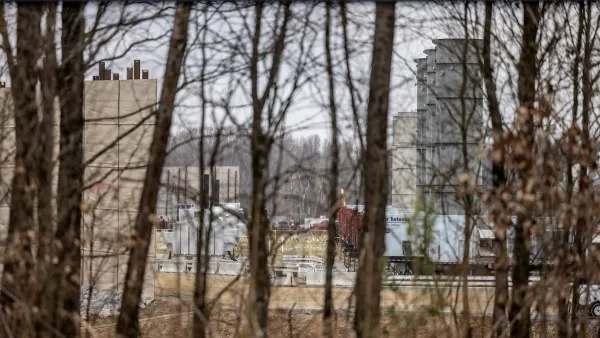
SpaceXAI may be fined $6 million for data center lacking water permits
A Mississippi agency also responds after a federal judge criticized the state’s Clean Air Act enforcement.

How a Chicago-sized wind farm beat the odds and powered on
The project spanned five presidential administrations and a standoff with a U.S. military base.

Planetizen Federal Action Tracker
A weekly monitor of how Trump’s orders and actions are impacting planners and planning in America.

Eastern Nebraska is running out of electricity
Data centers and electrification are straining eastern Nebraska’s grid, throttling economic development.

Washington state to charge fee to drivers with fuel-efficient cars
Revenue from the fee will go towards supporting the state’s highways.

Instead of building new housing, LA developers are turning mansions into mega-mansions
In the richest areas, the number of houses valued at $30 million with demolition permits has skyrocketed since 2018.

Illinois considers spending $1 billion in taxpayer money on data center
A quantum computing campus and data center are currently under construction in Chicago.

As development costs rise, Boston moves to lessen affordable housing requirements
The Boston Zoning Commission and the City Council still need to approve Boston Mayor Michelle Wu’s proposed changes

FREE Course: Walkable City 1: Why Walkability?
After describing his path towards focusing on walkability as the essence of good planning, Jeff Speck marches through his five principal reasons for making more walkable places.
Reinventing Malls: Planning Alchemy—Turning Gray Fields Into Gold
The course focuses on the opportunities and imperatives that shape reinvention of mall sites.

City of Charlotte
City of Rosemead
Rutgers University, Edward J. Bloustein School of Planning and Public Policy
University of Michigan School for Environment and Sustainability (SEAS)
Hunter College, City University of New York (CUNY)
The Architects Foundation
University District Partnership
City of Cambridge
The Pocatello Development Authority