Disasters happen. Being prepared is almost always the ideal, but rarely the reality. A disaster training facility in Texas is trying to change that.


Known as Disaster City, this 52-acre site simulates what it's like for rescue workers responding to disaster situations in urban areas.
"Disaster City isn't a city but a vast disaster-simulation center designed to look and feel as close to catastrophe as you ever want to be. Each hairline crack, each mangled car, all the mountains of rubble are modeled on wreckage from real disasters, like the 1994 Northridge earthquake in Los Angeles that killed 72 people and injured nearly 12,000. The 1993 World Trade Center bombing inspired the collapsed parking garage, with cars dangling off the sides like spiders from a ceiling, while the 12-foot-deep rubble catacombs resemble those from Ground Zero."
Read the full story: Disaster City: Inside the World's Largest Search-and-Rescue Training Facility
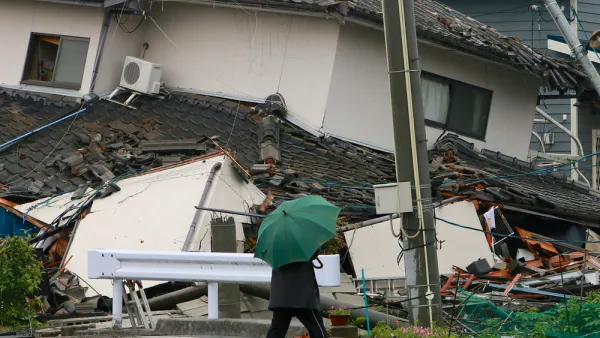
Protecting Affordable Housing After Natural Disasters
Research shows that low-income communities suffer most and take the longest to recover from disasters, which can often wipe out affordable housing stock and displace vulnerable households.
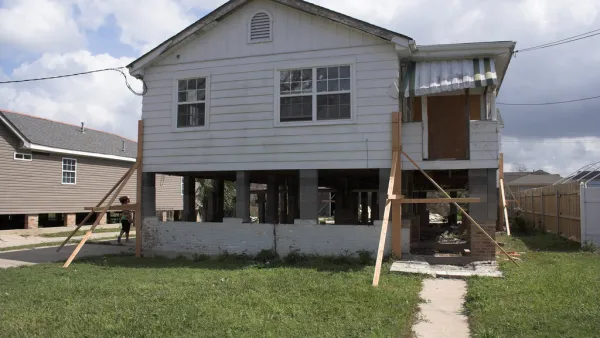
Adapting Building Codes to Natural Disasters Saves Billions
New research shows that modern building codes have prevented around $27 billion in damage from natural disasters between 2000 and 2016, yet many cities still operate under decades-old regulations.

Texas Central High-Speed Rail Gets Green Light From Feds
The Federal Railroad Administration has granted two key permissions for Texas Central to operate a high-speed trail between Houston and Dallas.

Planetizen Federal Action Tracker
A weekly monitor of how Trump’s orders and actions are impacting planners and planning in America.

Eastern Nebraska is running out of electricity
Data centers and electrification are straining eastern Nebraska’s grid, throttling economic development.

Washington state to charge fee to drivers with fuel-efficient cars
Revenue from the fee will go towards supporting the state’s highways.

Instead of building new housing, LA developers are turning mansions into mega-mansions
In the richest areas, the number of houses valued at $30 million with demolition permits has skyrocketed since 2018.

Illinois considers spending $1 billion in taxpayer money on data center
A quantum computing campus and data center are currently under construction in Chicago.

As development costs rise, Boston moves to lessen affordable housing requirements
The Boston Zoning Commission and the City Council still need to approve Boston Mayor Michelle Wu’s proposed changes

FREE Course: Walkable City 1: Why Walkability?
After describing his path towards focusing on walkability as the essence of good planning, Jeff Speck marches through his five principal reasons for making more walkable places.
Reinventing Malls: Planning Alchemy—Turning Gray Fields Into Gold
The course focuses on the opportunities and imperatives that shape reinvention of mall sites.

City of Charlotte
City of Rosemead
Rutgers University, Edward J. Bloustein School of Planning and Public Policy
University of Michigan School for Environment and Sustainability (SEAS)
Hunter College, City University of New York (CUNY)
The Architects Foundation
University District Partnership
City of Cambridge
The Pocatello Development Authority