The New York Times Magazine profiles Will Allen, the urban farmer from Wisconsin who recently received the MacArthur Foundation's "genius" grant for his work in agriculture.


As organic food and local agriculture become mainstream ideals, urban farmer Will Allen's Wisconsin farm is at the head of the class.
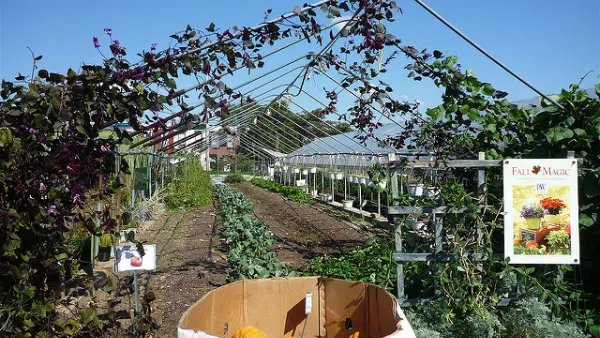
"When you're producing a quarter of a million dollars' worth of food in such a small space, soil fertility is everything. Without microbe- and nutrient-rich worm castings (poop, that is), Allen's Growing Power farm couldn't provide healthful food to 10,000 urbanites - through his on-farm retail store, in schools and restaurants, at farmers' markets and in low-cost market baskets delivered to neighborhood pickup points. He couldn't employ scores of people, some from the nearby housing project; continually train farmers in intensive polyculture; or convert millions of pounds of food waste into a version of black gold."
Read the full story: Street Farmer


Urban Farming Addressing Hunger (and More) in Pittsburgh
Urban farming provides opportunities to increase food security in addition to other benefits.
Minnesota Grants May Bolster Urban Farming's Legitimacy
For the first time, the state of Minnesota is offering money specifically for urban agriculture, in a win for urban farmers who want to challenge the notion that agriculture is necessarily a rural enterprise.
The Future of Farming is Millennials
An aging population of farmers may give way to a generation of young entrepreneurs who see the value and values of growing food.

Planetizen Federal Action Tracker
A weekly monitor of how Trump’s orders and actions are impacting planners and planning in America.

Amtrak, CN end decades-long dispute with eight-year agreement
The new operating agreement establishes an updated framework for the companies to work together, including processes to resolve disputes.

Northwest rail fans eager for Sept. 30 debut of Amtrak’s Airo fleet
Get ready for that new train smell and more seats. But they won’t go faster or run more frequently on the Cascades route in Washington and Oregon.

LAX SkyLink opening delayed again, contractor won’t commit to new deadline
The project was supposed to open its doors to the public in 2023.

Caltrain may slash over one-third of its stations
If Bay Area voters reject two transit tax measures, Caltrain, BART and AC Transit will see steep service cuts.

A 'dangerous' precedent: North Carolina successfully pressures communities into voting for toll roads
Two mayors resigned from the Charlotte Regional Transportation Planning Organization after it voted in favor of the toll roads.

FREE Course: Walkable City 1: Why Walkability?
After describing his path towards focusing on walkability as the essence of good planning, Jeff Speck marches through his five principal reasons for making more walkable places.
Reinventing Malls: Planning Alchemy—Turning Gray Fields Into Gold
The course focuses on the opportunities and imperatives that shape reinvention of mall sites.

City of Thousand Oaks
City of Wisconsin Rapids
Harvard University Graduate School of Design
The Architects Foundation
University of Cincinnati Online
The Pocatello Development Authority
The Urban Renewal Agency of the City of Pocatello