For the first time, the state of Minnesota is offering money specifically for urban agriculture, in a win for urban farmers who want to challenge the notion that agriculture is necessarily a rural enterprise.


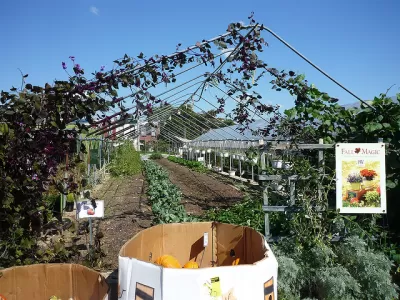
Though relatively modest, Minnesota's new urban agriculture grants may nurture a change in perceptions. Taryn Phaneuf writes, "Advocates said state investment is crucial because it lends credibility to what [one grant recipient] calls the 'changing face of agriculture.' Such state funding, even a small amount, can usher in a shift toward seeing urban areas as potential farms and their residents as fellow food producers."
The legislation that established the new grants took several years to get passed, primarily though the efforts of bill author Karen Clark (DFL-Minneapolis). Grants total $10 million a year, and they're funded through Minnesota's Agricultural Growth, Research, and Innovation program (known as AGRI), which supports agriculture and renewable energy in the state.
While the grants are only guaranteed through next year, advocates hope urban agriculture will retain its seat at the state table. Phaneuf elaborates: "A local food system – which includes everything from growing food to processing it to buying and consuming it – also creates jobs, income, and infrastructure. That’s the mindset used to justify public spending on agriculture development in Greater Minnesota, like one that helps farmers modernize their livestock operations by, say, expanding their facilities to hold more animals."
Read the full story: State grant program offers money, and legitimacy, for urban agriculture

Urban Farming Addressing Hunger (and More) in Pittsburgh
Urban farming provides opportunities to increase food security in addition to other benefits.
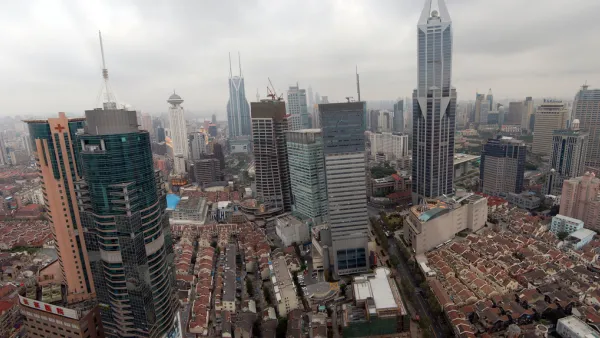
China's Megacities May Soon Rely on Urban Farming
While widespread urban farming remains pipe dream in the United States, dwindling arable land and a mass shift to cities might make it a necessity in China.
Fish: the Future of Urban Farming
Cityscape Farms has developed a new technique for farming fish along with vegetables in combined urban food systems that allows them to farm in developed areas.

Planetizen Federal Action Tracker
A weekly monitor of how Trump’s orders and actions are impacting planners and planning in America.

California plans to bury El Niño’s downpour
If the state plays its cards right, it may be able to store a billion acre-feet of El Niño’s water in aquifers.

Desperate measures: Advocates weigh draining Lake Powell to fill Colorado River
Draining the reservoir could reduce evaporation losses by a couple hundred thousand acre-feet.

Mamdani’s pied-à-terre tax survives legal challenge
A panel of judges found that the plaintiffs failed to demonstrate injury as a result of New York City's implementation of the tax.

Eastern Nebraska is running out of electricity
Data centers and electrification are straining eastern Nebraska’s grid, throttling economic development.

Seattle passes record-breaking transit services expansion
Proposition 1 will double the city’s transit tax to add 95,000 more bus trips and preserve 180,000 bus trips annually.

FREE Course: Walkable City 1: Why Walkability?
After describing his path towards focusing on walkability as the essence of good planning, Jeff Speck marches through his five principal reasons for making more walkable places.
Reinventing Malls: Planning Alchemy—Turning Gray Fields Into Gold
The course focuses on the opportunities and imperatives that shape reinvention of mall sites.

City of Rosemead
Rutgers University, Edward J. Bloustein School of Planning and Public Policy
One Hundred Miles
University of Michigan School for Environment and Sustainability (SEAS)
Hunter College, City University of New York (CUNY)
The Architects Foundation
City of Cambridge
Montrose County
The Pocatello Development Authority