While widespread urban farming remains pipe dream in the United States, dwindling arable land and a mass shift to cities might make it a necessity in China.


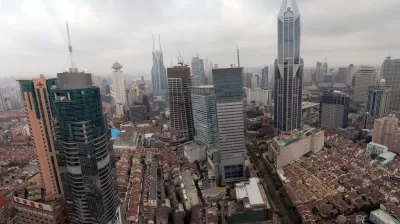
Danny Hudson explores the question, "If China's farmers are leaving the countryside - due to both eviction and personal choice - then who is to cultivate all the food for a traditionally self-sustaining culture with over a billion mouths to feed?"
China has a long history of finding innovative ways to feed large populations. But the scale of today's challenges is unprecedented. "Citizens find themselves displaced and obligated to become part of an urban (and to them foreign) community, forcing the government to come up with a new system of urban farming that would not only help to solve the issue of diminishing farmland and food supply, but also assist in regulating urban air qualities and green space for those who want and need it."
The photo-rich article discusses how Chinese cities might become "a new typology of urban design whereby the artificial is the new planting bed for the contemporary farm."
Read the full story: china paves the way for a new definition of urban farming


Urban Farming Addressing Hunger (and More) in Pittsburgh
Urban farming provides opportunities to increase food security in addition to other benefits.

Minnesota Grants May Bolster Urban Farming's Legitimacy
For the first time, the state of Minnesota is offering money specifically for urban agriculture, in a win for urban farmers who want to challenge the notion that agriculture is necessarily a rural enterprise.
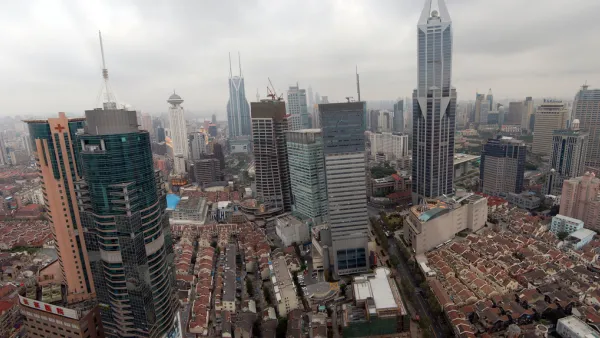
Population Limits Push Residents Out of Beijing and Shanghai
In top-tier Chinese cities like Shanghai and Beijing, new population caps have spurred the relocation of residents, many of them low-income, to smaller cities and the outskirts.

Planetizen Federal Action Tracker
A weekly monitor of how Trump’s orders and actions are impacting planners and planning in America.

California plans to bury El Niño’s downpour
If the state plays its cards right, it may be able to store a billion acre-feet of El Niño’s water in aquifers.

Chicago breaks ground on $3 billion megadevelopment
The new neighborhood, titled Foundry Park, will one day host 3,700 residences.

California High-Speed Rail Authority CEO resigns after $600,000 scandal
Under Ian Choudri, the authority used taxpayer dollars to fund first class flights and trips to nightclubs.

Want to study the Missouri River? Soon, you may need unanimous approval from 10 states
Legislation would require 10 governors’ permission to study or build projects moving water outside the basin.

Desperate measures: Advocates weigh draining Lake Powell to fill Colorado River
Draining the reservoir could reduce evaporation losses by a couple hundred thousand acre-feet.

FREE Course: Walkable City 1: Why Walkability?
After describing his path towards focusing on walkability as the essence of good planning, Jeff Speck marches through his five principal reasons for making more walkable places.
Reinventing Malls: Planning Alchemy—Turning Gray Fields Into Gold
The course focuses on the opportunities and imperatives that shape reinvention of mall sites.

City of Rosemead
Rutgers University, Edward J. Bloustein School of Planning and Public Policy
One Hundred Miles
Hunter College, City University of New York (CUNY)
The Architects Foundation
University of Cincinnati Online
City of Cambridge
Montrose County
The Pocatello Development Authority