More than 30 cities and counties in California have passed some form of a ban on the use of polystyrene containers, and a new state law under consideration, AB 1358, would ban the use of polystyrene foam and non-recyclable food containers statewide.


The article contains an interview with Frank Liesman, assistant chief counsel for Dart Container Corp., who presents the food packaging industry's side of the argument:
"There hasn't been enough emphasis on the recycling of polystyrene foam due to market conditions and the low-cost of virgin resin to produce these products. However, as these issues have been raised -most especially in California-we at Dart have looked to establish an infrastructure, through our company's efforts and by working with our trade group, to have recycling as a more viable and available option to individual consumers and municipalities."
"We partnered with, for example, Tracy, California and Roseville, California, giving them commercial-sized densifiers that will allow them to compact and densify the foam that is dropped off by the citizens of those cities. In turn, we have made arrangements to find homes for that recycled foam. Now, this could be not only just food packaging of that foam, but if you buy a new T.V. or computer, for example, you will have some of that foam packaging in the box. A consumer or citizen in those cities can drop off that material in Tracy and Roseville. It will be densified, shipped off, and recycled into another product."
Read the full story: Styrofoam Food Packaging Waste Stream Legislation Oversimplifies Issues, Recycling Options

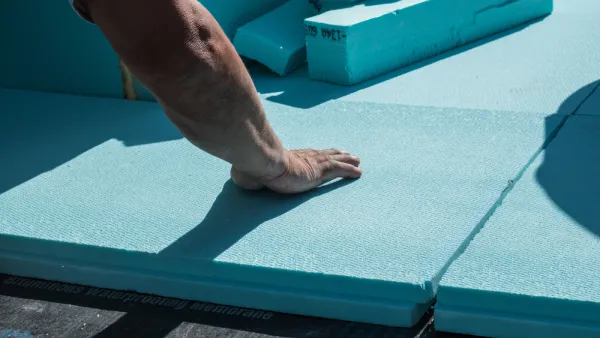
New York City Polystyrene Ban Took Effect New Year's Day
Thanks to two recent New York State court rulings, disposable food and beverage containers will no longer be made from polystyrene in the nation's largest city. The ban was originally proposed by Mayor Michael Bloomberg in February 2013.

From Brownfields to Community Assets: A Conference on Land Revitalization
The 2025 California Land Recycling Conference (CALRC) will convene experts in Carson, CA, from September 16-18 to discuss brownfield redevelopment, sustainability, and equitable land reuse, with session proposals open until March 31, 2025.

First US Hydrogen Public Utility to Launch in California
The project will serve as an intermediary between clean hydrogen providers and consumers.

Amtrak, CN end decades-long dispute with eight-year agreement
The new operating agreement establishes an updated framework for the companies to work together, including processes to resolve disputes.

Judges permit Denver to divert 77,000 acre feet from the Colorado River for reservoir expansion
Overuse and climate change have caused the Colorado River’s water levels to plummet.

Nation's most wind-powered state turns to coal as data centers increase energy demand
For the first time in decades, Iowa has increased its generation of coal power.

Boston has spent millions making the Green Line more accessible — and there’s no end in sight
While the city has invested millions into expanding and adding platforms to the Green Line to make it more accessible, new train cars set to arrive next year will be too tall for disabled passengers to board without raising the current platforms.

Idaho may see an 18% drop in federal surface transit funding — the largest estimated cut in the US
Transit systems in rural communities are much more reliant on federal funding to provide their services.

How ‘post-disaster gentrification’ alters neighborhoods after natural calamities
After hurricanes, fires or other calamities, the original residents of a community are often replaced by younger, wealthier residents.

FREE Course: Walkable City 1: Why Walkability?
After describing his path towards focusing on walkability as the essence of good planning, Jeff Speck marches through his five principal reasons for making more walkable places.
Reinventing Malls: Planning Alchemy—Turning Gray Fields Into Gold
The course focuses on the opportunities and imperatives that shape reinvention of mall sites.

City of Wisconsin Rapids
Harvard University Graduate School of Design
KFH Group Inc.
The Architects Foundation
University of Cincinnati Online
The Pocatello Development Authority
The Urban Renewal Agency of the City of Pocatello